



First Hatching of Magellanic Penguin Chicks in Three Years
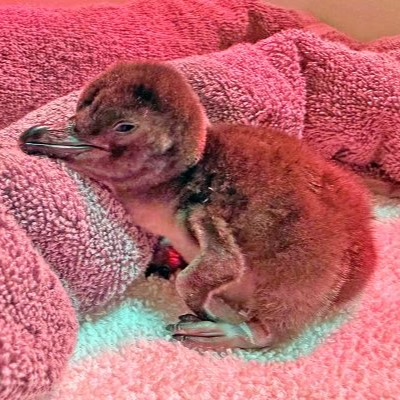
The shrill squeaks and peeps emitted by tiny Magellanic penguin chicks is music to the ears of San Francisco Zoo bird staff, as they recently welcomed three chicks hatched nearly four weeks ago. The trio represents the first successful hatching of penguin chicks in three years, and the first time in many years that chicks are being hand-reared rather than parent-reared.
“We made the decision as part of this year’s breeding season, to pull any viable eggs and incubate them separately from the parents,” said Brice Smith, Assistant Curator of Birds. “One of the key reasons is that it had been a few years since we’ve had chicks and some of the potential parents were not at the experience level we prefer. So basically, we decided to hand-rear them, which entails nearly 24-hour care in the beginning.”
As the most successful breeding colony of Magellanic penguins in an AZA (Association of Zoos and Aquariums) accredited zoo, this prolific group had traditionally hatched between two and five chicks per year since the late 1980s. Magellanic penguins are native to the southern coasts of South America, primarily Argentina, Chile and the Falkland Islands, where they are listed as Near Threatened by the International Union for Conservation of Nature (IUCN)
The Zoo follows breeding recommendations from the AZA’s Species Survival Plan for Magellanic Penguins. Over the past few years, because the Zoo’s colony was at a well-balanced population at 50 penguins, breeding was not recommended by the SSP. After the passing of a few individuals from old age or illness, Curator Quinn Brown contacted the SSP for approval to breed this year as attrition of the colony contributed to a renewed focus on chicks.
“Breeding is highly strategic,” said Brown. “Some of our pairs have been very successful, and some are not approved to breed as their genetics may be overrepresented in accredited facilities.”
The three chicks are growing steadily and will have their “fluff” for the next several weeks. In the meantime, they are being hand-fed, like the adults that live on Penguin Island.
“When they’ve matured a bit more, we will start teaching them how to swim,” said Smith. “They are a little awkward, but get the hang of things easily.”
Later this summer, the Zoo will introduce the chicks to Penguin Island and the rest of the penguins by hosting its popular “March of the Penguins” event for Zoo members. The chicks will waddle and walk around length of the 200-foot-long penguin pool, and then join the often curious adults during their first swim in their new home.