



Sa Zoo
Wolf Canyon (Cañón del Lobo)
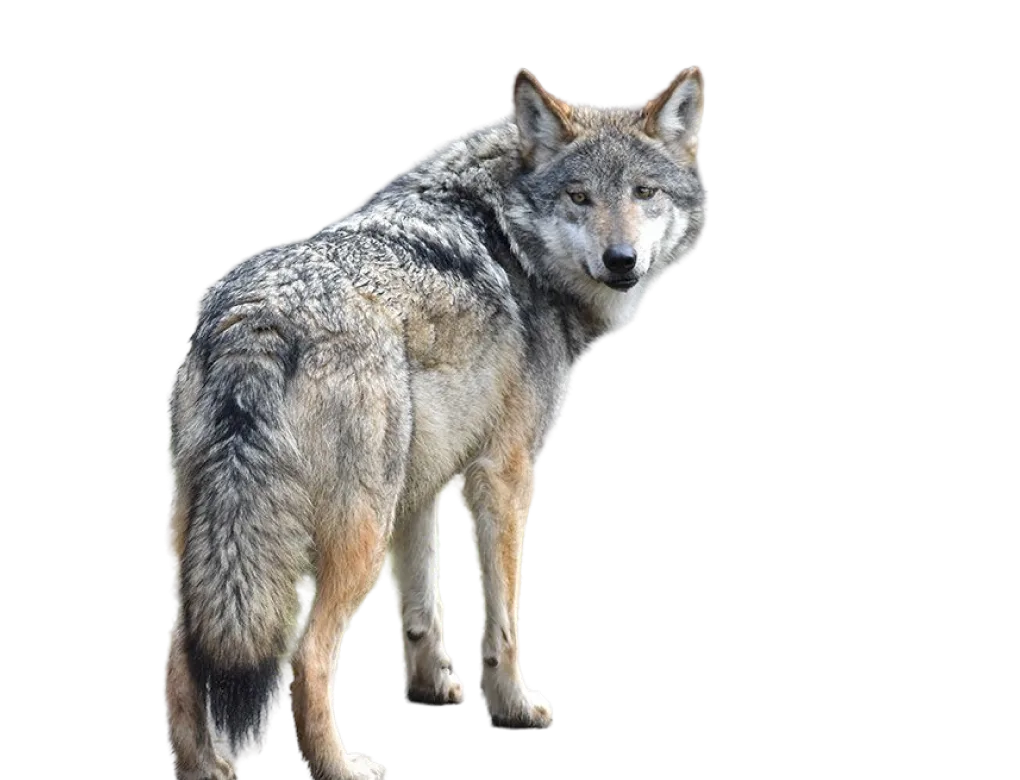
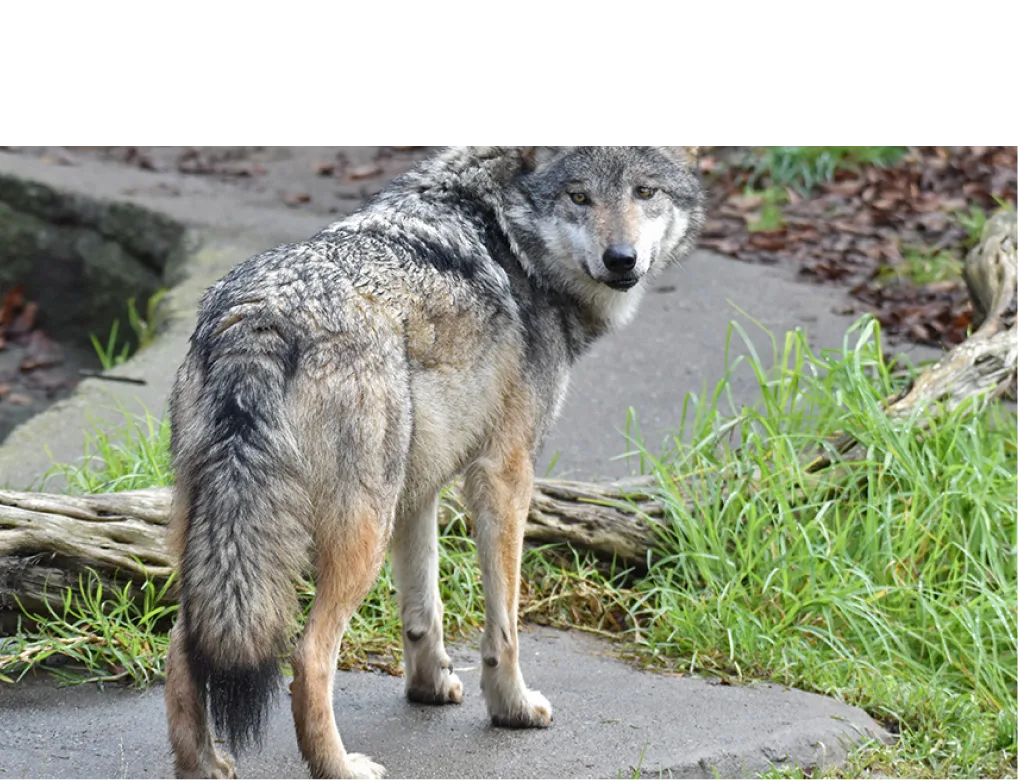
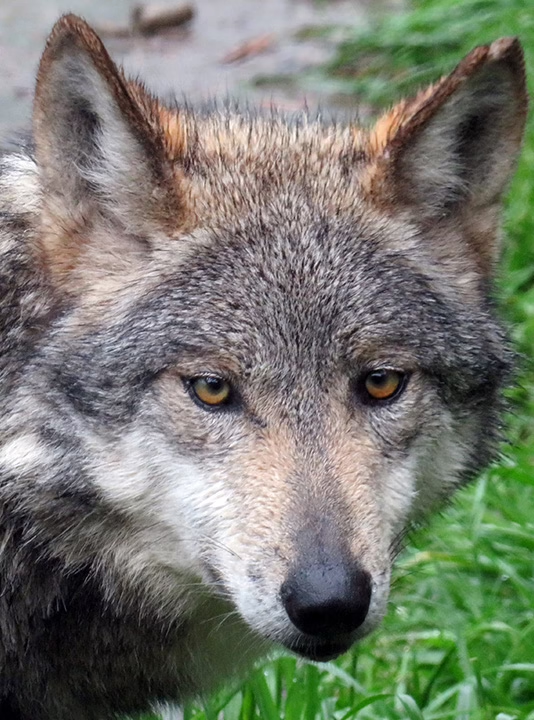
We currently house a trio of female siblings, born at the Wolf Conservation Center. Their placement is part of a collaborative Association of Zoos and Aquariums (AZA) Mexican Gray Wolf Species Survival Plan and the Mexican Wolf Recovery Program led by U.S. Fish and Wildlife Service.
Nakakaganyak na mga Katotohanan
- Mexican gray wolves are often referred to as ‘el lobo‘, which means ‘wolf’ in Spanish.
- They have an excellent sense of smell, keen vision, and sharp hearing.
- Every wolf has its own unique howl that lets pack members recognize one another.
Mga Pisikal na Katangian
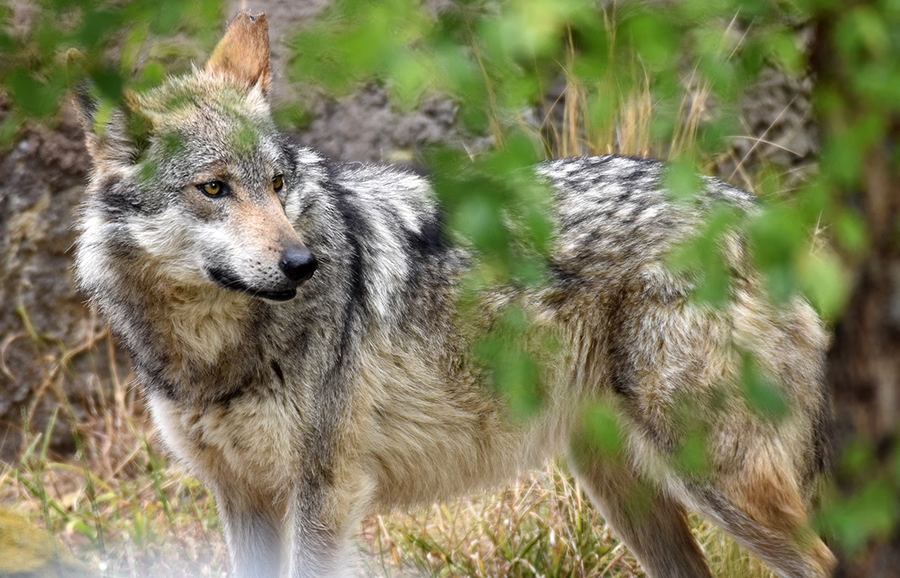
Mexican gray wolves are the smallest gray wolf and most genetically distinct subspecies and are approximately half of the size of the North American gray wolf. They are between 26 – 32 inches at the shoulder, 4 ½ – 5 ½ feet in length from nose to tip of tail and weigh between 60 – 80 pounds. Males are slightly larger than females.
Despite the name “gray” wolf, their coats are a mix of gray, rust, brown, black and cream. They tend to have darker colored backs and lighter colored bellies.
They can live up to 15 years under human care.
Habitat
Mexican gray wolves are found in mountain woodlands, grasslands and scrublands. They once ranged from the southwestern U.S. to central Mexico. Their current range is restricted to Apache National Forest in southeastern Arizona.
Diet
They eat mainly elk, white-tailed deer, and mule deer, as well as javelinas, rabbits, ground squirrels, and mice. They hunt cooperatively so that they can take out prey much larger than themselves. They will also occasionally scavenge.
Sosyal na Pag-uugali
Mexican gray wolves are social animals and live in packs, usually with an alpha breeding pair and their offspring. Mating season is between mid-February to mid-March and after a 63-day gestation period, a litter of 4 – 7 pups is born blind and helpless. The subordinates in the pack will help to raise the pups, who will become mature at 10 months of age. Wolves communicate through scent-marking, body language and vocalizations, including howling.
Katayuan sa Kalikasan
By the 1970’s, Mexican gray wolves were essentially wiped out in the United States but have since made a small comeback. In 1998, 11 Mexican gray wolves were released into the wild by the U.S. Fish & Wildlife Service. Today, there are nearly 150 wild Mexican gray wolves.The biggest threat to these animals is human intolerance. They are the most endangered wolf subspecies in the world.
Alam niyo ba?
What is their strongest sense?
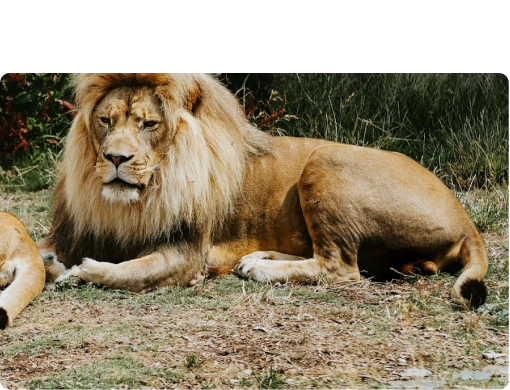
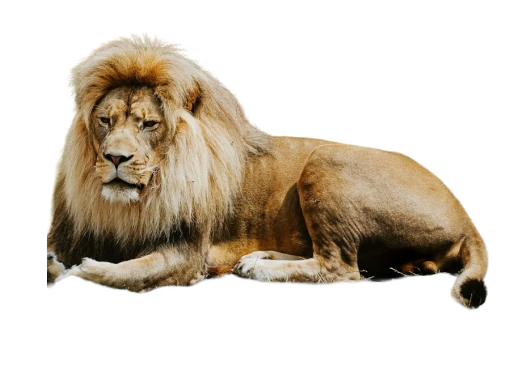
Aprikanong leon
MapanganibIsa sa mga pinakatanyag na hayop sa mundo, ang leon ng Africa ay simbolo ng lakas, sosyal na katalinuhan, at ligaw na Africa.
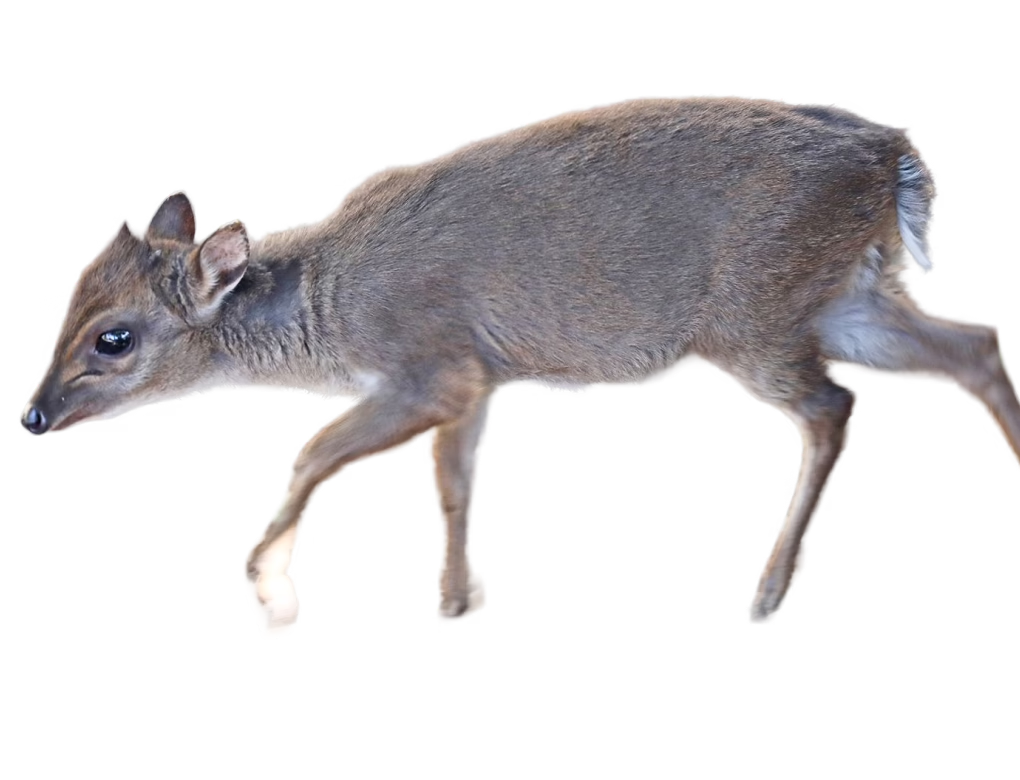
Blue duiker
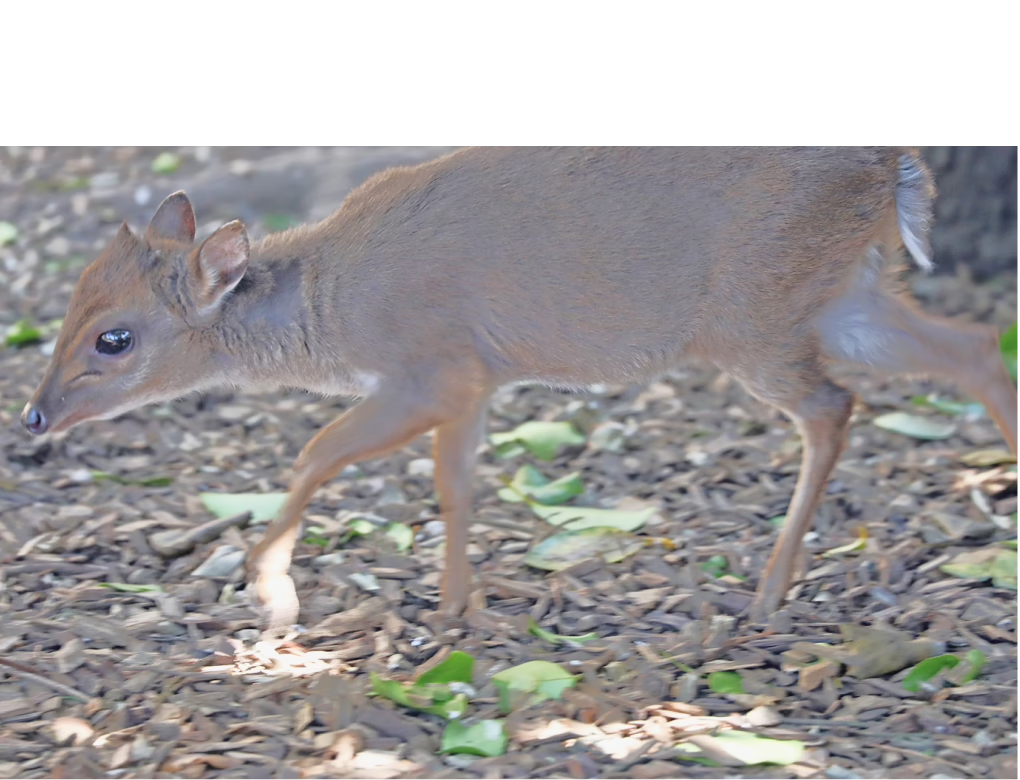
Hindi Nakalulugod na KalagayanBilang pinakamaliit na species ng antelope at pinakamaliit na duiker sa mundo, mahalaga ang kanilang papel sa ekosistema ng kanilang kagubatan.
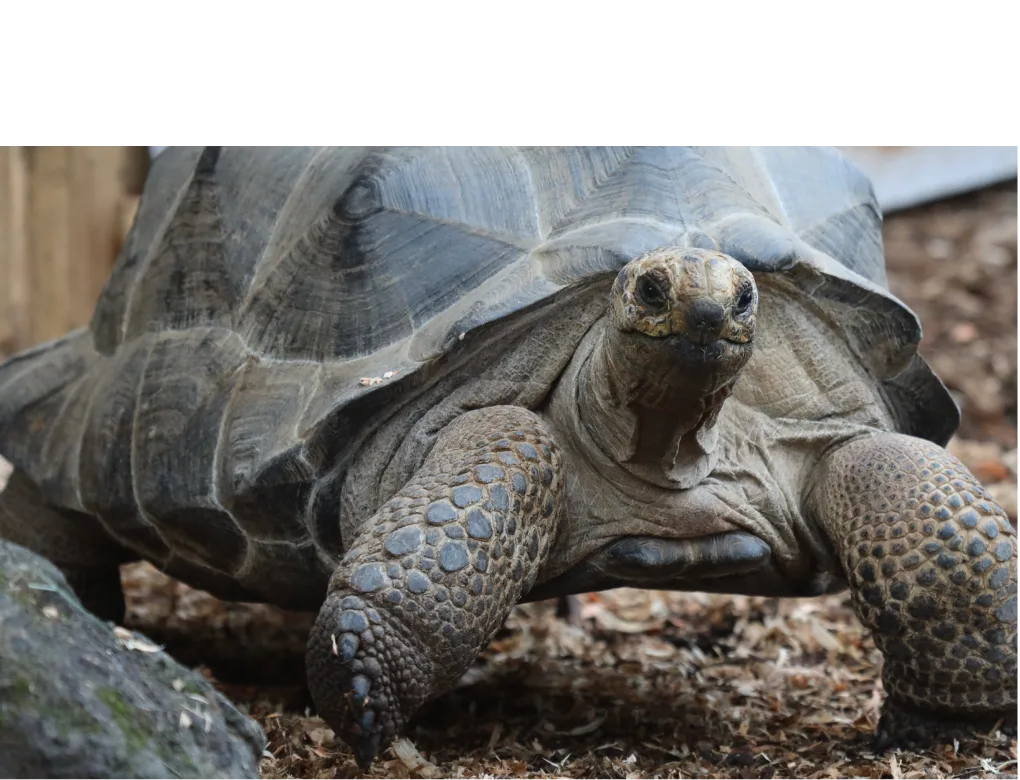
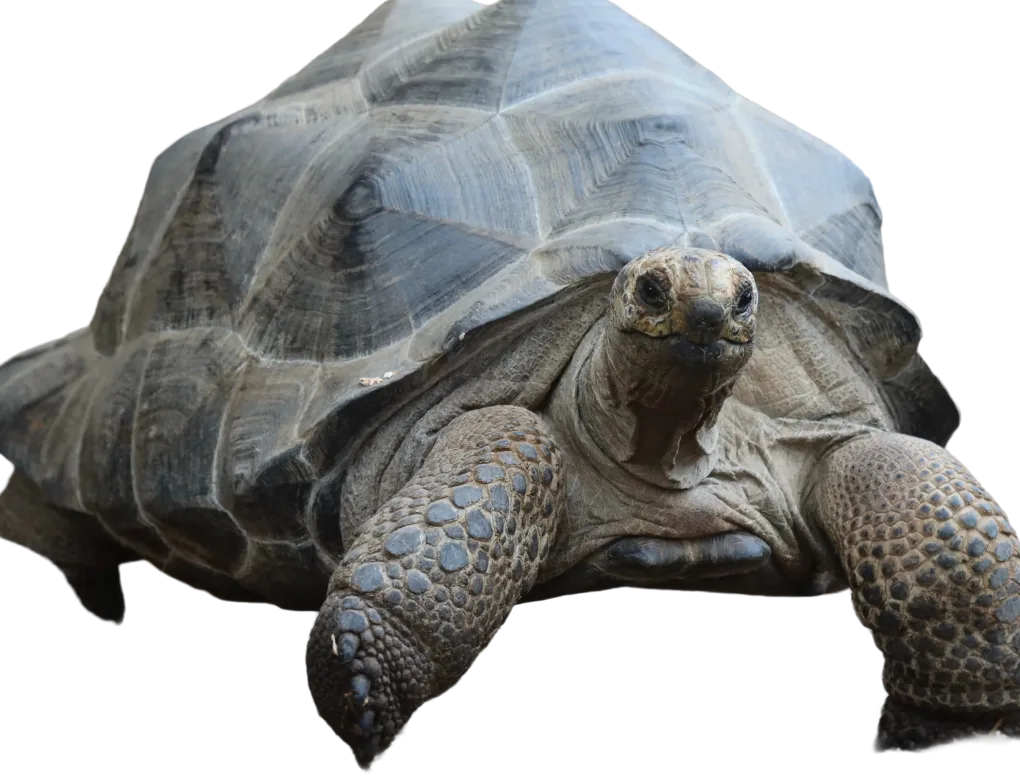
Aldabra tortoise
MapanganibBilang isa sa pinakamalaki at pinakamahaba ang buhay na mga land tortoise sa mundo, may ilan na tinatayang may 170 taon nang nabubuhay!
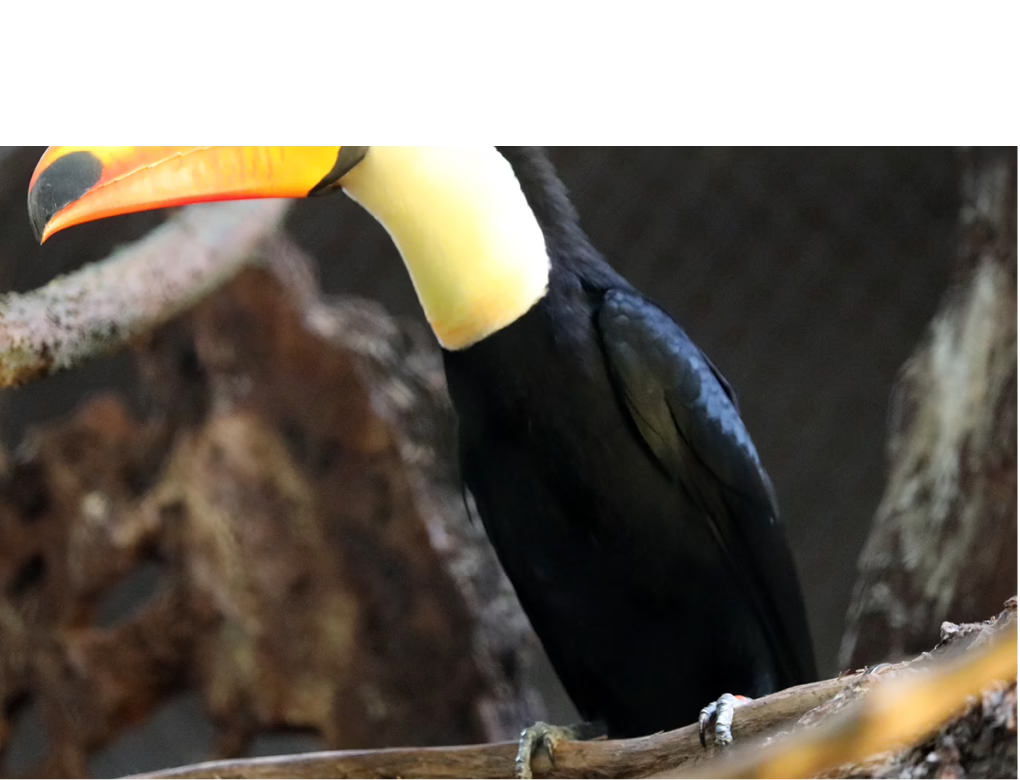
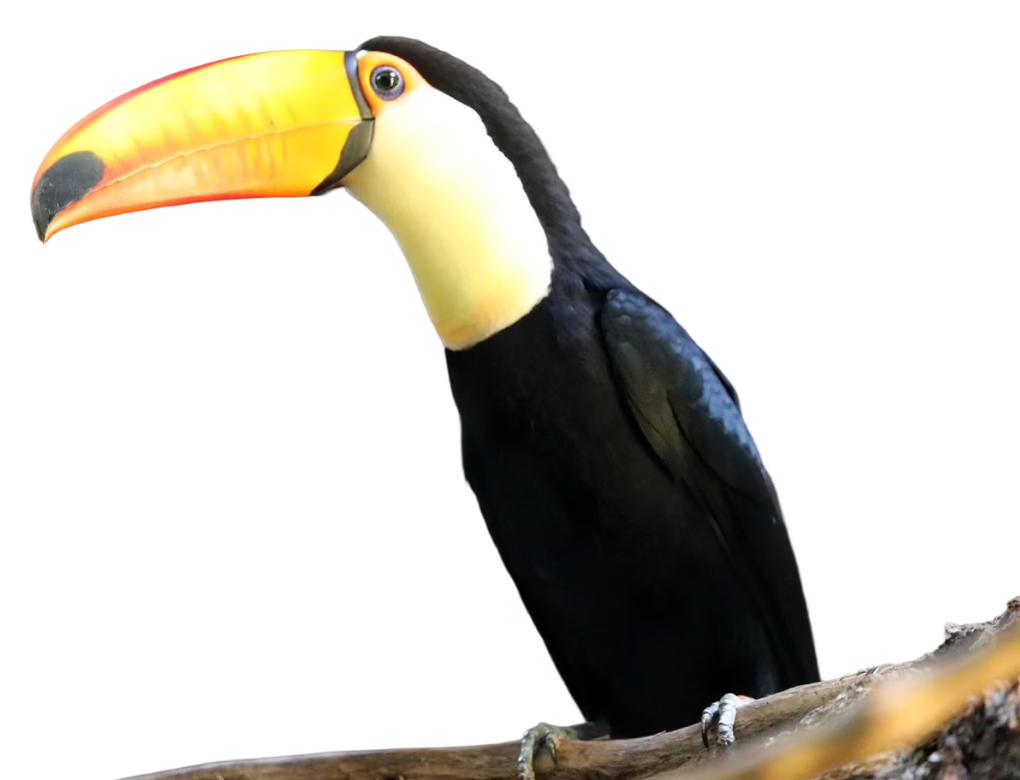
Toco toucan
Hindi Nakalulugod na KalagayanKilala sa malalaking bilog na balahibo at masiglang pag-uugali, ito ang pinakamalaking uri ng toucan.
Mag-ampon ng hayop na iyong minamahal habang nakikinabang mula sa mga eksklusibong benepisyo.