




Tại vườn thú
Between Australian WalkAbout and South American Tropical Rainforest & Aviary.
Những sự kiện hấp dẫn
- The double-wattled cassowary is also referred to as the southern cassowary.
- Cassowaries are the only large flightless bird adapted for life in the rainforest.
- For the Kalam people of New Guinea, cassowaries are believed to be reincarnations of their female ancestors, for which reason it is forbidden to hunt or trade the birds.
- This bird belongs to a group of large, flightless birds called ratites, of which, the southern cassowary is one of the heaviest, second only to the ostrich.
Đặc điểm vật lý
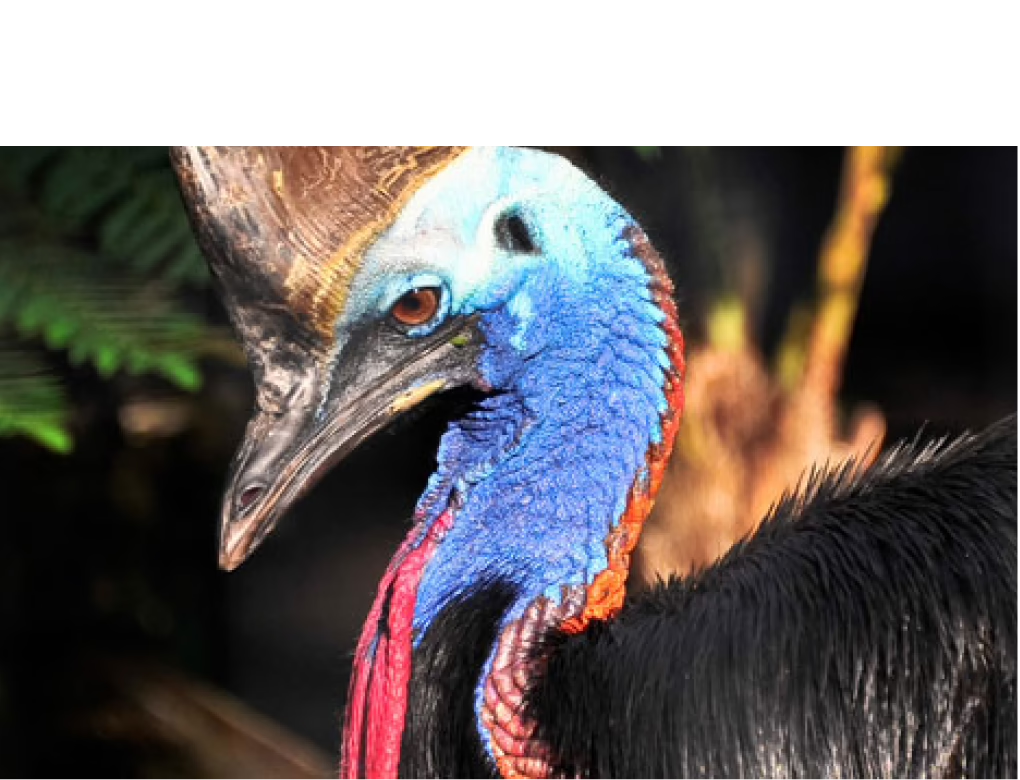
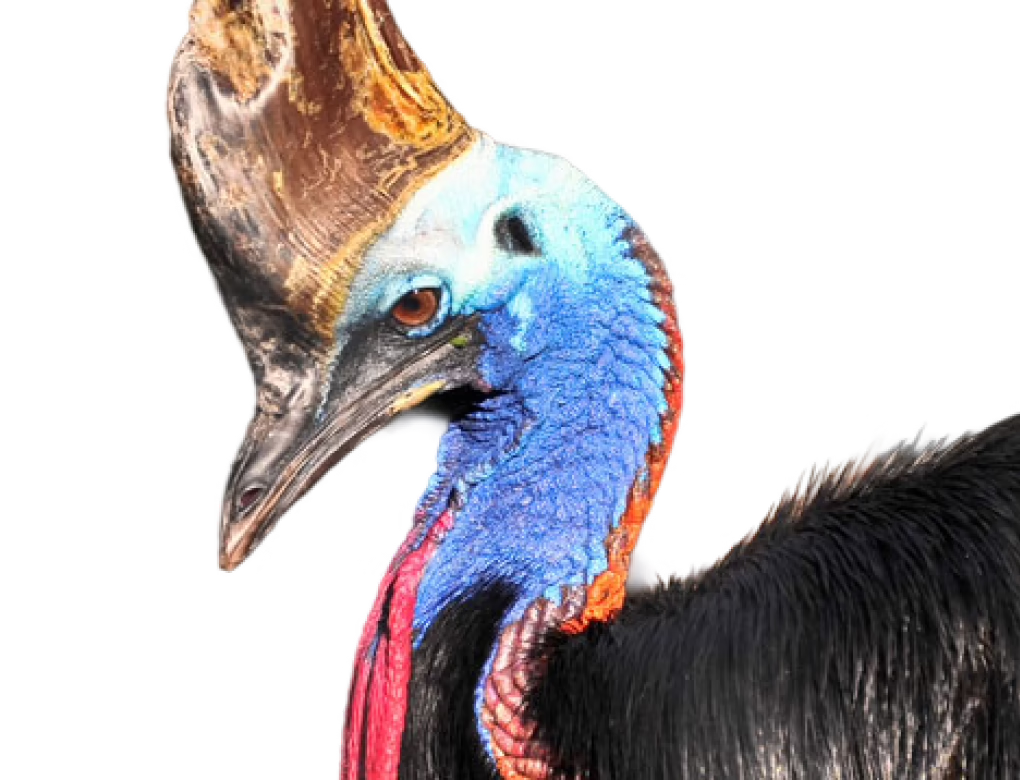
Cassowaries are massive birds that can measure up to six feet in height and weigh 100-150 pounds. The southern cassowary is the largest of the three species of cassowary. The feet have three toes with a stout claw, while the middle toe has a long dagger-like claw. They have long, powerful legs and can run up to 30 miles per hour through thick underbrush with the neck stretched forward and body horizontal. The black-colored plumage is extremely hard and coarse, protecting the body from thorns and sharp leaves. The head and neck are a brilliant blue and red. Female cassowaries are larger than males and generally brighter in color.
Chicks have brown and creamy-white stripes, eventually fading to brown after about six months. Juvenile coloration darkens as the birds mature, which takes around three years.
Cassowaries have a structure on the head resembling a helmet, called a casque. The purpose of the casque is not fully understood. The most common theory is that the animal uses it to force its way through dense vegetation, avoiding injury to its head. Observation of captive birds shows it being used as a shovel in search of food among leaf litter. Just like the wattles, brightly colored folds of skin on the head and neck, the casque may also be an indicator of social status and dominance, as it grows slowly throughout the bird’s life.
They are great jumpers; maneuverable in dense forest spaces, and surprisingly, excellent swimmers and divers.
Lifespan in the wild is 12-19 years in the wild, and around 40 years under human care.
Điều kiện sống
Cassowaries are found in the rain forest and savanna woodland areas of New Guinea and northeastern Australia.
Chế độ ăn uống
They eat a diet of fruit, insects, eggs, frogs, fungi and carrion.
Hành vi xã hội
They are solitary except in breeding season, and are very territorial. They are active in the morning and late afternoon, and occasionally during moonlit nights. Usually shy, a cassowary can become quite aggressive during breeding. This is especially true when accompanied by chicks, or cornered. To defend themselves they use their sharp clawed feet to kick predators.
These large birds produce a variety of sounds, ranging from booming low frequency territorial calls to the coughing call used by an adult male to maintain contact with chicks.
Cassowaries tend to breed when fruit is most abundant, usually from June to October. The male makes the nest, a shallow depression scooped in the ground and lined with grass and leaves, well camouflaged in the rainforest. Males only mate with a single female, but once 3-5 green eggs are laid, the female goes off to find another mate and usually lays two or three clutches during one breeding cycle. Like emu and rhea, the male remains with the eggs and cares for chicks after they hatch.
Eggs are incubated for about 60 days, and chicks are able to walk and feed themselves within a few hours. Male and chicks leave the nest after about two days, and stay together about nine months.
Tình trạng trong tự nhiên
Southern cassowaries are listed as Least Concern by the IUCN. In Australia, they are listed as Endangered under Australian Federal and Queensland State legislation, with fewer than 1,500 to 4,000 adult birds left in Far North Queensland. Habitat loss and hunting are major threats. Globally, there are more stable populations found in Papua New Guinea and Indonesia.
In New Guinea, feathers are used for ceremonial headdresses and the increase in price in native markets has intensified hunting pressure. In some parts of their range, cassowaries are hunted for bushmeat as well. Additionally, chicks suffer heavy predation by dogs and feral pigs; this predation may have a serious effect on cassowaries in Australia.
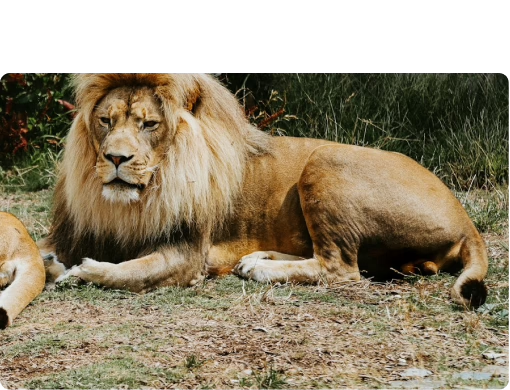
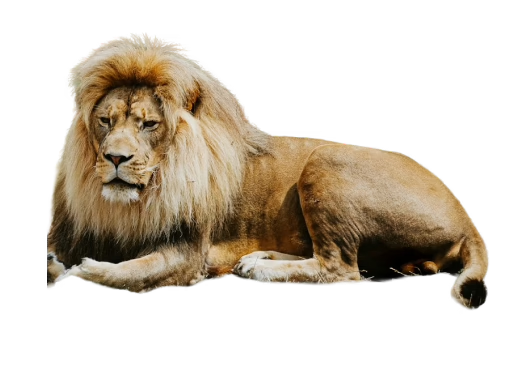
Con sư tử châu Phi
Dễ bị tổn thươngMột trong những loài động vật mang tính biểu tượng nhất trên Trái Đất, sư tử châu Phi là biểu tượng của sức mạnh, trí tuệ xã hội và vùng đất hoang dã của châu Phi.
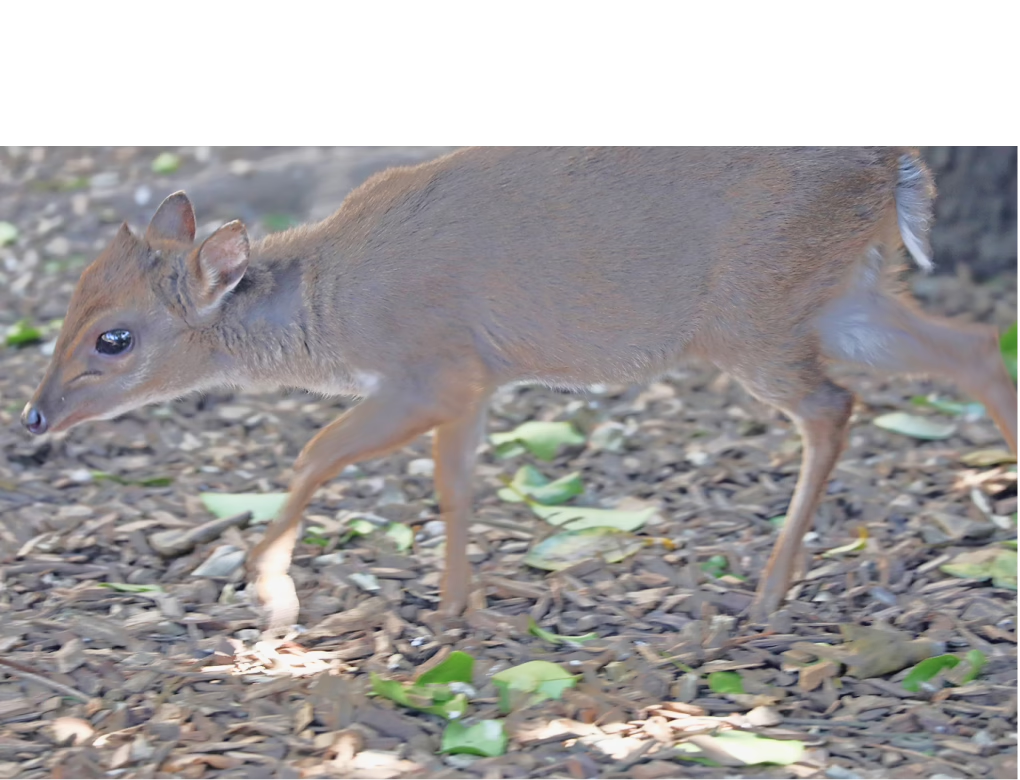
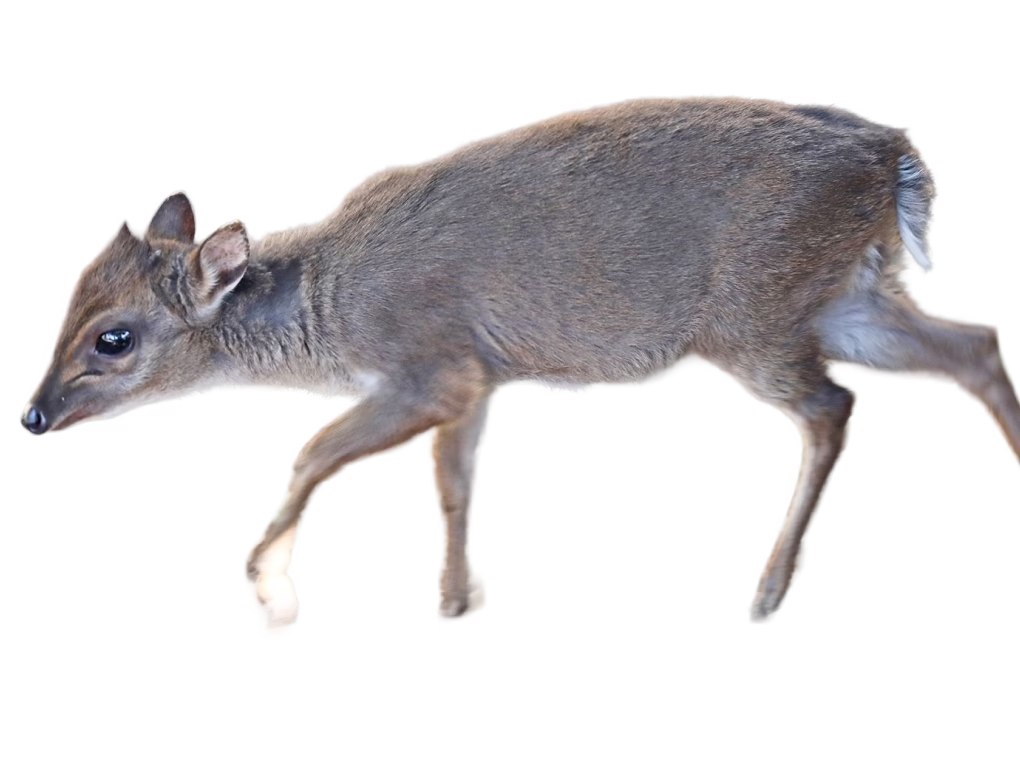
Blue duiker
Loại ít nguy cấpLà loài tê tê nhỏ nhất thế giới và là loài duiker nhỏ nhất, chúng đóng vai trò quan trọng trong hệ sinh thái rừng của chúng.
Cá sấu Aldabra
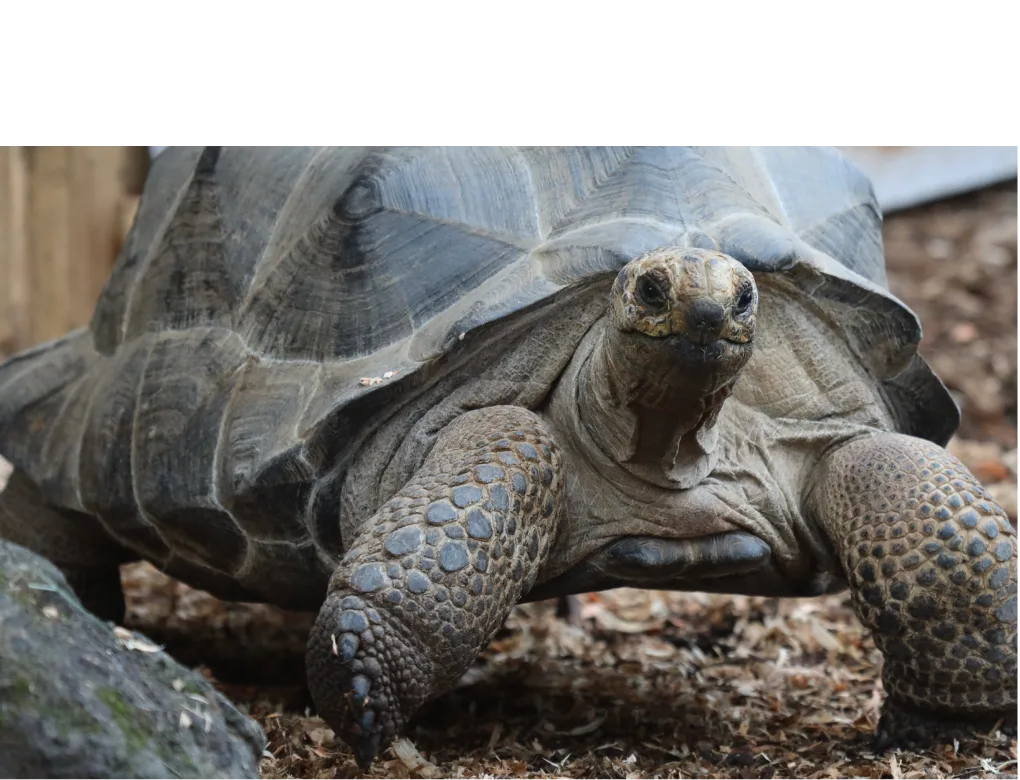
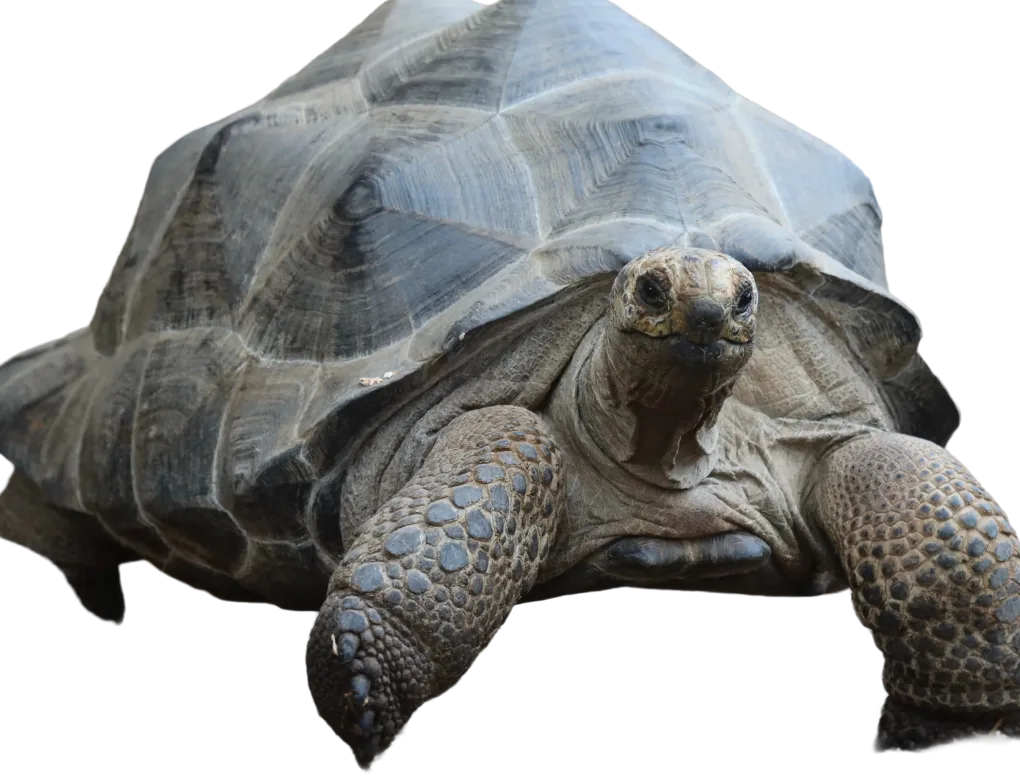
Dễ bị tổn thươngLà một trong những loài rùa đất lớn nhất và sống lâu nhất trên thế giới, một số loài được biết đến đã sống đến 170 năm!
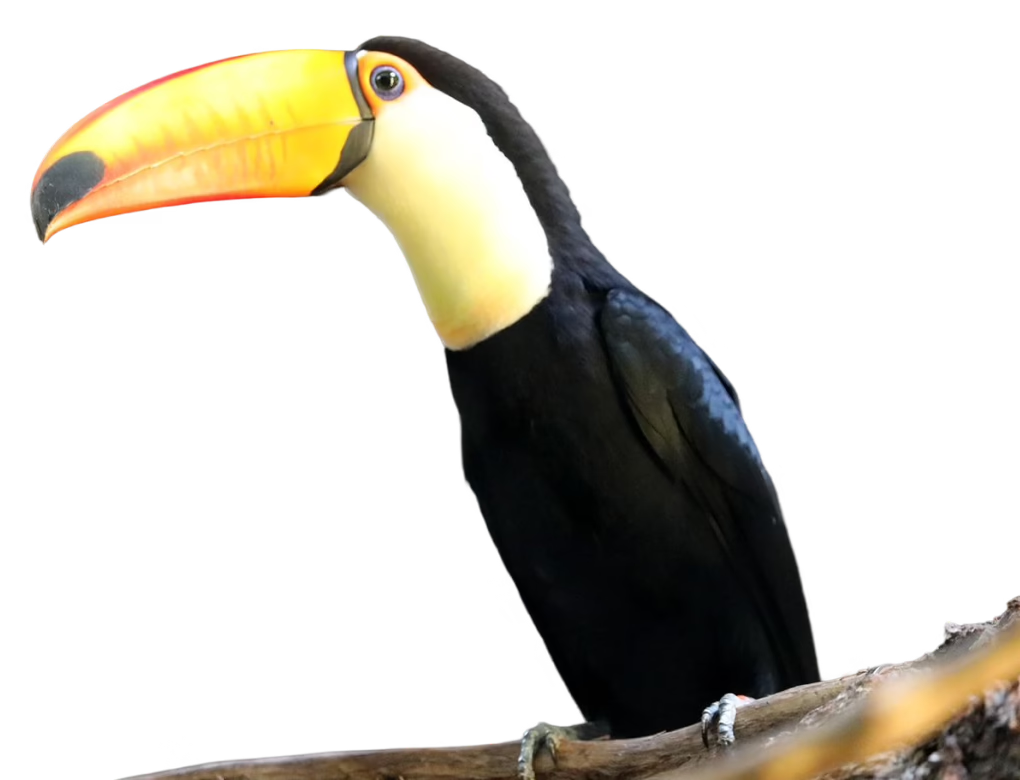
Con tico toucan
Loại ít nguy cấpĐược biết đến với những chiếc vảy lớn và đầy màu sắc cùng với lối sống vui tươi, đây là loài cò lớn nhất trong số các loài cò.