





Vườn và nghệ thuật
Our close proximity to the Pacific Ocean offers an exceptional mild climate, allowing many plant species from around the world to thrive. Here, flora and fauna go hand-in-hand, as our gardens reflect surrounding animal habitats.
Botanical gardens galore
Throughout the Zoo, you’ll find an array of gardens and plant life, from native California species, like the California poppy, to unique specimens from exotic locales. Even the trees are emblematic of San Francisco’s historic landscape of sand dunes and coastal shrublands.
Browse gardens
“Browse” comprises the branches and leaves consumed by many of our animals. Daily harvesting of browse for animals such as koalas, giraffes, rhinos and others ensures they receive the freshest and most delectable fare.
We can enrich the animals’ diets, stimulate their senses and replicate how they would eat i the wild with these natural materials from trees and shrubs such as eucalyptus, coprosma, acacia and bamboo.
Gail’s Fragrance Garden
Named after a beloved former Zoo horticulturist, board member and docent, this tranquil and immersive sensory and fragrance garden is a must-see for visitors. Opened on Earth Day in 2018, you will find California natives, like poppies, and European flowers such as crocus and forget-me-nots. A great photo spot lies under the entrance trellis and by the signature California poppy sculpture.
Greenie’s Conservation Garden
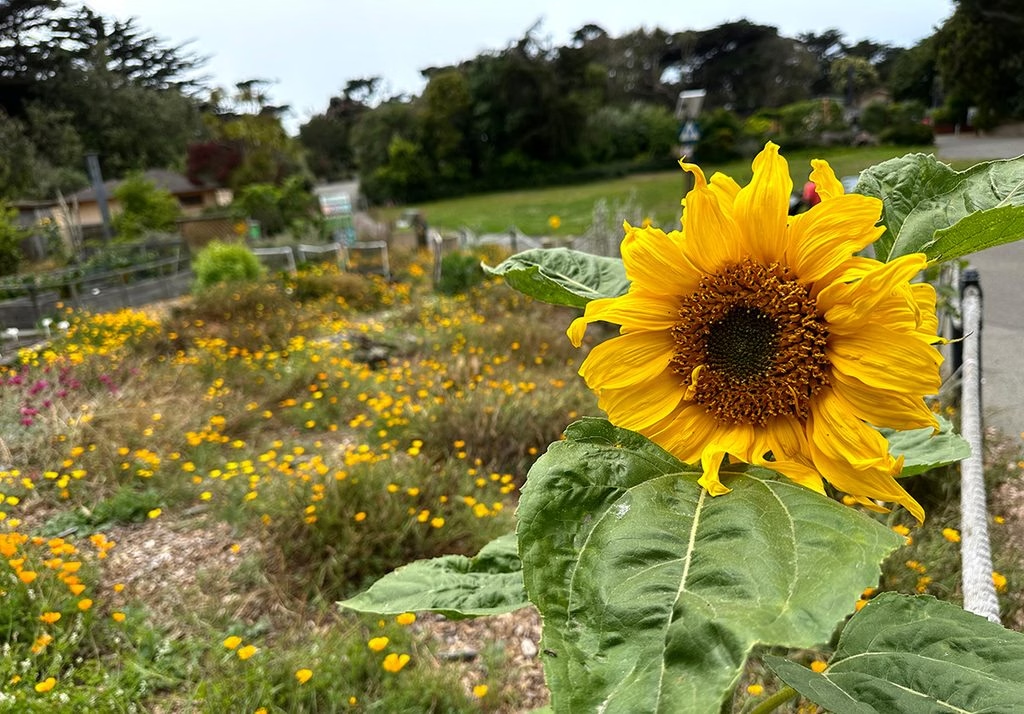
This quaint and eclectic garden opened on Earth Day in 2010, replacing a long-unused animal area and was created to showcase backyard conservation actions. Navigate the garden path to find planters made from discarded materials like old fencing and concrete garbage containers. Here, you’ll find drought tolerant, water-wise plants, butterfly and bee-friendly flowering plants, a solar-powered fountain made from used animal drinking troughs, and organic produce grown for our animals.
A delightful highlight is a true piece of San Francisco history — an authentic 1906 earthquake shack! Thousands of these small homes were built for citizens displaced by the world-famous earthquake, and today, only a few shacks survive.
regional delights
Native gardens
Many plants from other parts of the world do well in our mild climate.

California Species
Look for California poppies, yarrow, ceanothus, soapbloom and more at native gardens located at the Connie & Bob Lurie Education Center, Green's Conservation Corner and Gail's Fragrance Garden.
Plants of Africa
Striking examples include many protea species in a variety of shapes and colors around the Leanne B. Roberts African Savanna and Madagascar Center. Find the Cape Flats Erica, extinct in its native South Africa, African daisies and Guernsey lilies, and Malagasy plants like crown of thorns.

South American Plantlife
Find unique specimens that originated from Mexico, Central and South America in and around Puente al Sur and South American Tropical Rainforest & Aviary. These include the split leaf philodendron, Mexican orange and sun bromeliads, plus colorful dahlias, begonias and Peruvian lilies abound.

Plants of Australia
Species of eucalyptus can be found throughout the Zoo, and around Austalian WalkAbout. Find the pink melaleuca, a flower tolerant of ocean winds and sea spray, and the Tasmanian tree fern, a species older than dinosaurs.
Fresh is best
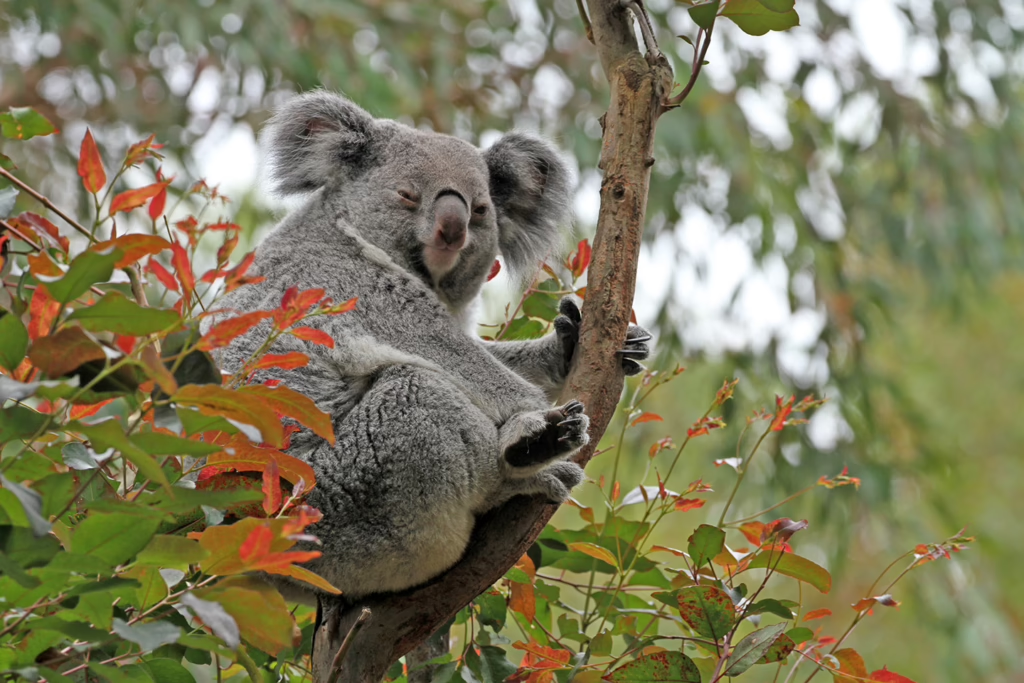
Our most significant browsers are the koalas. These finicky marsupials require 3-5 varieties of fresh eucalyptus each day, and meeting their needs requires daily cutting of 120-160 branches, each 4-5 feet long. Our on-site eucalyptus grove is just past Koala Crossing, on the way to the Australian WalkAbout where red ironbark, bangalay, yellow gum, and river gum thrive easily in our climate. The fallen leaves of these Australian natives inhibit other plants from growing underneat, so they grow as “monoculture,” without other species.
Although this small garden is harvested two or three times a year, it demonstrates the diverse diet of our koalas. Our horitculturists collect eucalyptus from throughout the Bay Area, including Golden Gate Park.
Not Your average garden variety
Specialty gardens
From whimsical gardens to prehistoric plantlife, and everything in between.

Fairy Gardens
It is said that if you plant a miniature garden for fairies that they bring good luck! You'll find fairy gardens along pathways, in Carousel Plaza and around Wildlife Theater. The enchanting gardens feature branches, stumps, and flowering plants with tiny, fairy-sized doors.

Dune Garden
The original land where the Zoo sits was originally sand dunes. Small shrubs and plants help anchor the dunes, preventing erosion and keeps the flowing sand in place. Near the Flynn Family Fountain, find dune tansy, coyote brush, coast irises and beach strawberry.

Prehistoric Garden
An ancient plant garden can be found surrounding the upper lake and adjacent to the South American Tropical Rainforest & Aviary. Mosses, gunnera, horsetails and ferns have survived since the time of the dinosaurs, an extraordinary feat.
Pocket Gardens
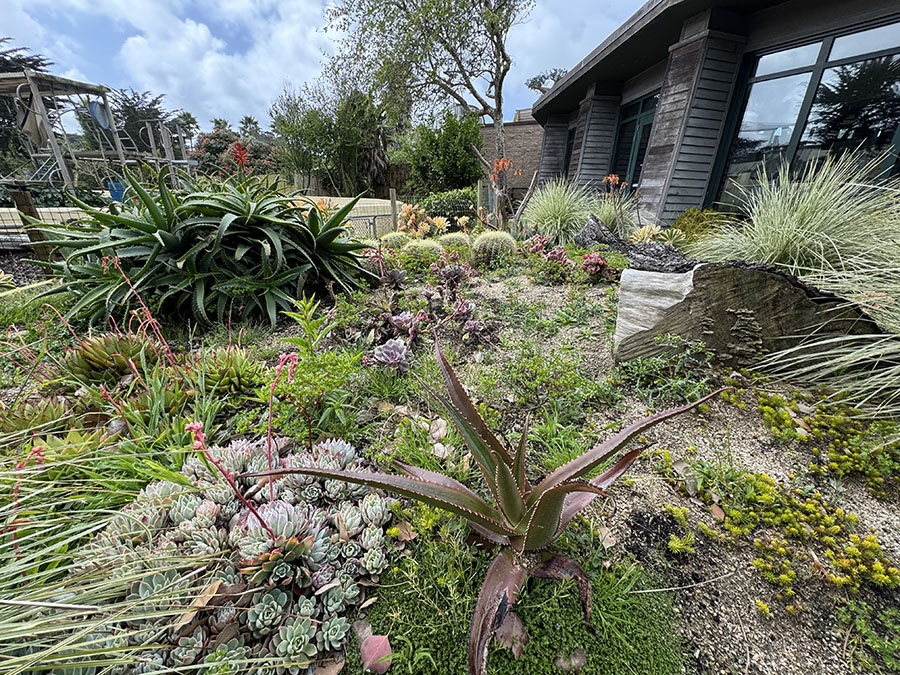
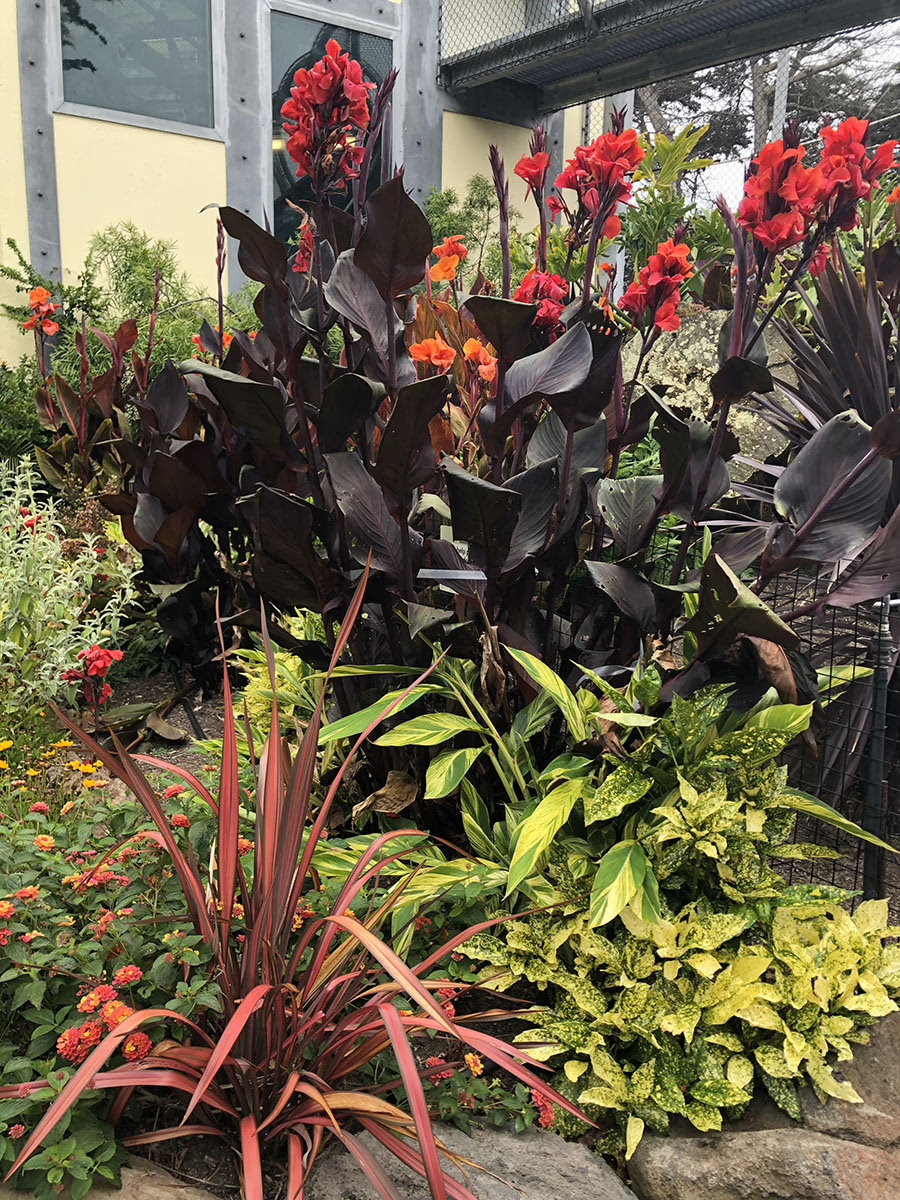
Located throughout the Zoo, these small "pocket" gardens are themed with a variety of plants, cactuses, succulents, tropical plants and flowers. Each garden has been designed to enchant and delight the onlooker.
Flowers, plants & more
Visitors can view hundreds of plant and tree species throughout the Zoo, which thrive in this coastal environment.
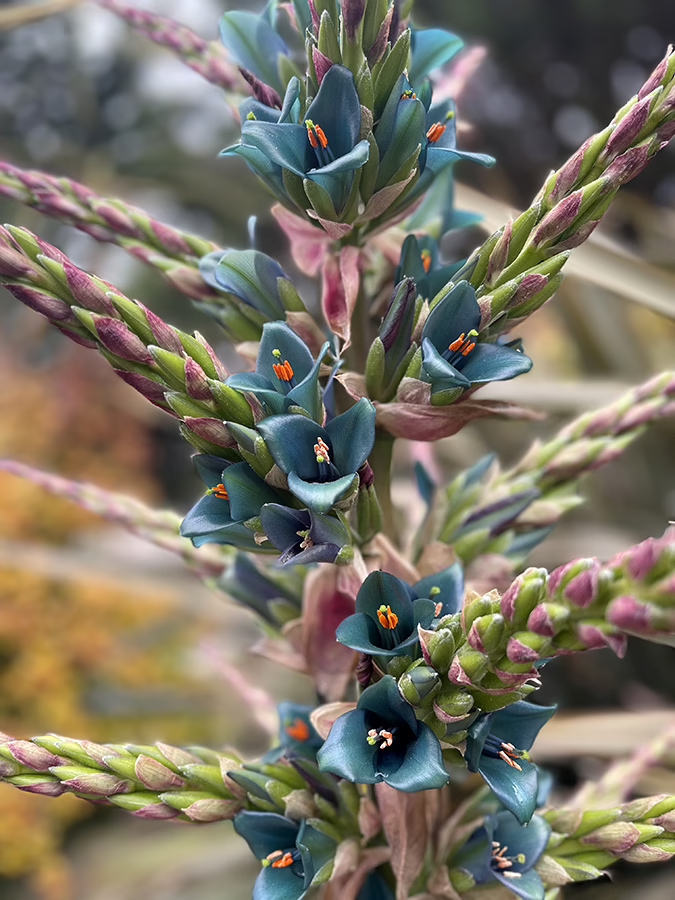
Puya
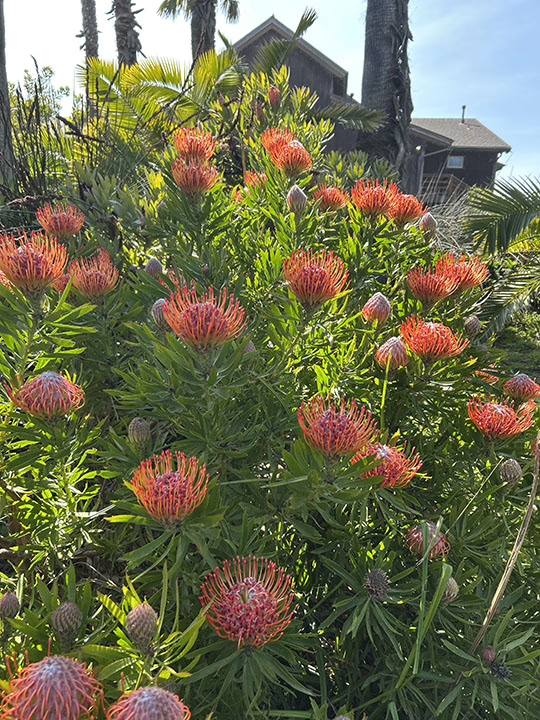
Protea
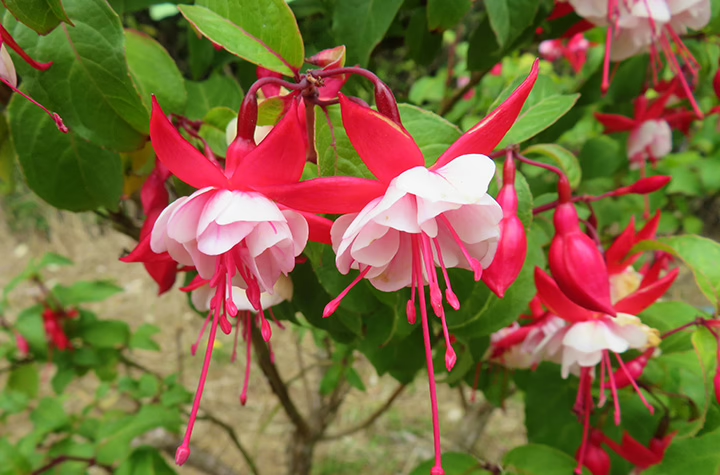
Fuschia
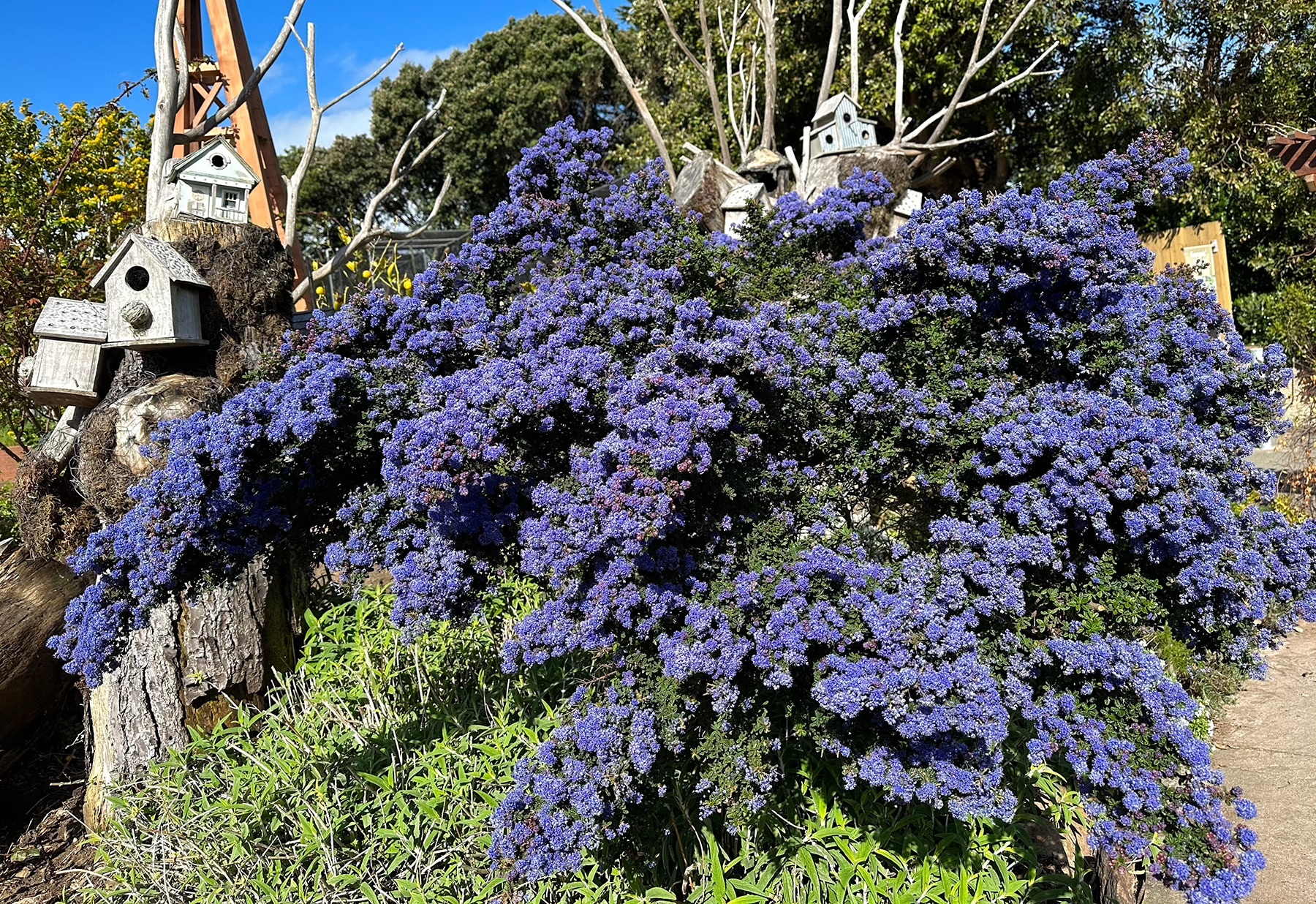
Gail’s Fragrance Garden
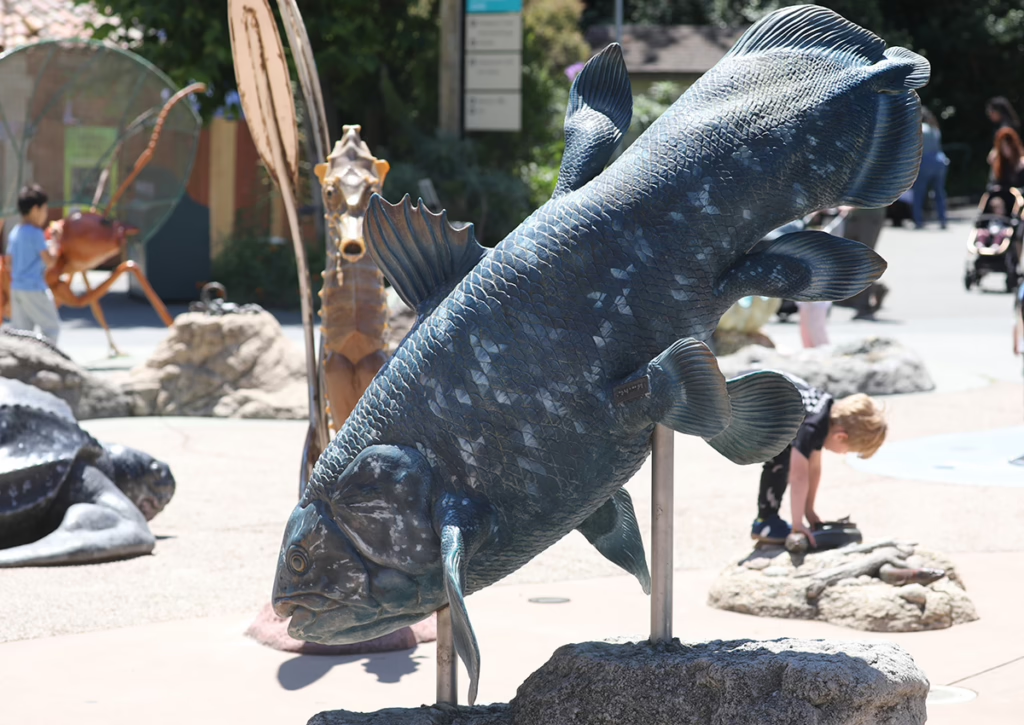
Art at the Zoo
From murals to sculptures to mosaics and more, art has always been a part of the Zoo’s landscape. In particular, animal-themed art adds the overall ambiance, and stimulates interactivity and learning opportunities. Here, kids can climb on life-sized animal sculptures and touch and feel a variety of scale models.
Nearly 100 sculptures and reliefs illustrate the amazing array of adaptations from some of the world’s most unique species. You will discover ecological threads that connect living things throughout planet Earth.
The Split Mound was built as part of The New Zoo, as a designated San Francisco Art Commission installation. Created by artist Jud Fine, it depicts an earthwork that is situated between two circular forms which serves as a visual and physical ink to emphasize the human qualities of the area. There are three separate micro-environments that echo material vocabularies used in the Zoo, with coastal, sub-tropical and semi-arid plantings. Elements within the Split Mound include a Zoetta Stone written in animal code, a stone map of “Pangea,” stainless steel reflective surfaces, viewing tubes, bronze frogs and porcelain photos of historic exploratory ships.
Both the artworks and the modern zoo, in continual states of development, reflect the ethic that has been evolving since “Pangea”; before politics, economies, policies and territoriality that characterize the modern age.
“Under the Canopy” is an immersive, multi-sensory, walk-through art installation that highlights the impact and urgency of climate change. The outdoor experience offers an immersive, artistic interpretation of a tropical rainforest designed to raise awareness of the devastating impact on ecosystems by the effects of climate change. This was conceived and produced by San Francisco artist, Henry Jackson, and invites guests to explore the four working tiers of a tropical rainforest and learn how human actions and climate change have ravaged once-pristine environments like the Amazon rainforest.
The experience uses sights and sounds to reflect the struggles of millions of animal and plant species that are adversely affected by climate change, and the actions of humans can make a life or death difference for organisms that inhabit one of the planet’s most biodiverse regions. Here, the four layers of the rainforest are highlighted: Forest Floor, Understory, Canopy and Emergent Layer, with an emphasis on the canopy, known for its concentrated and diverse activity. Several sculpted, large-scale Kapok-inspired trees are adorned with uniquely hand-crafted leaves interfaced with native plant life. As guests walk through the exhibit, they will encounter a symphony of composed sounds throughout, spotlighting vulnerable rainforest species, creating an immersive auditory experience that showcases the vibrant diversity of life that climate change threatens to diminish.
The journey concludes at the Emergent Layer, where a trail of cut trees marks the advancing presence of human development. The path ends with an unmistakable sight of a highway, a representation of progress intertwined with the destruction of the natural world.
Under the Canopy is designed to provoke thought and reflection and is intended to make us think. By guiding visitors through this transformative journey – where they can see, hear and feel the effects of climate change – we hope to inspire deeper understanding and action.