




在动物园里
Koret Animal Rescue and Conservation Center
令人惊叹的事实
The Mojave desert tortoise is California’s state reptile.
This species practices llithophagy – swallowing rocks to aid digestion.
物理特征
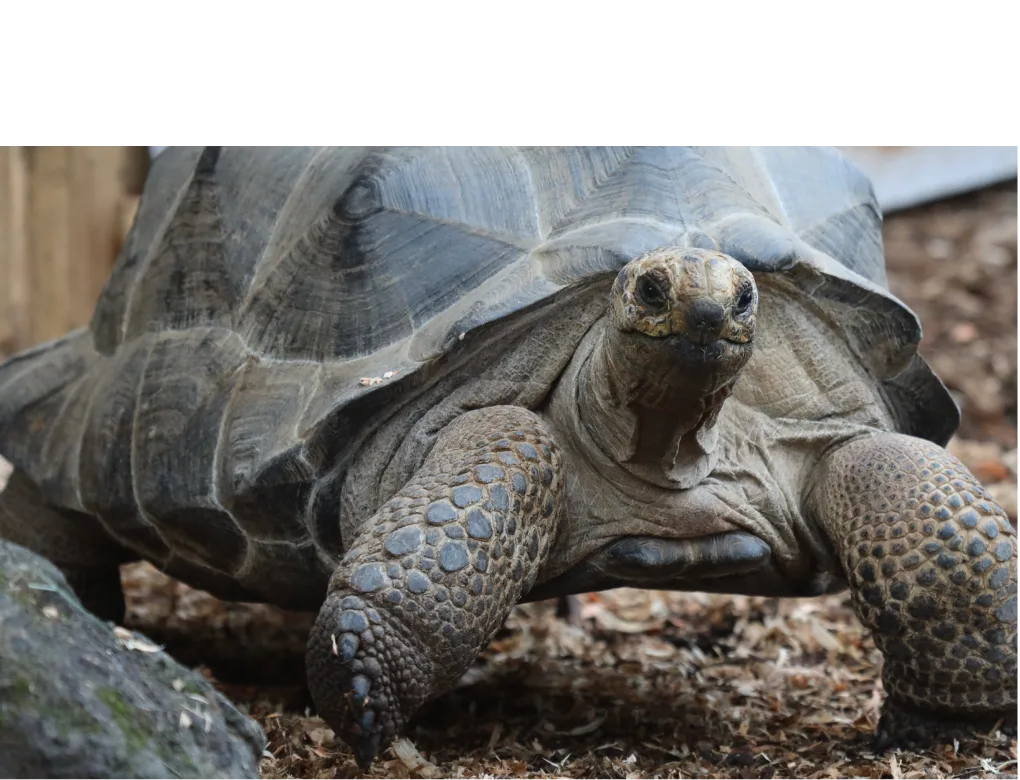
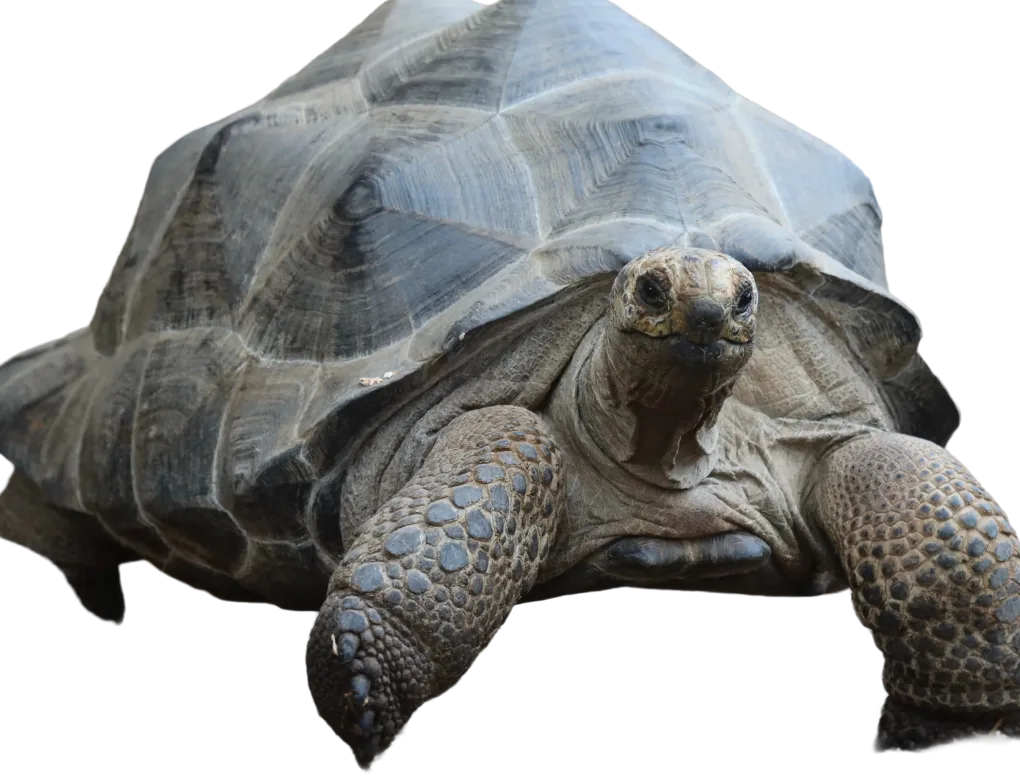
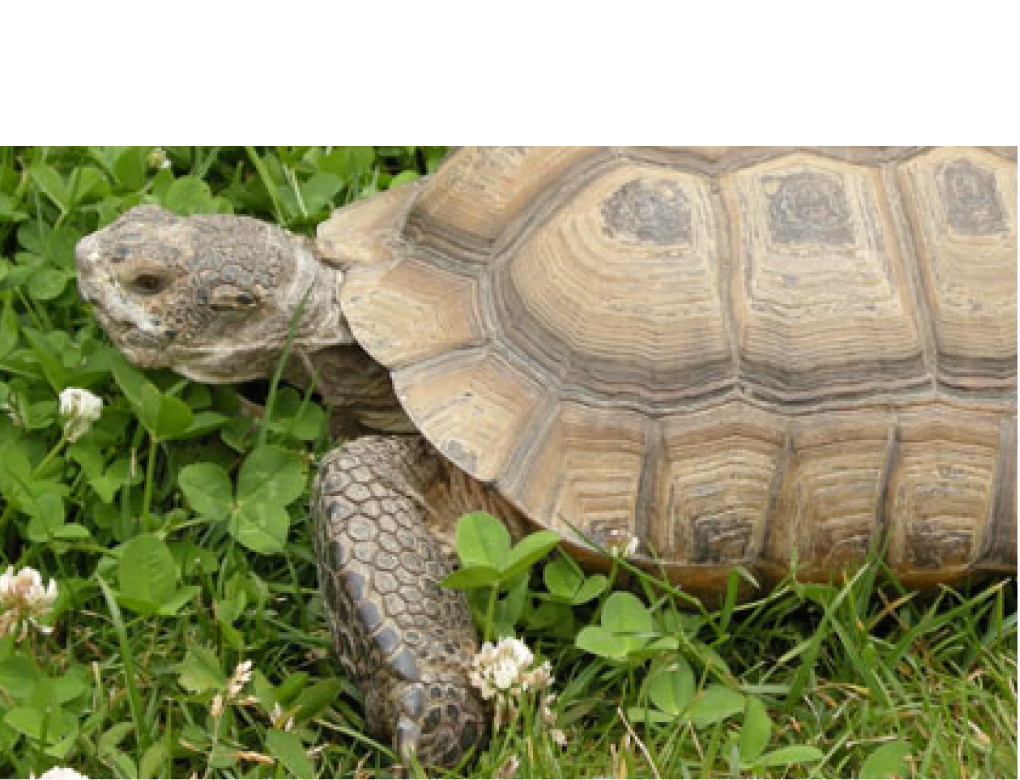
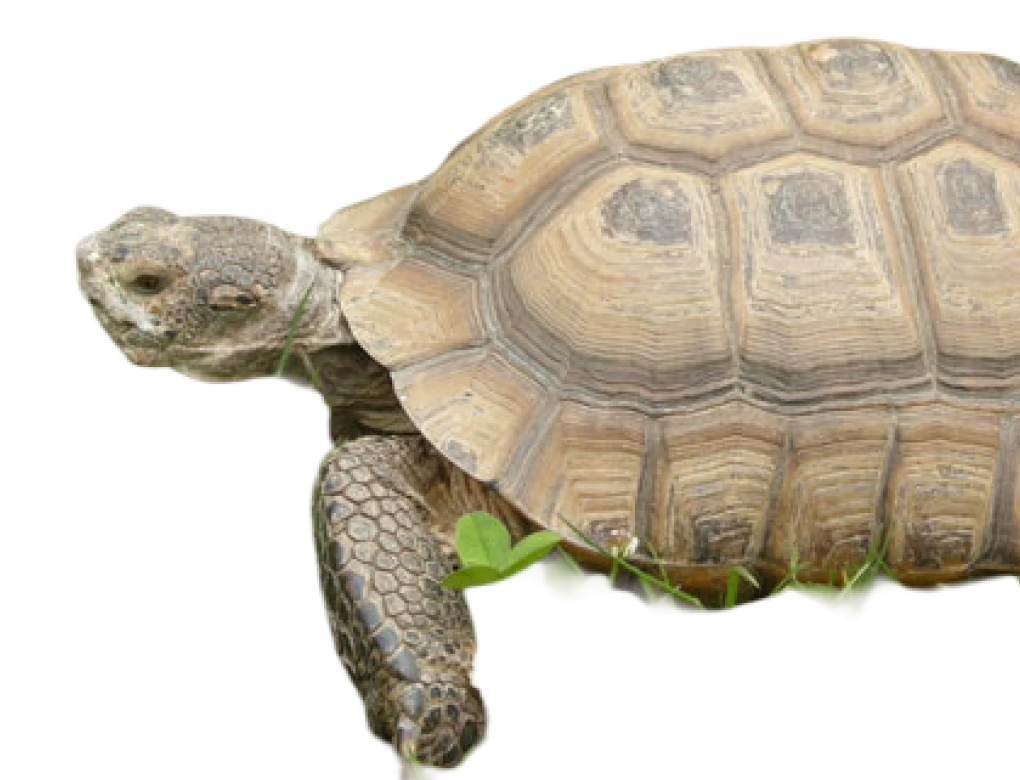
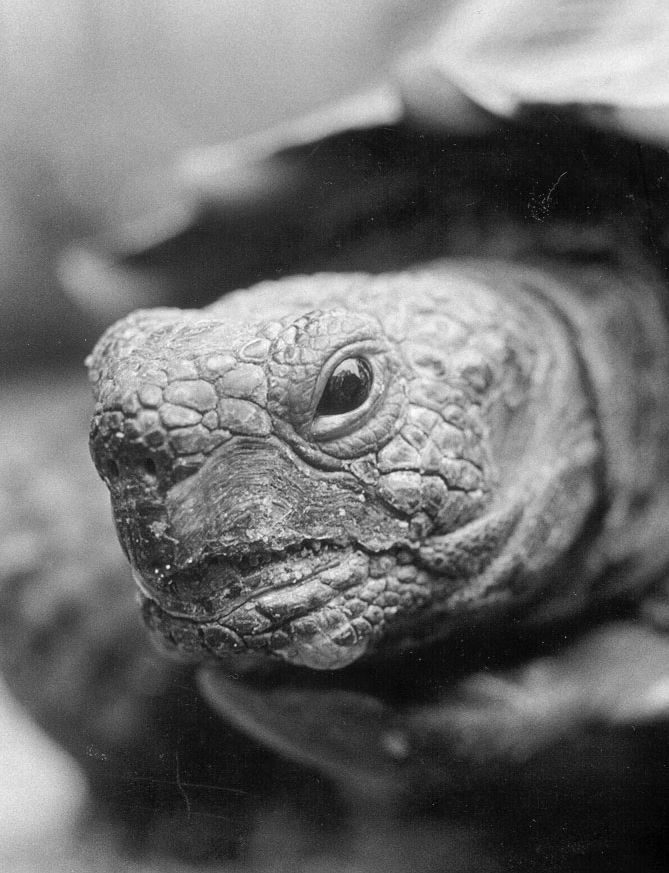
These tortoises weigh from 10 to 20 pounds with a carapace (upper shell) length of up to 15 inches. The shell is high domed with prominent growth lines on shields of both carapace and plastron (lower) sections. The top is brown or horn-colored; bottom is yellowed. The limbs are stocky; and when drawn in completely close the opening of the shell. The head is fairly large in proportion to the body. The tail is short, though longer in males. Foot claws are longer and sharper in adults. The gular (throat) shields are longer on the male, with a scent gland lump on each side of the lower jaw.
栖息地
Desert tortoises are found in the desert regions in the southwestern United States to northwestern Mexico. They are excellent burrowers and hibernate in communal burrows.
饮食
In the wild, these herbivores eat wild grass, flowers, cactus pads and fruit. At the Zoo, they are fed a variety of leafy greens and fruits and vegetables, as well as alfalfa hay.
社交行为
Desert tortoises engage in an elaborate courtship. The males have head bobbing and ramming matches. Males can have harems of 10 to 60 females. Females are able to store sperm for up to four years. In June, females lay 6 to 13 elongated eggs in a ground hole. After incubating for 3 to 4 months, two-inch hatchlings hatch out. Parents exhibit no parental care.
In the wild, their lifespan is estimated between 30 – 50 years, though many young hatchlings do not survive their first year. They often live 50 – 100 years under human care.
野生的状态
Desert tortoises are listed as threatened under the Endangered Species Act. In California, they are formally listed as endangered under the California Endangered Species Act due to rapid population collapse. Under the IUCN, it is listed as vulnerable.
In the wild, many tortoises empty their storage and anal bladder when threatened or picked up and dehydrate before reaching the next watering hole. Habitat destruction, pet trade, automobiles, and respiratory disease have reduced their numbers greatly. The respiratory disease was introduced into wild populations when people released infected desert tortoises they had as pets in an attempt to help re-establish the population. Unfortunately, it did more damage than good.
其他
Our desert tortoises are part of the collection of educational ambassador animals that are housed at the Koret Animal Rescue & Conservation Center (ARC).
Mojave is our oldest resident at the Zoo, who turned 79 in 2026.
The tortoises can be seen by the public on the Nature Trail in the Exploration Zone between Memorial Day and Labor Day.
你知道吗?