





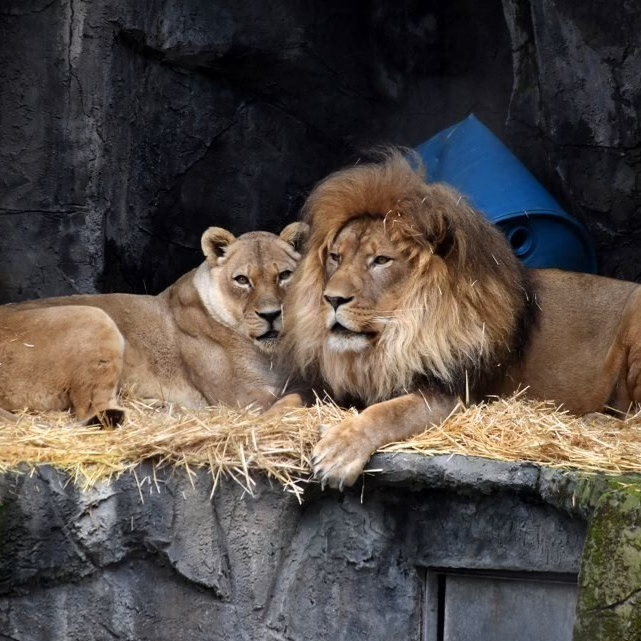
Last two lions to transfer to another zoo to allow renovation of habitat
Following extensive review and consideration, San Francisco Zoo & Gardens has made the difficult decision to transfer its remaining African lions to another accredited zoo to better support their long-term welfare needs as they age.
“This is an extremely difficult decision, as our lions are beloved by their caretakers, our staff and the public.” said Cassandra Costello, CEO & Executive Director. “Over the past year or more, we have been seeking an alternative solution to keep our lions here, especially after the Lion House was earmarked for the future housing of Giant pandas. And though there has not yet been confirmation of pandas coming here, we have now decided to re-home our lions, as the habitat as it currently stands is not adequate for our aging pair.”
The current habitat is the 1940’s era WPA-constructed Lion House, which has gone through some upgrading over the years, most recently in 2023-2024 with the expansion from four outdoor grottoes to two. The habitat is home to Marvella, an 11-year-old female lion, and Jasiri, a 10-year-old male. Marvella came to the Zoo in 2023 from the Lee Richardson Zoo in Kansas, while Jasiri was born at the Zoo in 2015. At just one-year-old, Jasiri was diagnosed with a congenital spinal condition that affected his strength and coordination. Because corrective surgery carried significant risks, he instead has received on-going physical therapy and dedicated care from the Zoo’s veterinary and animal care teams throughout his life.
With African lions under human care typically living 15-20 years, both Marvella and Jasiri are entering their senior years. “
“Both lions remain agile and mobile, but as they age, they are starting to experience some mobility challenges, “said Dr. Nick Dannemiller, DVM, Dipl. ACSM, one of the Zoo’s clinical veterinarians. “Even in old age, we want animals to have choice, comfort, and control over their lives, and the current enclosure presents physical challenge, particularly for Jasiri, given his congenital spinal condition.”
Whether or not Giant pandas arrive, the outdoor exhibit requires extensive renovation to make it more easily navigated by the aging pair of lions. Given that the exhibit is 86-years-old, much of the original grotto structure remains intact, although the original plateaus were replaced approximately 25 years ago with natural substrate and grass.
“This exhibit has long been on a short-list of updating, and while some cosmetic work has been done, the reality is that the original exhibit was built for a different era. As our lions get older, they have different, individual needs, specifically, accessibility to flat surfaces,” said Tina Hunter Burnam, Curator of Carnivores. “There is also concern that, should an animal have difficulty climbing out of the lower moat, animal and veterinary staff have limited ways of accessing the cat.”
The Zoo moved its last Sumatran tigers to another zoo per a breeding recommendation through the Association of Zoos and Aquariums (AZA). At this time, the lions represent the largest big cat at the Zoo.
“We have worked extensively to identify another area of the Zoo to place them,” said Eric Krussman, Executive Vice President of Animal Care. “It is not feasible to build a new habitat for lions at this time, and other existing areas cannot adequately house big cats safely and securely.”
Timing has not been determined as the Zoo works with the AZA’s Species Survival Plan for African Lions to find an accredited zoo to take both of them together as a bonded pair.