



By Sophie Chorich, Non-Living Collections Intern
As a curtain of fog drifts in from the ocean on a characteristically gloomy summer day in the Outer Sunset neighborhood, San Francisco Zoo’s Non-Living Collections Team pours a gallon bucket of water into a garden planter outside the Connie and Bob Lurie Education Center.
“We have to empty the dehumidifiers every couple of days when it’s so humid” commented Julian Birnbach, Natural History Collections Specialist. In his 10 years of service at the zoo, Julian worked his way up from being a Nature Trail and Junior Zoologist Volunteer, then ARC intern before earning his Masters’ Degree in Museum Studies at SF State. In 2025 he traded animal care duties for archive management when he was awarded a grant from the California Institute for Biodiversity to rescue the Zoo’s collection of natural history specimens (“BioFacts” to those in the know) and reference library from improper storage.
This grant supplied the Zoo with a budget for archival materials to conserve the collections and established two temporary Collections Specialist roles to manage the process of re-housing and documenting some 2,000 BioFacts, 20,000 archive items, and 1,925 books. “Our goal is to organize these historical and scientific resources into a system that can make them available to the public,” said Sophie Chorich, the second Collection Specialist managing the archive.
“Julian’s knowledge of zoo operations and the history of the field is unmatched,” she continued. “Though I‘ve always admired animals, I came into this role with more of a background in local history and cultural interests so I was curious about working with the Zoo archives to learn about the history of wildlife stewardship at this particular Zoo that’s nearing 100 years old.”
Julian and Sophie’s research has uncovered unexpected Zoo artifacts like guestbooks from the launch of the insect zoo in the 1980s, a birthday party brochure from the 1960s found in a loft at the Children’s zoo family farm, thousands of photos, videos, and documents from the last century all catalogued in a customized digital asset management system.
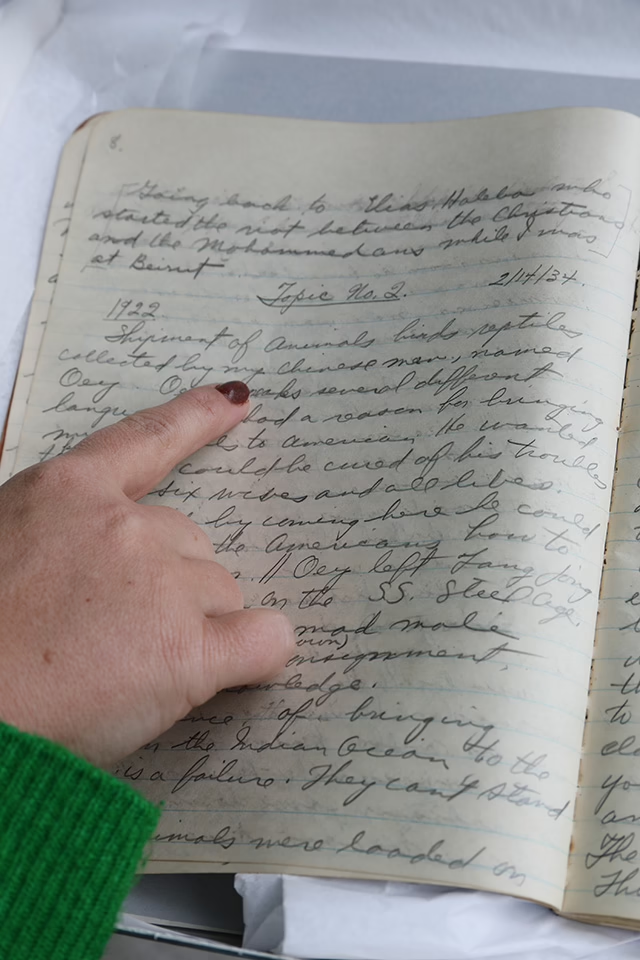
“The most interesting artifact I’ve come across in this project,” said Sophie, “Is the Bistany Journal.”
George Bistany was appointed the first Director of the San Francisco Zoo by founder Herbert Fleishacker. Bistany immigrated from Egypt to New York as a child, maturing into an adventure-seeking world traveler and wild animal dealer. He was initially approached
by Fleishacker in 1929 to diversify the zoo’s collection of animals which consisted of primarily “hay-burning” hoofstock. His expertise in sourcing and keeping “exotic” animals landed him a permanent job in San Francisco where he personally attended to the living collection and trained zoo staff on caring for beasts adjusting to captivity. In his tenure, Bistany worked within a mostly unregulated international network of animal trade to deliver pachyderms, apes, carnivores, birds, and reptiles to the zoo before he died of rumored “heartbreak” following the passing of one of his favorite zoo primates with whom he developed a remarkably close keeper-animal relationship.
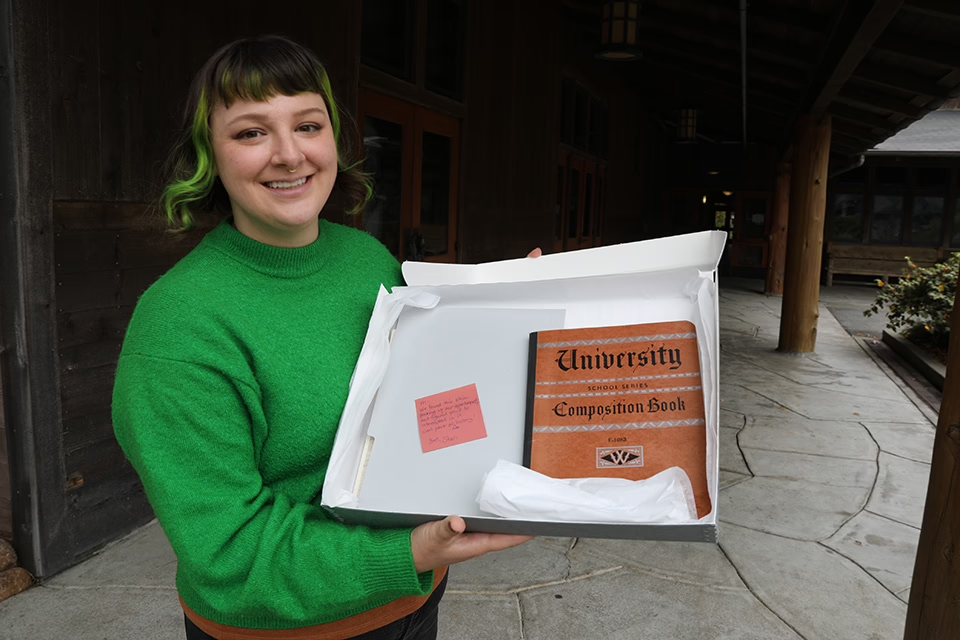
“This item was initially a total mystery to us. As we began deciphering the sometimes less-than-tidy historical handwriting, we weren’t sure who it belonged to,” said Sophie. The diary was delivered to the Zoo Library offices by an employee who had been storing it in their office for years, unsure where it truly belonged. The only information about its provenance was a sticky note from a mysterious “Shari” (last name not recorded) who had found the journal in her apartment and donated it to the Zoo. How it came to be in Shari’s hands is a puzzle still unsolved- but the memoirs within gradually revealed hints of the writer’s identity.
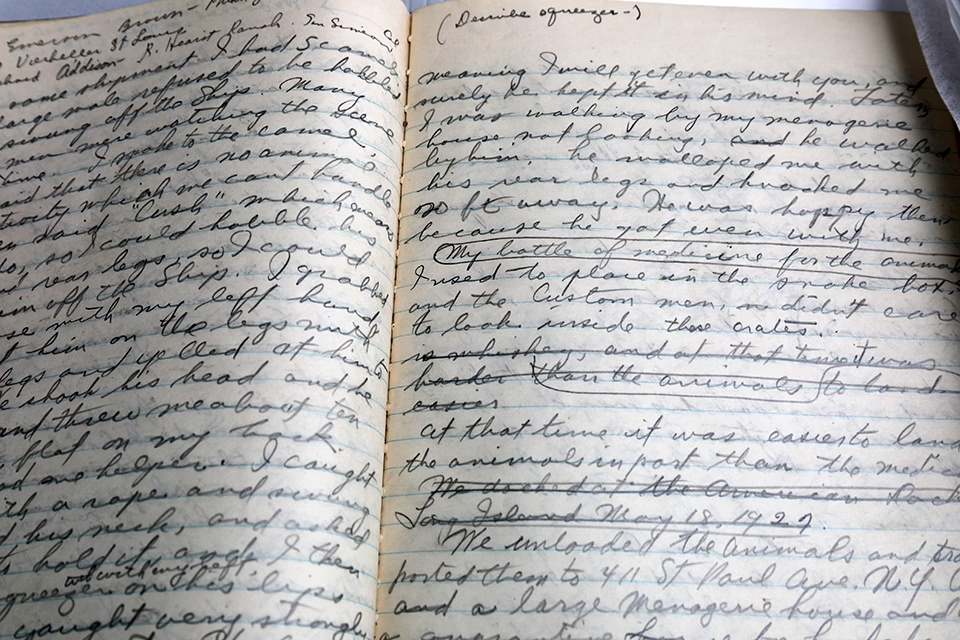
“Though the entries are dated as being written in the 1930s, the stories themselves begin in Egypt in the 1910s,” said Sophie. “there’s a lot of discussion of the dangers of navigating colonially occupied cities at night, dramatic alley-way gunfire, things like that before the narrator moves on to memories of New York City. It took a few dozen pages before the he quoted an associate calling him ‘George’ then quoted himself saying “That’s me, George Bistany!” You can’t get much clearer attribution than that.”
In further pages, tales of Bistany arranging elephants to be lifted off steamships by crane, subduing a lion that escaped an attraction at the Canadian Expo, and visiting the Director of the Victoria Gardens Zoo in Mumbai. The memoir has sparked innumerable research side-quests about the locations and people that Bistany documented. “I want to keep pulling the threads of Bistany’s story,” said Sophie. “Though the details of his adventures contain approaches to animal-handling and some language choices that we’re glad to leave in the past, it’s clear that Bistany viewed the animals he built a career around with appreciation and respect.”
A research plan is being developed to expand this topic from the Zoo Archives into a bigger project. Stay tuned to find out what happens next.