





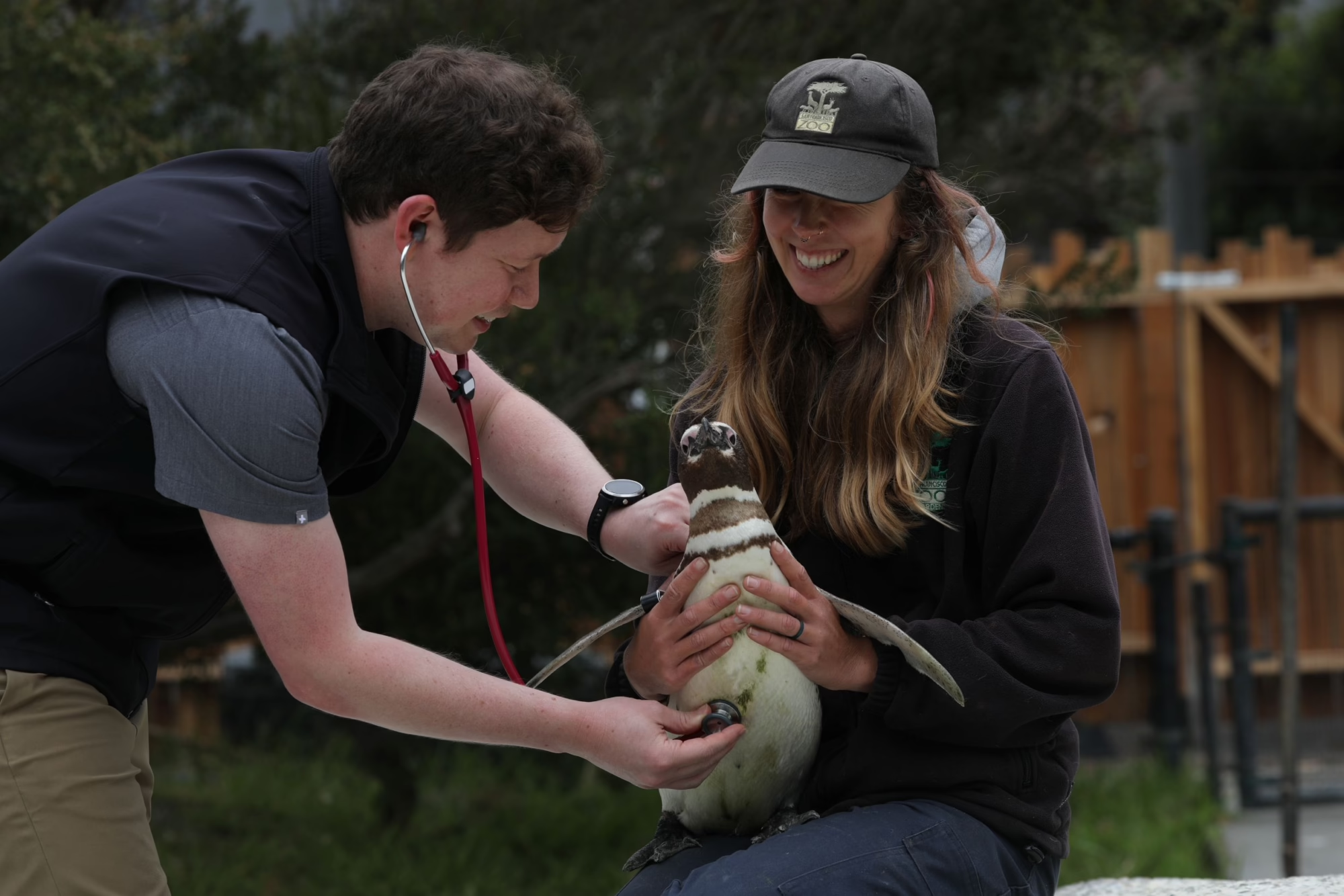
San Francisco Zoo & Gardens and San Francisco Animal Medical Center (SFAMC) have partnered to provide Sophia, a 28-year-old female Magellanic penguin, recently diagnosed with an aggressive melanoma, with an innovative vaccine treatment.
“Cancer is unfortunately common across many animal species, but one of the most rewarding aspects of my job is applying the latest advances in veterinary medicine to help animals like Sophia,” said Dr. Nick Dannemiller, SF Zoo veterinarian. “Working closely with other veterinary specialists allows us to combine expertise and develop the best possible care plans for our patients.”
Born at the Zoo in 1998, Sophia is one of the oldest female Magellanic penguins in the Zoo’s colony of 50. Earlier this year, penguin keepers became concerned after Sophia began passing bloody urates and feces. A veterinary exam identified a cloacal mass, which was surgically removed in February 2026. Subsequent pathology results confirmed the mass was melanoma, a cancer that can affect humans and many animal species, including penguins.
To determine whether the cancer had spread, Sophia underwent a computed tomography (CT) scan in March 2026. The scan revealed no evidence of metastatic disease, an encouraging finding that prompted the Zoo’s veterinary team to pursue additional therapies aimed at targeting any remaining cancer cells and reducing the risk of recurrence.
As part of that effort, Sophia is now receiving the ONCEPT® Canine Melanoma Vaccine, a DNA-based immunotherapy originally FDA-approved for dogs with oral melanoma. The vaccine works by stimulating the immune system to recognize and attack melanoma cells. While the treatment has been used in canine patients for years, its application in zoological medicine remains relatively uncommon, making Sophia’s case a unique example of innovative cancer care for non-domestic animals.
The decision to pursue immunotherapy was made collaboratively by the Zoo’s veterinary team and oncology specialists at SFAMC. The team was inspired in part by a 2022 published case report describing the use of the ONCEPT® Canine Melanoma Vaccine in an African penguin at the Mystic Aquarium in Connecticut, highlighting the potential of this therapy in non-canine species.
“San Francisco Animal Medical Center is pleased to collaborate with the San Francisco Zoo in the care of Sophia, a Magellanic penguin diagnosed with cloacal melanoma,” said Dr. Aarti Sabhlok, DVM, DACVIM (Oncology). “Dr. Dillon Didehvar, DVM, DACVIM (Oncology) and I, provided oncologic consultation and administered the ONCEPT melanoma vaccine (Merck Animal Health). While experimental in avian patients, ONCEPT carries full USDA approval for canine oral melanoma and its application here is grounded in sound immunologic principles that support potential cross-species efficacy.”
Sophia continues to be closely monitored by her animal care and veterinary teams and has maintained her normal daily activities, including leisurely swims and hanging out with her lifelong partner, Melvin, while undergoing treatment.
For both organizations, Sophia’s treatment highlights the growing role of advanced diagnostics, specialty medicine, and immunotherapy in modern zoos & aquariums. By combining expertise in avian medicine, surgery, diagnostic imaging, and oncology, the team was able to offer a treatment approach rarely used in penguins.
“Cases like Sophia’s represent exactly the kind of collaboration that pushes veterinary medicine forward. The willingness of the Zoo’s veterinary team to seek specialist partnership — and to share supporting literature that informed our approach — reflects a shared commitment to giving every patient the most thoughtful, evidence-based care possible, regardless of species,” said Dr. Sabhlok. “Comparative oncology advances precisely through these moments: when clinicians across institutions bring their expertise together in the interest of a single patient. We are honored to be part of Sophia’s care and remain deeply invested in her outcome and in what her case may teach us about the future of immunotherapy in non-traditional species.”
While melanoma remains uncommon in penguins, Sophia’s case demonstrates how innovative partnerships can expand treatment options for animals facing complex medical conditions. SF Zoo and SFAMC hope the knowledge gained through her care will contribute to a broader understanding of melanoma treatment in non-traditional species.
Photo credit: Yalonda M. James/S.F. Chronicle