





Scientific research
Different aspects of the study of animals allows us to ensure they thrive under human care. Research studies also benefit the global community.
Why conduct scientific research in a zoo?
San Francisco Zoo has long conducted scientific research throughout its history, often working with outside researchers to better understand behavioral aspects of animals under human care, with results that could be applied to species’ wild counterparts.
Today, our team of scientific and behavorial researchers monitor animal behavior on a daily basis, analyzing data that helps understand how environmental factors, such as visitor interaction and presence, may influence behavior. They also track how certain enrichment devices and tools work to stimulate them physically and mentally. Findings that offer breakthrough discoveries are published in scientific publications and shared with the broader zoological community.
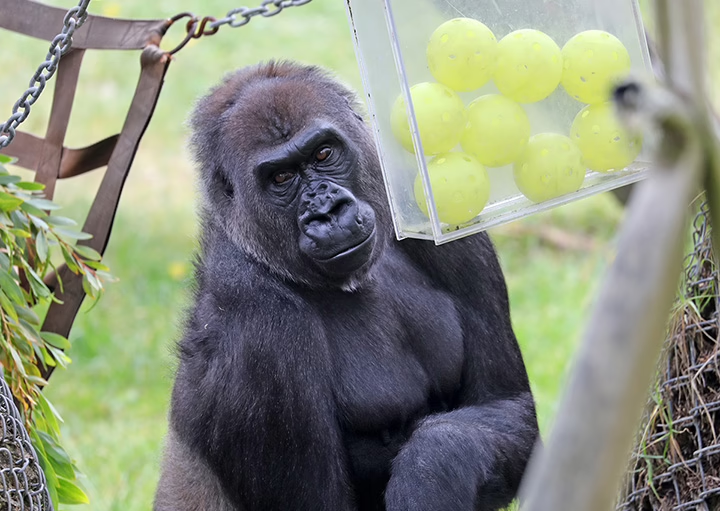
Studying enrichment
Animals receive a variety of enrichment items or devices, special treats, or other stimulating presentation, on a daily basis. This could come in the form of sensory, feeding strategies, cognitive enrichment, environmental, or social. While guests see animals engaging with the enrichment, including ice for the wolverines to stimulate play, or puzzle devices for primates, researchers observe how the animals behave, as they document and evaluate the animals’ engagement.
Enrichment provides animals with species and individual appropriate challenges, opportunities and stimuli, with the goals of helping to increase natural behaviors, such as foraging, tool use, climbing, wallowing, etc. Other goals include increasing the use of their habitat space use, and decreasing any abnormal behavior.
Scientific Programs
We encourage and support students, researchers, universities, other zoos, conservation or community organizations, and federal or agencies that wish to conduct scientifically sound research here, as we serve as an important resource for both academic study and field opportunities.
- Contribute to the conservation and survival of threatened and endangered species.
- Contribute to the improvement of husbandry or veterinary procedures for the Zoo’s plant or animal species.
- Contribute to our understanding of the natural history, behavior, biology, physiology, or other aspects of species in our care or other species of interest to the Zoo.
For information and the policy guide, contact education@sfzoo.org.