




Habitats & exhibits
Animal habitats are designed to meet the needs of each species.
Where they live
San Francisco Zoo & Gardens sits on 100-acres in the southwest corner of the City. Its proximity to the Pacific Ocean makes it an ideal spot for many animal species, as our mild climate remains quite comfortable year round.
Accommodating needs
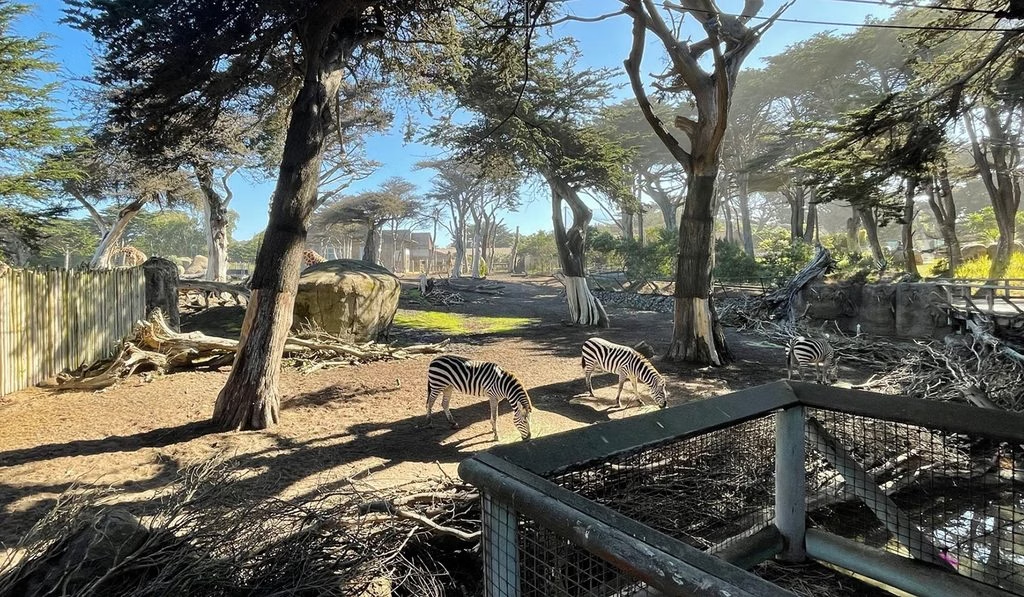
For animals that are indigenous to warm weather or tropical climates, we provide heated or climate-controlled spacies, particularly for some birds and reptiles. Even our biggest mammals have access to indoor, heated night quarters, while most animals have choice on whether they wish to remain indoors or outdoors.
On the rare occasion when temperatures rise, you can often see animals, such as our Greater one-horned rhinoceros or grizzly bears, soaking it up in their respective pools!
Heritage areas
Over time, we have worked to repurpose and update many of the original landmark buildings such as the Pachyderm Building, outdoor grottoes and aviary, replacing concrete from 1940 to natural substrate and climbing structures. We also provide fresh browse, and other species-specific enrichment to keep animals active and stimulated.
Mixed-species habitats
By mixing different species together in living spaces, we can demonstrate the dynamics between species, as you would see in the wild. Here, we allow animals to co-exist with one another, providing separate indoor facilities that allow species (or genders) to be separated at night. There are also multi-species areas, however, these habitats house single species under an umbrella name.
habitat enrichment
Zoogeographic regions
Grouping animals by their native region allows us to replicate specific ecosystems, placing plants and animals where they are naturally found together, and promoting social behavior between species.

The Americas
Mixed species habitats include Puente al Sur (Bridge to the South), featuring Giant anteater and Baird's tapir; South American Tropical Rainforest & Aviary is an original WPA structure with birds, reptiles, amphibians and a two-toed sloth. Habitats for North American species include the naturalistic Grizzly Gulch and Wolf Canyon and housing for rescued black bears.

Australia
As one of six zoos in the country with koalas, Koala Crossing, fashioned after an Australian outback station, remains popular. Australian WalkAbout is a 2.2 acre multi-species habitat featuring a dry river bed and rocky slopes, while the cassowary area hosts these remarkable flightless birds.

Africa
The 3-acre Leanne B. Roberts African Savanna was designed as one free-roaming envrionment for multi-species and multiple observation areas, including an African Aviary. The Lipman Family Lemur Forest is the largest and most diversified naturalistic habitat for lemurs in the country, while Great Ape Passage and the Jones Family Gorilla Preseve are homes to critically endangered Great apes.

Asia
While there are currently multiple Asian zones throughout the Zoo, including the Red Panda Treehouse in the Exploration Zone, Bornean orangutans, Bactrian camel and Przewalski's horse, near the upper lake, and Francois' langurs by the fragrance garden. future plans may include a more cohesive zoogeographic area.
Interpretive centers throughout the Zoo
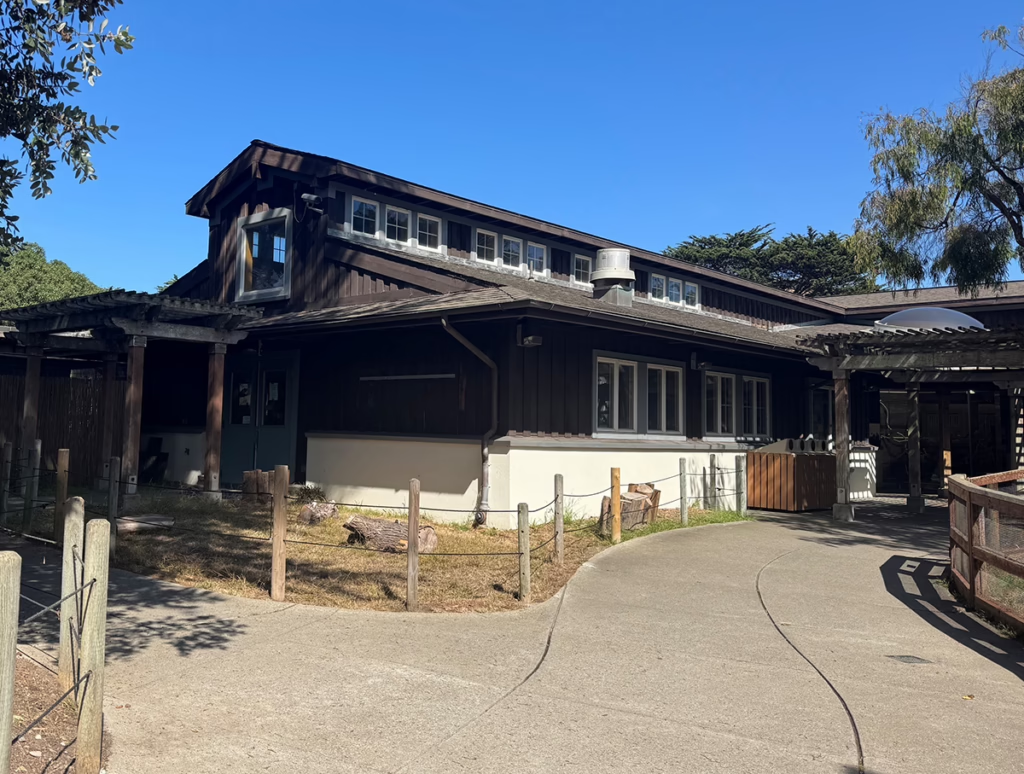
In addition to all the habitats throughout the Zoo, you may find new and exciting animals at the following interpretive centers. Click each to learn more!
Over 60 birds, mammals, reptiles and amphibians are housed and cared for at the Koret Animal Rescue & Conservation Center (ARC).
Our animal ambassadors play a key role in connecting our guests with wildlife, as they represent the only Zoo animals that visitors can actually see up-close and personal. Many of these beloved individuals were former pets, confiscated from the illegal wildlife trade, injured in the wild and deemed non-releasable, and have found a second chance at the ARC.
Insects make up more than half of all known living animal species, and are also the tiniest. Make your way to the popular Insect Zoo, located in the Exploration Zone and home to some of the most industrious, fascinating and diverse creatures on the planet. Each amazingly intricate species serves unique purposes in their ecosystems.
The Exploration Zone covers six acres of discovery, where guests can meander across a wetlands bridge to find the innovative Meerkat & Prairie Dog exhibit to see burrowing mammals from two different geographic areas. Find a variety of rescued, non-releasable ambassador animals used for educational outreach and the summer Nature Trail program, and make your way to contact yard of the Family Farm, often a child’s first encounter with a goat or sheep!
Beyond the Family Farm are exotic macaw species, and freshwater turtles. You’ll also find the popular Insect Zoo and the Red Panda Treehouse.