




Sustainability
We strive to conserve and support conservation through partnerships, daily practices, and work to inspire communities to protect and preserve wild places and wild things for future generations.
Working green
As a conservation organization, we work to provide visitors with meaningful ways to connect with concepts of sustainability and biodiversity, so that they will care and conserve resources to create a more sustainable environment for all.
Sustainable practices
At the Zoo, we have a culture of sustainability, from using water-filling stations instead of plastic bottles, and bicycles in lieu of vehicles, to ensuring compostable products are available for our guests. Here are some of our programs.

Going paperless
Download a zoo map from our web site or attractions app. You can also "snap a map" by taking a photo of the large on-site maps to view on your mobile device.

Compostable dining
All utensils, plates, cups and napkins are compostable in our dining areas. Beverages in plastic bottles are no longer sold.

Fill your bottle
Water refilling stations are located around the Zoo for guests.

Charge your car
Multiple charging stations are available for electric vehicles, bike racks encourage biking here.

Water recycling
Water features at the Zoo use a closed system that recirculates the water through a sand filtering pump to clean water.

Repurposing trees
Downed trees and branches are placed in animal habitats as enrichment; wood chips are spread in gardens and public areas. We've planted drought-resistant gardens throughout the Zoo.

Recycling materials
We collect and sort trash, compost and recyclables, working with San Francisco's Recology who collects and processes waste and reclaiming reusable materials. SF Zoo proudly records an 85% diversion rate.

Animal waste & water
We treat animal waste and water sustainably, and out of eyesight of the pubilc.
Sustainability partners
We are truly all in this together! By aligning with key organizations to get our messages out, there is strength in numbers. When we are all on the same page, we are most effective.
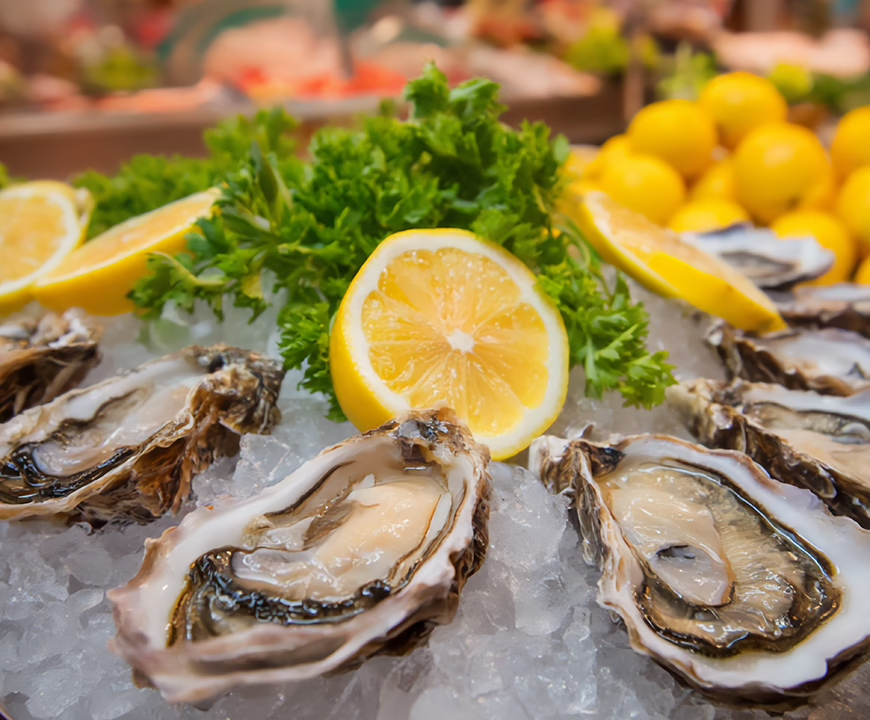
We are a proud member of the Bay Area Sustainable Seafood Alliance, a partnership aimed at raising local consumer, restauranteur, and seafood industry awareness of the importance of acquiring seafood from sustainable sources.
Working together, the Zoo, Aquarium of the Bay, The Marine Mammal Center, and California Academy of Sciences provide regional support for Monterey Bay Aquarium’s Seafood Watch® program.
SFPUC advises the Zoo on important water and energy conservation projects. In 2013, the partnership yielded 5 new electric vehicle charging stations in the Zoo’s parking lot. We collaborate on water conservation initiatives like the San Francisco Zoo Recycled Water Project.
The recycled water that is channeled to the Zoo for non-drinking needs include plant and grounds irrigation, washing down animal habitats, and filling animal pools. This helps us to conserve high-quality groundwater.
We also work with the SFPUC on coastal efforts, such as the Ocean Beach Climate Change Adaptation Project, which involves the rerouting of traffic, parking lot and other street improvements by the Zoo.
We partner with Recology to help streamline our on-site waste and recyclable materials from guests, staff and animals. While we do initial sorting here, Recology takes it to the next level to manage our waste. In 2022, we were nominated by Recology in a San Francisco Chamber of Commerce awards event winning in the sustainability category, thanks to an 82% waste diversion rate.
Recology joins us at many of our events such as Earth Day, to provide information to our guests on how to properly sort recyclables, compost and landfill items.
taking action
You can make a difference
Your actions, big or small, can make a big difference in helping save our planet. Changes take time, but our actions become second nature once we get started.
We see the impact of climate change in our own backyard, and through awareness, keeping well-informed, and modifying our lifestyles, we can effect significant change. We are all in this together!
Conserve water
You can conserve water by turning off the faucet when brushing your teeth or washing dishes.

Create wildlife friendly yards
By planting native plants in your backyard, you can attract birds, butterflies, and even toads.

Buy locally grown food
Local foods require less transportation and refrigeration, which reduces carbon emissions and helps fight climate change.

Vote!
The establishment of conservation corridors often requires voter input. Use your vote to help wildlife.

Support conservation groups
Send a contribution or join your favorite conservation group. Or volunteer with a local habitat restoration project.

Buy palm oil free products
Support sustainably-sourced palm oil from companies that have pledged to be responsible with natural resources.