



Animal care & welfare
The wellbeing and quality of life of every animal in our care is our most fundamental responsibility. Here’s how we meet that commitment every single day.
How we care for our animals
At San Francisco Zoo, a dedicated team of veterinarians, animal care specialists, and wellness professionals works toward one shared goal: ensuring that every animal resident is not just healthy, but genuinely thriving.
Our approach to animal wellness is integrative, combining ongoing scientific study with practical, hands-on application. At the Dianne Feinstein and Richard Blum Wellness & Conservation Center (WCC), we use advanced techniques to continuously improve how we care for each species and each individual animal.
This includes behavioral assessments, individualized enrichment programs, habitat design that reflects each species’ natural needs, and rigorous veterinary monitoring.
Our standards are continuously evaluated against the best available science in animal welfare, and we are proud members of the Association of Zoos and Aquariums (AZA) — one of the highest benchmarks for animal care in the world.
Veterinary Care
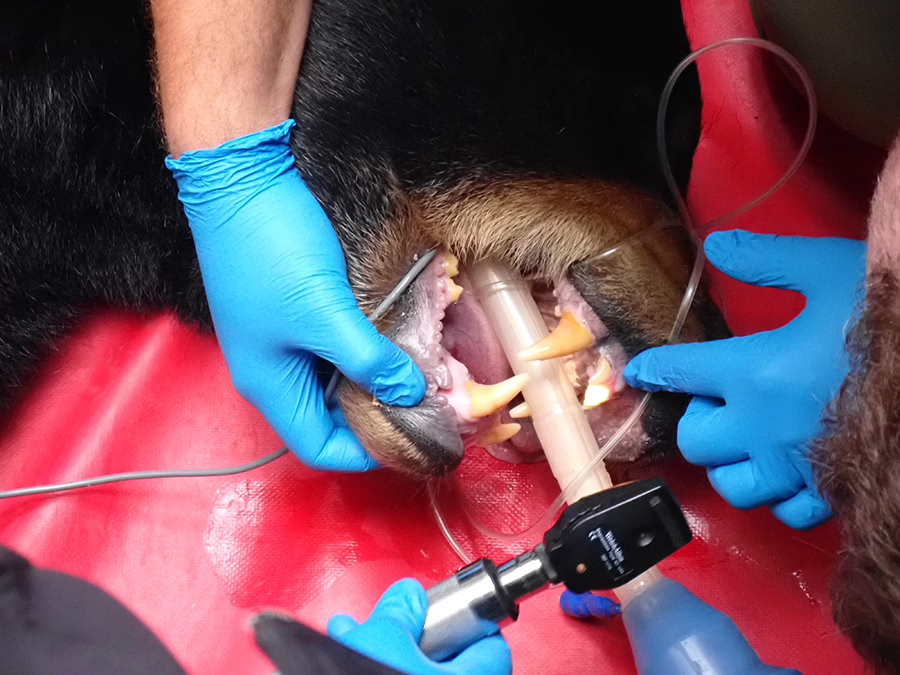
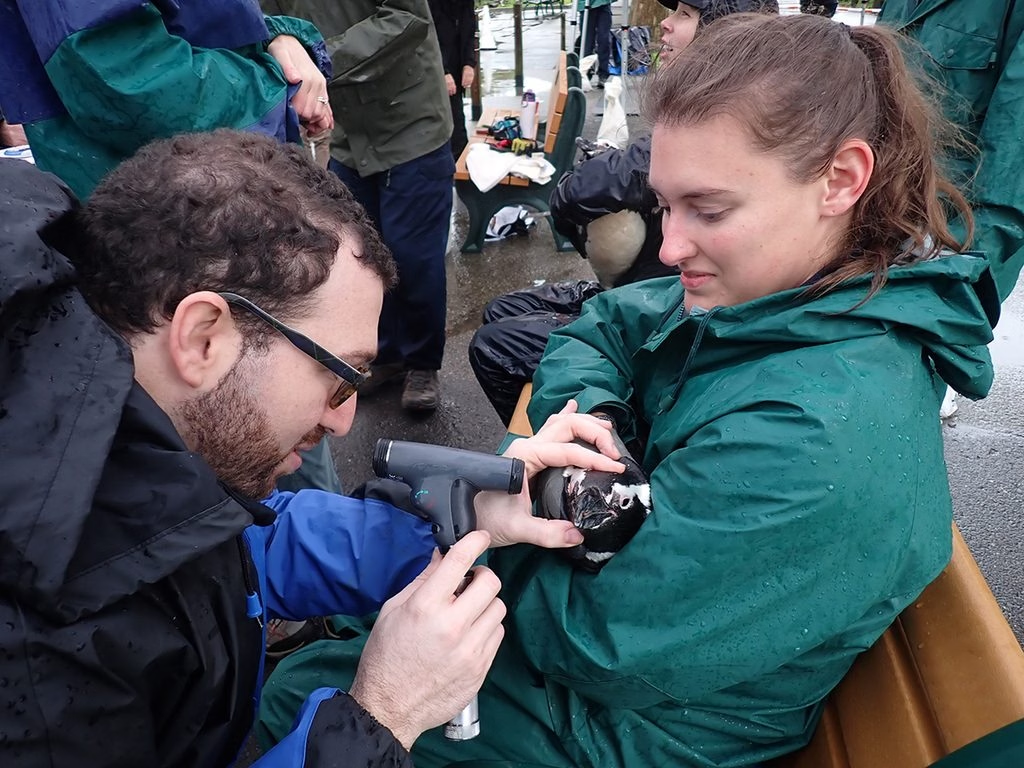
A full-service on-site animal hospital allows our veterinary staff to perform everything from lab work to x-rays to surgical procedures on animals, with the ability to conduct mobile care for our larger species.
Zoo veterinarians are specialists with a vast knowledge of the anatomies and biological make-up of hundreds of animal species, staying up-to-date with advances in exotic animal care. They work closely with the animal care team on individual animal’s health and well-being, including preventative, geriatric and natal care and work collaboratively with specialists around the country.
Diet & Nutrition
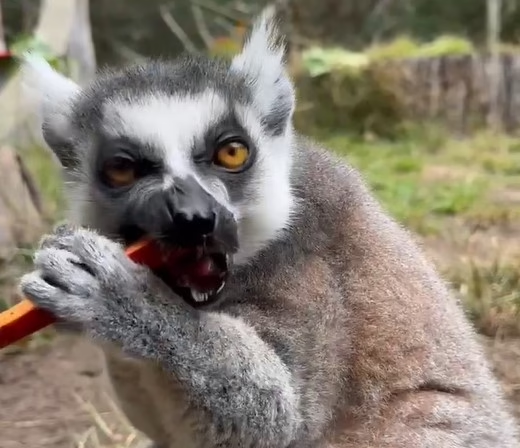
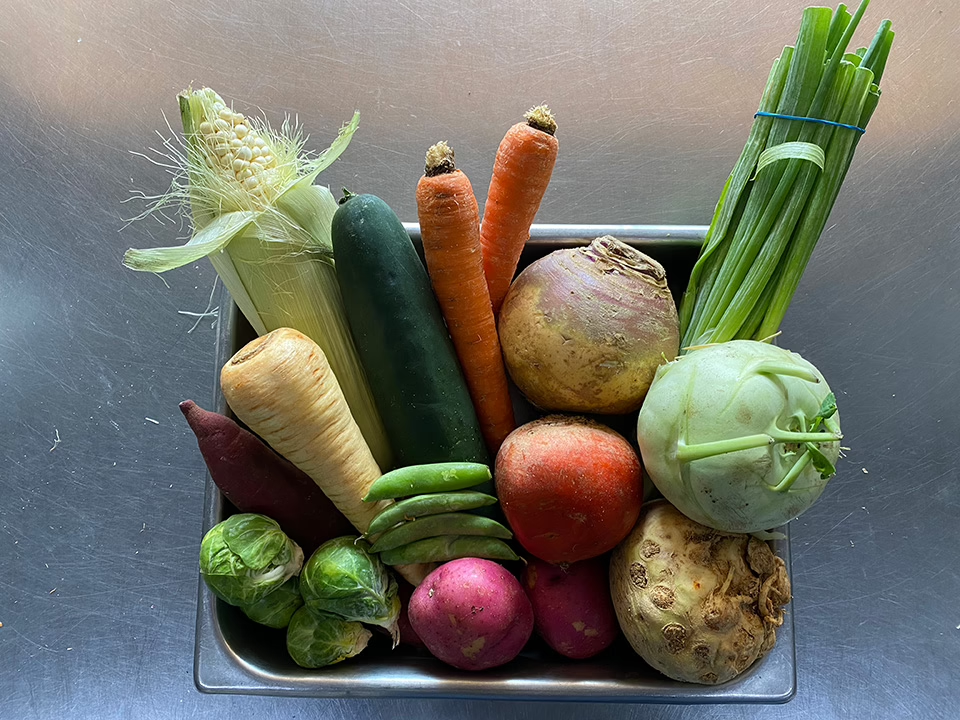
The right nutrition is key to animal wellness. Animal diets formulated for different animal species and individuals are designed to meet their nutritional needs. And just like humans, some individual animals may have, for example, allergies or reactions to certain foods. In addition to “browse,” edible branches and leaves, the produce we provide is always fresh and delivered weekly, while carnivores receive fresh and frozen meats.
Specialized “chows,” such as formulated and vitamin-enriched biscuits and pellets prepared for different species, are also on the menu. Nutritionists analyze individual animal’s health to determine if they need more of one food item or another, and there is always leeway for special treats.
Enrichment
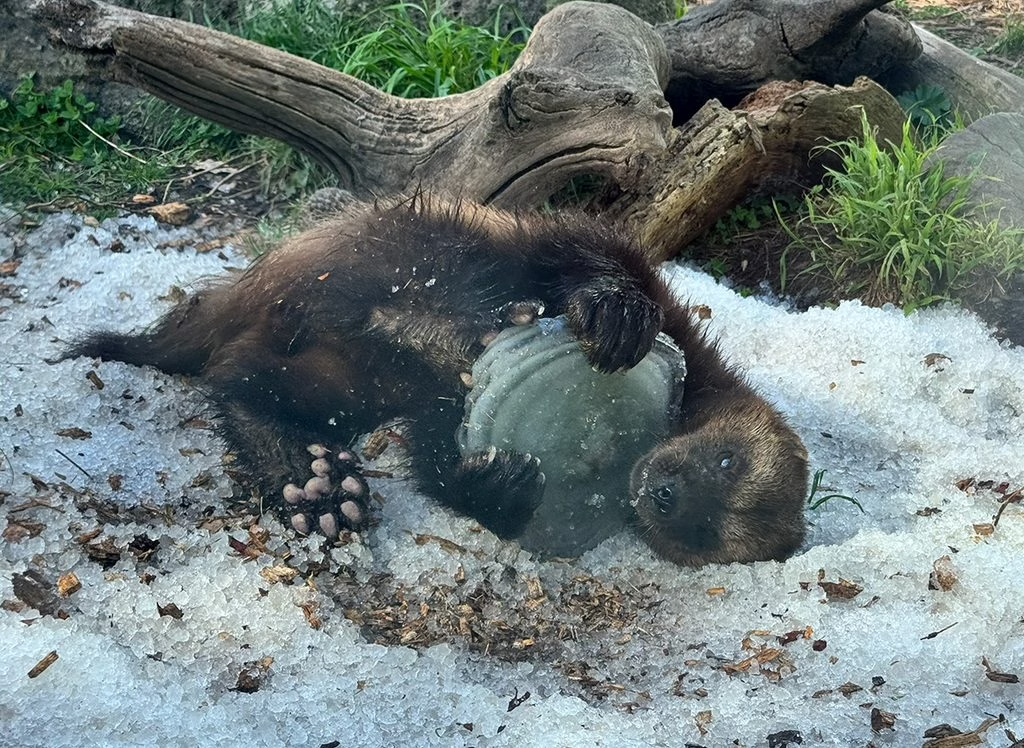
Environmental enrichment in the form of objects, activities and food treats presented to animals provide important psychological and physical stimulation, giving them choices and enhances their welfare. Think toys, games and treats! Even birthdays and special designated animal days are reasons to present new enrichment and special treats.
Training
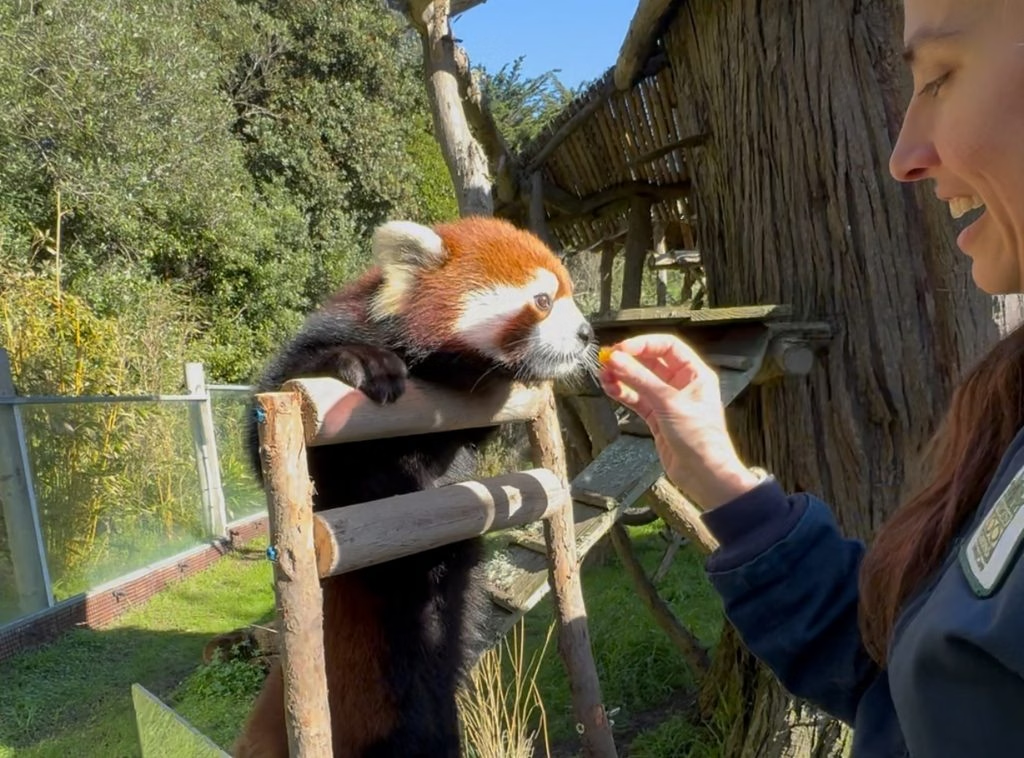
Training benefits our animals in many ways, both directly and indirectly. By utilizing positive reinforcement based on operant conditioning and applied behavior analysis, our animals are able to choose to participate in medical procedures, for example, without anesthesia. Training helps build positive relationships between keepers and animals, allowing staff to move or shift animals, and animals participate voluntarily in husbandry tasks, such as having them step on a scale to be weighed, getting an injection or blood draw or trimming nails.
Why do we train animals at the Zoo?
Training starts with building a positive relationship and teaching simple behaviors, then maintaining behaviors once they are learned. Positive training provides mental and physical stimulation, ensures better safety, health care, timely shifting of animals, safer transports, research opportunities. As an accredited facility, training is part of AZA standards, and is considered a best practice in a zoological setting.
You may observe a number of animals being trained on your visit throughout the day.


Animal care and conservation go hand in hand at the Zoo.