





At the Zoo
Puente al Sur (Bridge to the South)
Fascinating facts
- Rodents of unusual size do exist! Capybaras are one of South America’s largest native grazers.
- While they have been traditionally hunted as a protein source, there have been recent efforts to start ranching them for commercial meat.
- Due to their semi-aquatic way of life, they have been classified as “fish” during the time of Lent and are able to be eaten when other sources of protein are not permitted.
Physical characteristics
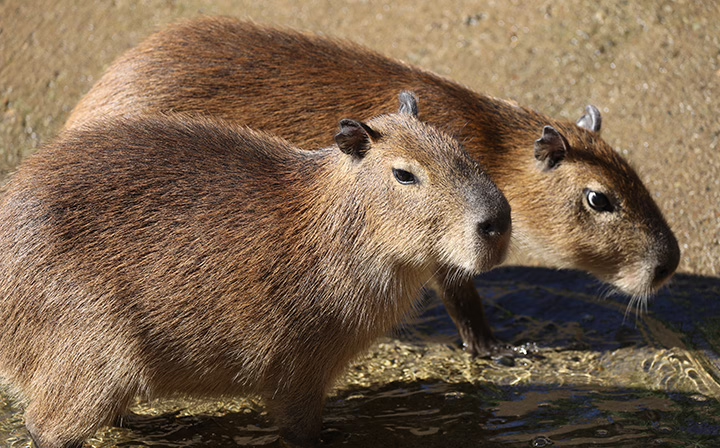
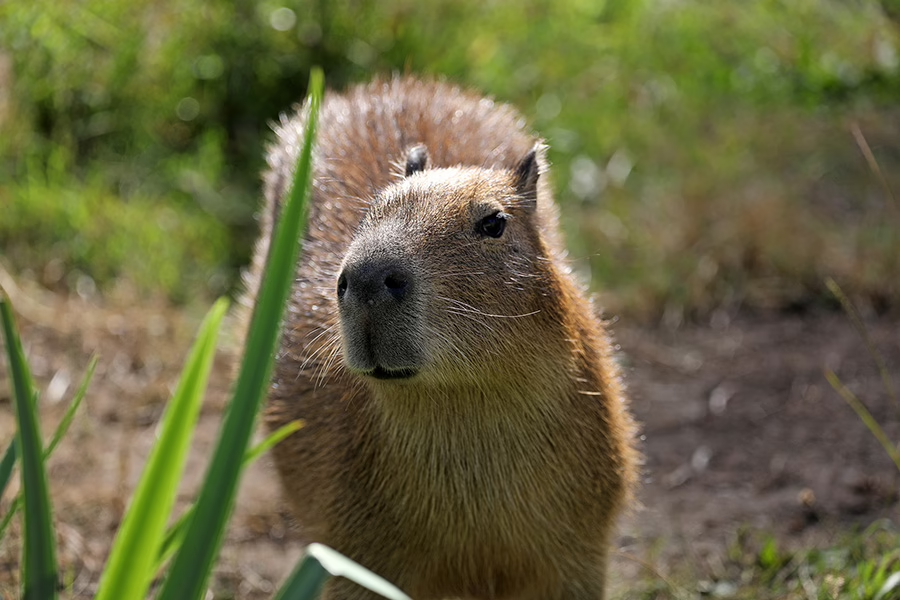
Capybaras are the largest member of the rodent family. They can weigh between 75 – 145 lbs, measure almost 4 feet in length, and stand approximately 2 feet high at the shoulder. Females are slightly larger than males. The have a stocky, tailless body with thin, coarse, reddish-brown fur. Their webbed toes help make them excellent swimmers, and their eyes, ears and nostrils are located close to the top of the head to allow the capybara to submerge most of its body below the water’s surface. Capybaras are so adapted to an aquatic lifestyle that they can mate and even sleep in the water.
They live approximately 6 years in the wild and up to 12 years under human care.
Habitat
Capybara are found in wetlands, swamps, riparian zones, and flooded grasslands. They prefer areas with year-round access to water and grazing.
Diet
They are grazers, feeding primarily on grasses and aquatic plants, and occasionally bark or fruit.
Social behavior
Capybaras breed year round, with the peak coinciding with the start of the rainy season. A dominant male will attempt to breed with the females in his group. Breeding takes place in the water and after a gestation period of 150 days, a litter of 2 – 8 are born. They are precocial and can graze within a week of birth. Young are weaned around 3 months of age, become independent at 1 year of age and will reach sexual maturity at 18 months. They have one litter per year and the other adults in the group will perform cooperative parenting and help raise the young.
Group life is very important to capybaras and helps them to survive. They live in groups of approximately 10 individuals, which includes both males and females. They will defend their territory, which covers their preferred grazing and wallowing sites. They are mainly crepuscular, active at dawn and dusk, and spend the hottest part of the day in the water. They will scent mark to stake out their territory and provide information about dominance and reproductive status. Males have a scent gland on the top of their nose. Capybaras will also vocalize to communicate, including barking to warn other group members of danger.
Status in the wild
While some populations are threatened by over-hunting, overall the population is stable. Non-human predators include: caiman, jaguars and anacondas.
Range
They are found in northern South America, mainly in the Amazon Basin, west to the Andes and south to the Pampas.
Capybara
Least ConcernAs the largest rodent in the world in the family Rodentia, capybaras have seen a surge in popularity around the world.
African lion
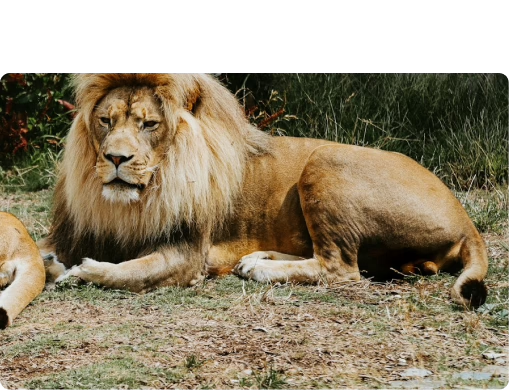
VulnerableOne of the most iconic animals on Earth, the African lion is a symbol of strength, social intelligence, and wild Africa.

Adopt an African Lion and make your support roar.
Sed tincidunt quis amet ut. Augue et pellentesque quis sit tempus placerat vitae. Nunc potenti donec blandit quis sit. Faucibus purus odio sit massa id.