




Young sibling pair to live at Zoo’s Puente al sur habitat
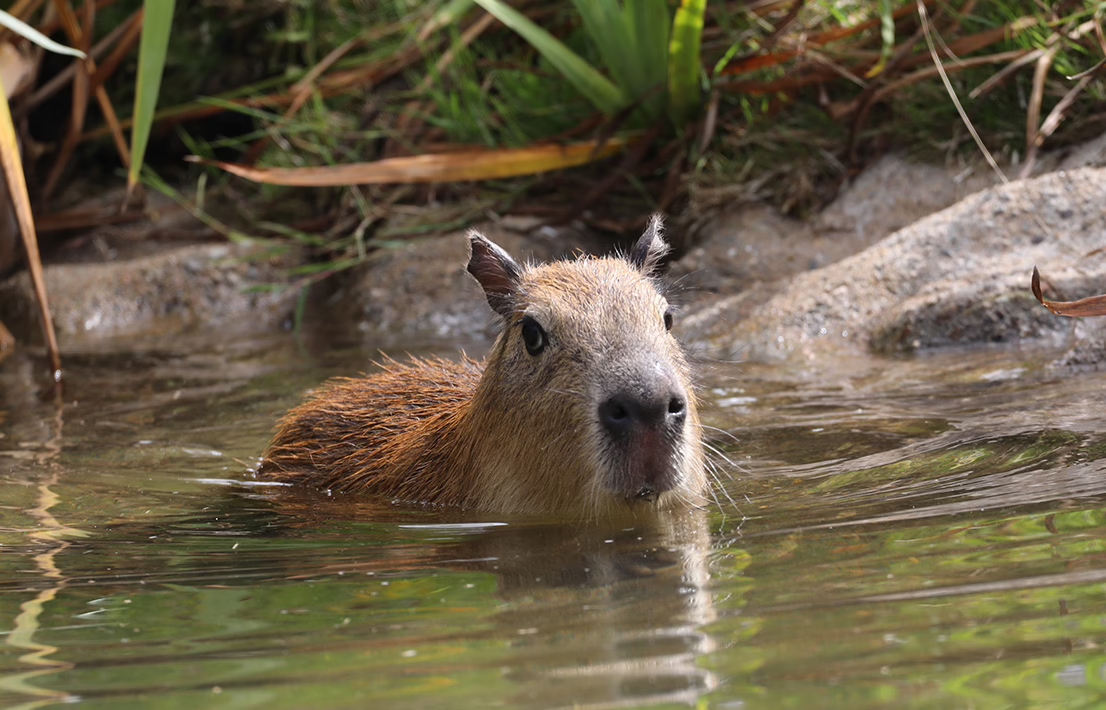
For the first time in nearly 10 years, visitors will be able to see capybaras at San Francisco Zoo & Gardens, following the arrival today of a male and female sibling pair from the Sacramento Zoo.
Capybaras (Hydrochoerus hydrochaeris) are the world’s largest rodents in the order Rodentia, and are related to beavers and porcupines. As adults, capybaras can weigh between 110 and 150 pounds or more, can reach over four feet long from snout to rump, and can stand up to two feet in height. The pair that arrived today are just four months old and weigh about 33 to 44 pounds (15 to 20 kg) each.
“We have been in line to receive capybaras for several months, so we were excited to finally have an arrival timeframe, which was coordinated through the Association of Zoos & Aquariums’ Capybara SSP (Species Survival Plan),” said Cassandra Costello, CEO and Executive Director. “The excitement here is palpable. It has been several years since we last housed them here, and they are a favorite not only of our staff, but also of kids and adults alike on a global level!”
The pair, who are not yet officially named, are currently acclimating to their new home at Puente al Sur (Bridge to the South). This mixed-species habitat, which comprises four separate areas, is also home to a giant anteater, a Baird’s tapir, a Southern pudu, and a pair of Western Santa Cruz giant tortoises. A boardwalk overlooks the large yard featuring an outdoor pond, which the female capybara made a beeline for when she was let into the exhibit for the first time.
“Capybaras are excellent swimmers,” said Quinn Brown, the Curator who oversees Puente al Sur. “It was great to see the two of them exploring their new home, taking laps in the pool, and checking things out. Over the next several days, we will allow them to acclimate privately without members of the public before opening the exhibit sometime next week. In addition, we will eventually introduce them to our male Baird’s tapir, Pacha, which will create a more dynamic exhibit.”
Capybaras are native to Central and South America, and because they are semi-aquatic, they are found in lowland regions close to water. They can also be found in non-native regions as introduced species—notably Japan, where they can be seen living in hot spring enclosures called onsens. Here, these South American natives, which lack thick body fat, can keep warm and relaxed.
The recent popularity of capybaras as an internet sensation has been growing for the past six years, after they became a global phenomenon in 2020. However, San Francisco Zoo has managed this species for more than 30 years. A herd of capybaras once lived adjacent to the Nile hippopotamuses, and in 1999, they were moved to the new Puente al Sur as part of an overall mixed-species habitat to celebrate the rich biodiversity extending from Mexico to the tip of Argentina.
The new capybaras at the Zoo will tentatively be available for viewing for the first time next Tuesday, October 13. Until then, Puente al Sur will remain closed to the public.