
NEWSROOM
MAKING CONTACT
San Francisco Zoo & Gardens values the work of news media and will make every effort to accommodate requests, however please note that we may not be able to accommodate journalists who show up at the zoo without advance notification.
Please direct all media inquiries to the Zoo’s Communications team, email or text is the preferred method.
PR/COMMUNICATIONS
Nancy Chan Director of Communications
nancyc@sfzoo.org
Text: 415-840-6065
NEWS MEDIA FAQS
Can you add me to your media list?
Yes, working media may email a request and contact info to be added to the media list.
Can I get press passes to visit SF Zoo?
Yes, email either of the email addresses above with your credentials; you will receive a confirmation email to use as your entry.
Can I go behind-the-scenes to take photos or video?
Behind-the-scenes access is prohibited except by invitation.
I need to interview someone, how can I set that up?
All interview requests must be made in advance. There is no guarantee of availability. You may also email questions for response. Please be sure to include a deadline.
Can I shadow a keeper or veterinarian?
Sorry, we cannot accommodate this frequent request.
Do you have hand-out photos or b-roll?
Depending on the subject, we can provide select photos and b-roll upon request. Attribution must be provided.
TAKING PHOTOS
You are welcome to take photos for personal use! Please note the following:
- Stay behind barriers and in public viewing areas at all times
- Selfie sticks are strictly prohibited
- Do not call out, whistle, tap on windows, or tease any animal Commercial photography is prohibited without prior consent.
If you wish to use the zoo for commercial purposes, please contact the Communications team for consideration. Special fees will apply.
San Francisco Zoo & Gardens reserves the right to close sensitive areas to outside entities.
Press Releases
July 1, 2026
“Dinos Rule!” — SF Zoo’s New Dinosaur Exhibition Now Open
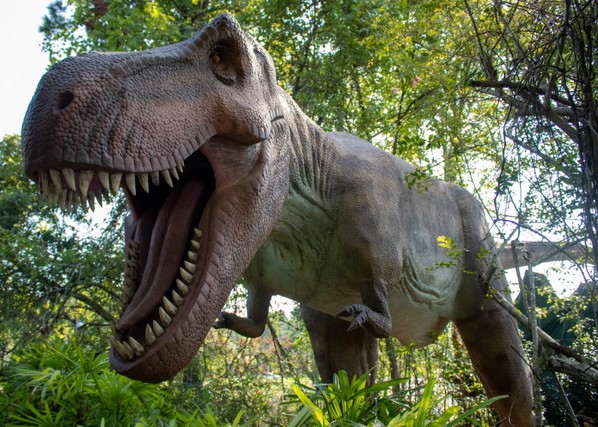
21 Life-sized, Animatronic Dinosaur Displays to Bring Awe & Excitement
San Francisco Zoo and Gardens has unleashed its colossal, new outdoor summer exhibition, Dinos Rule! This limited-time, family-friendly, immersive experience, run from July 1 through September 15, 2026.
“Dinosaurs continue to enthrall and evoke wonder for kids and adults alike,” said Cassandra Costello, CEO and Executive Director. “We felt that this was a great time to bring dinosaurs to the Zoo for the first time at this scale, something that would be exciting and new for our guests, and be a must-see for our community and beyond.”
In addition to life-sized, animatronic renditions of the world’s most famed and feared dinosaur, Tyrannosaurus rex, aka, “T-rex,” and the world’s largest long-necked herbivorous dinosaur, Brachiosaurus, guests will see a variety of lesser known, but equally imposing, Dinosauria. These include winged species, like Ncytosaurus, a flying pterosaur, and Gigantoraptor, a massive bird-like dinosaur. Guests will also find unusual specimens, like Pachycephalosaurus, an herbivorous dinosaur with a thick, domed skull with spikes on the back, and Psittacosaurus known for its distinct parrot-like beak.
Highlights
- 21 realistic, scientifically-informed, dinosaur models based on fossil evidence. Each individual dinosaur uses advanced robotics to enable natural movements like blinking, breathing and tail-swaying.
- These are the only dinosaur displays themed to evolution and extinction, grouping dinosaurs by era and geographic origin, and in dynamic interactions displaying behaviors like nesting, hunting, and scavenging.
- Interactive activities– a 5 ft. tall dinosaur photo op egg, a 6 ft. long Sauropod footprint and a 4 ft. long Tyrannosaurus footprint, plus a 15 ft. long climbable dinosaur sculpture.
- An 8 ft. by 8 ft. dig pitfeaturing a variety of dinosaur fossils.
The exhibit is situated around the Zoo’s serene lower lake, adjacent to the 2.2-acre Australian WalkAbout and Koala Crossing habitats. Visitors follow a pathway surrounded by a dense, thicket of plants and trees, as they venture around the outer lake, while discovering fearsome dinosaurs along the way. Their journey through prehistoric ages will culminate at the Prehistoric Garden and some terrifying surprises, located across from the South American Tropical Rainforest & Aviary. The permanent Prehistoric Garden highlights ancient flora that has survived since the age of dinosaurs.
Prehistoric Garden
- Horsetails – known as living fossils, these jointed green stems date back to the time of the dinosaurs;
- Ferns – Various fern species that have remained relatively unchanged for millions of years;
- Gunnera – known for its massive leaves, often referred to as “dinosaur food.”
- Mosses – primitive plants evolving roughly 450 million years ago;
- Magnolias & Palms – palm species that date back 80-90 million years and magnolias from ~100 million years ago dating to the Cretaceous Period.
Virtual Reality Experience
For guests seeking more dinosaur action, the Zoo offers a motion-based virtual reality experience, in collaboration with Immotion, the global leader in immersive edutainment. Playing at the VR Zone is “Dinosaur: Evolution,” a journey to the Cretaceous Period, when dinosaurs stood at the apex of their evolutionary journey. Donning VR goggles while sitting in motion-seating, guests will experience first-hand how some species not only survived, but flourished, in the aftermath of global devastation, making comparisons to today’s world and climate change.
Dino Don, Inc.
For this installation, the Zoo has partnered with acclaimed dinosaur company, Dino Don, Inc., the creator of among the world’s most accurate, full-sized robotic creatures. Each dinosaur is custom-fabricated under the direct supervision of paleontologists, including its CEO, “Dino” Don Lessem. Lessem served as a key advisor to director Steven Spielberg on the original 1993 Jurassic Park film, providing information about dinosaur anatomy and behavior. “Dino Don,” a noted science author, has a dinosaur named after him, Lessemsaurus, a large, herbivorous dinosaur found in Argentina.
“Dinosaurs have proven to be both a fascinating and engaging attraction for kids of all ages, and will be a great summer draw,” said Paulo Vergara, Executive Vice President of Marketing. “By having dinosaurs at the Zoo, we can bring the unique perspective of having our guests see these giant, life-sized dinosaurs, and comparing them to living parallels, like our prehistoric-looking cassowaries, and other birds, that are descendants to dinosaurs. Even some of our giant tortoises, that came from ancient reptiles that co-existed with dinosaurs, make for a fascinating visit!”
Dinos Rule! is a separate fee for all guests and is $9 per person/$8 SF Zoo members (children 2 and under are free) and is not included with general zoo admission. Each ticket is valid for one-time use on any date during the run of the exhibition. Reservations are not required.
Photo Assets. SF Zoo grants permission to use photos and video content.
June 15, 2026
SF Zoo Welcomes Three Penguin Chicks
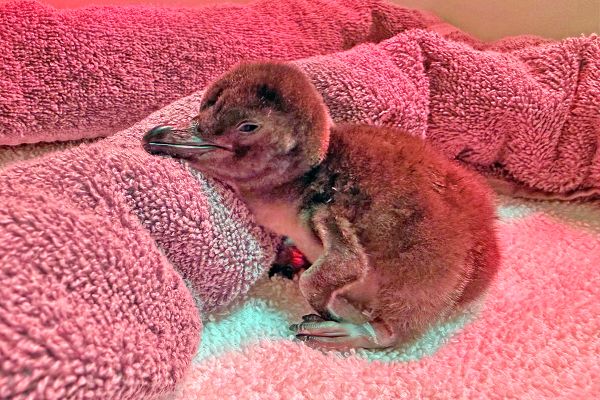
First Hatching of Magellanic Penguin Chicks in Three Years
The shrill squeaks and peeps emitted by tiny Magellanic penguin chicks is music to the ears of San Francisco Zoo bird staff, as they recently welcomed three chicks hatched nearly four weeks ago. The trio represents the first successful hatching of penguin chicks in three years, and the first time in many years that chicks are being hand-reared rather than parent-reared.
“We made the decision as part of this year’s breeding season, to pull any viable eggs and incubate them separately from the parents,” said Brice Smith, Assistant Curator of Birds. “One of the key reasons is that it had been a few years since we’ve had chicks and some of the potential parents were not at the experience level we prefer. So basically, we decided to hand-rear them, which entails nearly 24-hour care in the beginning.”
As the most successful breeding colony of Magellanic penguins in an AZA (Association of Zoos and Aquariums) accredited zoo, this prolific group had traditionally hatched between two and five chicks per year since the late 1980s. Magellanic penguins are native to the southern coasts of South America, primarily Argentina, Chile and the Falkland Islands, where they are listed as Near Threatened by the International Union for Conservation of Nature (IUCN)
The Zoo follows breeding recommendations from the AZA’s Species Survival Plan for Magellanic Penguins. Over the past few years, because the Zoo’s colony was at a well-balanced population at 50 penguins, breeding was not recommended by the SSP. After the passing of a few individuals from old age or illness, Curator Quinn Brown contacted the SSP for approval to breed this year as attrition of the colony contributed to a renewed focus on chicks.
“Breeding is highly strategic,” said Brown. “Some of our pairs have been very successful, and some are not approved to breed as their genetics may be overrepresented in accredited facilities.”
The three chicks are growing steadily and will have their “fluff” for the next several weeks. In the meantime, they are being hand-fed, like the adults that live on Penguin Island.
“When they’ve matured a bit more, we will start teaching them how to swim,” said Smith. “They are a little awkward, but get the hang of things easily.”
Later this summer, the Zoo will introduce the chicks to Penguin Island and the rest of the penguins by hosting its popular “March of the Penguins” event for Zoo members. The chicks will waddle and walk around length of the 200-foot-long penguin pool, and then join the often curious adults during their first swim in their new home.
May 29, 2026
Kids Receive Free Admission on Weekdays in June at SF Zoo
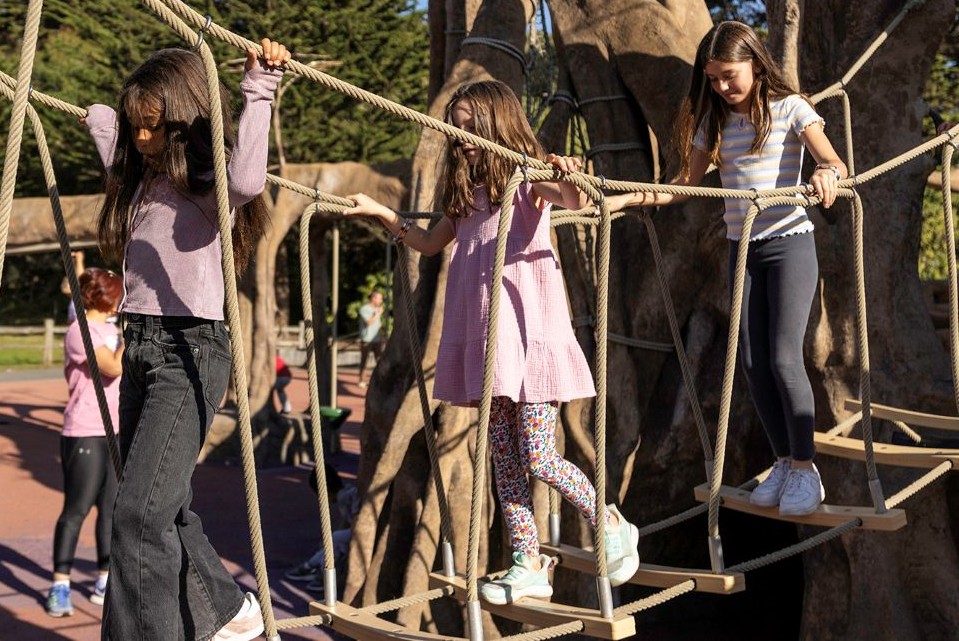
Kids 11 and under are eligible, limitations apply
San Francisco Zoo & Gardens is kicking off the summer by offering free admission to children, ages 11 and under, on weekdays, throughout the month of June. The offer starts on June 1 and runs through June 30, 2026.
“With kids out of school, we wanted to continue opportunities for them to learn and explore, and make the Zoo accessible for young kids,” said Cassandra Costello, CEO & Executive Director. “This promotion is our way of giving thanks to the public for their support over the past year.”
The maximum number of kids is five per paying adult. If tickets are purchased through the Zoo’s website, please note there is a $1 processing fee per ticket (including the free kid’s ticket). There is no fee if the tickets are purchased in person at the Zoo’s on-site ticket window.
In addition, the Zoo offers EBT/SNAP and Museums for All discounts to provide accessibility to the Zoo for anyone with an EBT/SNAP card. Named cardholders with a matching photo ID can receive up to four admission tickets at $5 each, and available for purchase at the Zoo’s ticket windows.
SF Zoo partners with the Discover & Go program, where visitors to San Francisco Public Library and other local libraries can receive a free pass to the Zoo. To access, users must log in with their library card credentials on the Discover & Go website to print or download their pass.
SF Zoo operating hours are 10 a.m. to 5 p.m. For more information, visit sfzoo.org.
May 27, 2026
SF Zoo to Pause its African Lion Program
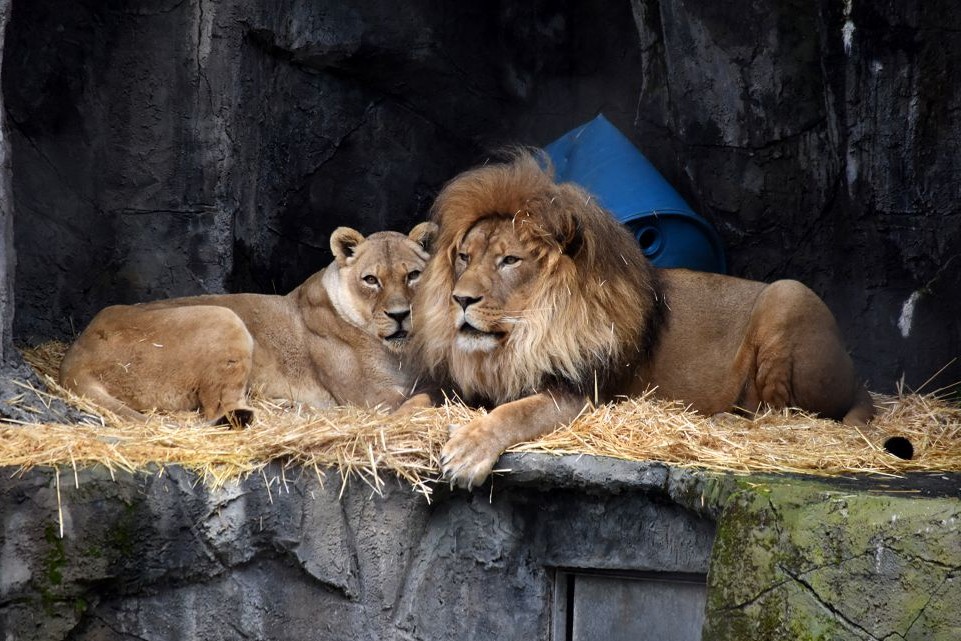
Last two lions to transfer to another zoo to allow renovation of habitat
Following extensive review and consideration, San Francisco Zoo & Gardens has made the difficult decision to transfer its remaining African lions to another accredited zoo to better support their long-term welfare needs as they age.
“This is an extremely difficult decision, as our lions are beloved by their caretakers, our staff and the public.” said Cassandra Costello, CEO & Executive Director. “Over the past year or more, we have been seeking an alternative solution to keep our lions here, especially after the Lion House was earmarked for the future housing of Giant pandas. And though there has not yet been confirmation of pandas coming here, we have now decided to re-home our lions, as the habitat as it currently stands is not adequate for our aging pair.”
The current habitat is the 1940’s era WPA-constructed Lion House, which has gone through some upgrading over the years, most recently in 2023-2024 with the expansion from four outdoor grottoes to two. The habitat is home to Marvella, an 11-year-old female lion, and Jasiri, a 10-year-old male. Marvella came to the Zoo in 2023 from the Lee Richardson Zoo in Kansas, while Jasiri was born at the Zoo in 2015. At just one-year-old, Jasiri was diagnosed with a congenital spinal condition that affected his strength and coordination. Because corrective surgery carried significant risks, he instead has received on-going physical therapy and dedicated care from the Zoo’s veterinary and animal care teams throughout his life.
With African lions under human care typically living 15-20 years, both Marvella and Jasiri are entering their senior years. “
“Both lions remain agile and mobile, but as they age, they are starting to experience some mobility challenges, “said Dr. Nick Dannemiller, DVM, Dipl. ACSM, one of the Zoo’s clinical veterinarians. “Even in old age, we want animals to have choice, comfort, and control over their lives, and the current enclosure presents physical challenge, particularly for Jasiri, given his congenital spinal condition.”
Whether or not Giant pandas arrive, the outdoor exhibit requires extensive renovation to make it more easily navigated by the aging pair of lions. Given that the exhibit is 86-years-old, much of the original grotto structure remains intact, although the original plateaus were replaced approximately 25 years ago with natural substrate and grass.
“This exhibit has long been on a short-list of updating, and while some cosmetic work has been done, the reality is that the original exhibit was built for a different era. As our lions get older, they have different, individual needs, specifically, accessibility to flat surfaces,” said Tina Hunter Burnam, Curator of Carnivores. “There is also concern that, should an animal have difficulty climbing out of the lower moat, animal and veterinary staff have limited ways of accessing the cat.”
The Zoo moved its last Sumatran tigers to another zoo per a breeding recommendation through the Association of Zoos and Aquariums (AZA). At this time, the lions represent the largest big cat at the Zoo.
“We have worked extensively to identify another area of the Zoo to place them,” said Eric Krussman, Executive Vice President of Animal Care. “It is not feasible to build a new habitat for lions at this time, and other existing areas cannot adequately house big cats safely and securely.”
Timing has not been determined as the Zoo works with the AZA’s Species Survival Plan for African Lions to find an accredited zoo to take both of them together as a bonded pair.
May 7, 2026
California Red-Legged Frog Recovery Reaches 10-Year Milestone in Yosemite
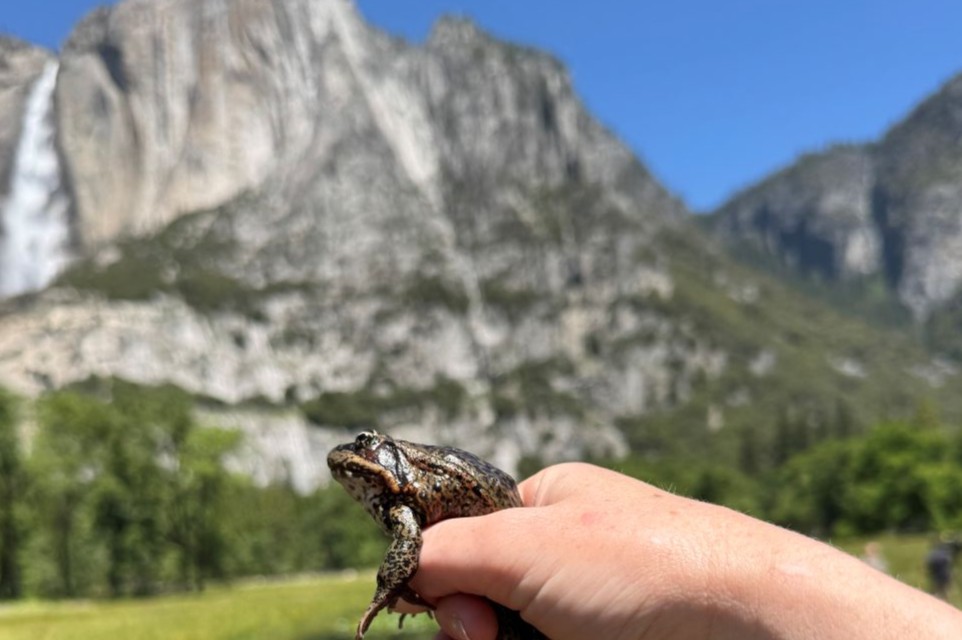
10,000 frogs released through multiagency conservation effort
The California red-legged frog, a federally threatened species absent from Yosemite National Park for decades, has made a significant comeback after 10 years of coordinated conservation work.
Partners will mark the milestone May 7, 2026, with the symbolic release of the program’s 10,000th frog in Yosemite Valley.
The recovery effort is led by the National Park Service in collaboration with U.S. Fish and Wildlife Service, the California Department of Fish and Wildlife, Yosemite Conservancy, and San Francisco Zoo & Gardens.
“This milestone reflects years of focused work to restore a species that plays an important role in the park’s ecosystem,” said Rob Grasso, aquatic ecologist at Yosemite National Park. “After invasive bullfrogs eliminated red-legged frogs from the area decades ago, we removed those threats and created conditions for recovery. Today, multiple generations of frogs are established in Yosemite Valley.”
Invasive American bullfrogs, introduced to the park, drove the species’ decline. Elevated raccoon populations, fueled by open refuse sites that remained in use until the 1970s, also contributed to the loss. Park staff spent decades removing bullfrogs, while habitat improvements tied to the Merced River Plan restored wetlands, streambanks and river systems critical to the frog’s survival.
“Our partners have been essential to the recovery of the California red-legged frog,” said Kim Turner, acting field supervisor for the Sacramento Fish and Wildlife Office. “We appreciate the progress made over the past decade and remain committed to this collaborative effort.”
During the May 7 event, speakers will deliver remarks near Yosemite Falls before releasing several zoo-reared frogs, including the program’s symbolic 10,000th frog, nicknamed “Twain.”
“The California Department of Fish and Wildlife is proud to have assisted the recovery of California’s official state amphibian in Yosemite,” said Laura Patterson, amphibian and reptile conservation coordinator for the Department. “Grants administered by the Department, using funds approved by the voters of California, facilitated the habitat restoration necessary for the success of this recovery effort.”
A key component of the effort is a dedicated rearing facility established in San Francisco in 2016 through a partnership between the National Park Service and the San Francisco Zoological Society. At the facility, staff raise frogs from wild-collected eggs to one- and two-year-old juveniles in a controlled environment before releasing them into the park.
The program is supported by the Zoo-Park Partnership Program, facilitated by the Wildlife Restoration Foundation, and is considered a model for species recovery in California.
“When the program began in 2016, no California red-legged frogs remained in Yosemite Valley,” said Dr. Rochelle Stiles, director of field conservation at the San Francisco Zoo & Gardens. “Today, every frog in the valley traces back to this effort. Despite drought, severe winters and flooding, the population has proven resilient.”
This year, the zoo plans to release about 830 juvenile frogs into Yosemite while raising approximately 600 eggs for future release.
“Protecting vulnerable species helps preserve the park’s natural balance,” said Cassius Cash, president of Yosemite Conservancy. “This milestone shows what sustained collaboration can achieve.”
The effort also relied on private landowner Diane Buchholz of Garden Valley, California, who allowed researchers to collect frog eggs from her property.
The California red-legged frog gained national recognition in The Celebrated Jumping Frog of Calaveras County by Mark Twain. The species, the largest native frog in the western United States, grows 2 to 5 inches long and is known for its reddish underside and soft, short calls. It inhabits ponds, streams and wet meadows.
April 2, 2026
Critically Endangered Mexican Gray Wolf at SF Zoo Approved for Breeding; Pups will Eventually Be Released to Wild
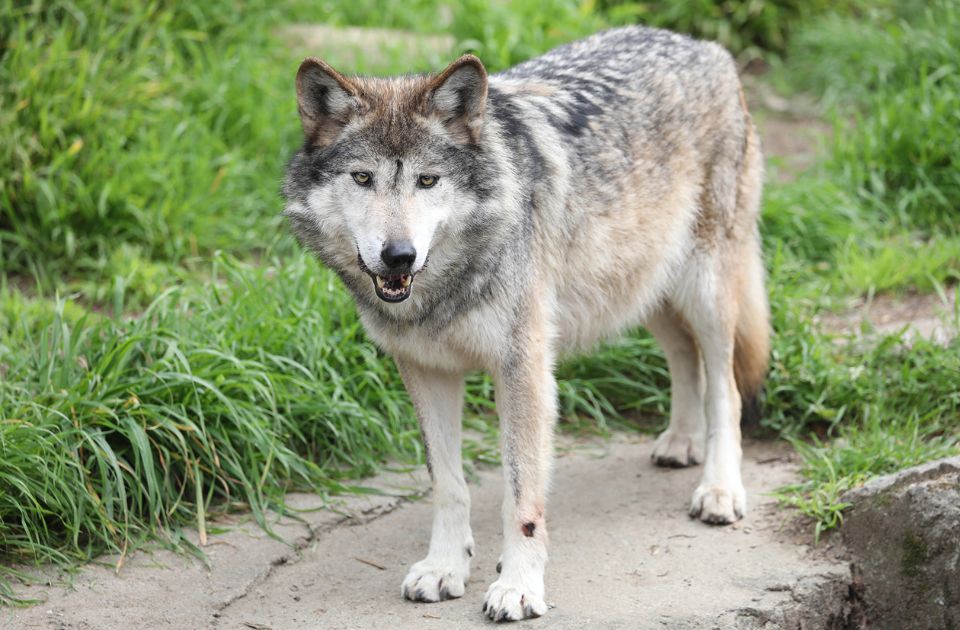
SF Zoo working in partnership with Mexican Wolf Recovery Program
This is Lobo Week, which was designated to celebrate the recovery of the Mexican gray wolf, also known as “El Lobo,” the world’s most endangered wolf subspecies, and one that has made a remarkable recovery after near extinction 50 years ago. Since 2016, San Francisco Zoo & Gardens has served as a permanent holding facility for captive-bred wolves in partnership with the Association of Zoos and Aquariums’ Mexican Gray Wolf Species Survival Plan and the Mexican Wolf Recovery Program led by U.S. Fish and Wildlife Service. The Zoo was recently been given the green light to breed “Alpha,” one of its four seven-year-old female siblings.
“This is really huge for this subspecies,” said Tina Hunter Burnam, Curator of Carnivores. “By breeding Alpha, her pups would eventually be released into the Mexican Wolf Recovery Area, essentially, contributing to the wild population and the re-establishment of this rare subspecies.”
This week, SF Zoo was safely transferred Alpha to ABQ BioPark’s Wolf Conservation Center in New Mexico, which has a viable male. As part of the program, Mexican gray wolves are kept “wild,” in that they are not trained, nor do animal care staff interact with them in the same way as they would other Zoo animals. This allows this particular subspecies to be eligible for release into the wild, should the occasion arise. SF Zoo previously kept three non-releasable senior wolves as part of the program, and in 2018, became home to the female siblings born at the California Wolf Center. The foursome has been part of on-going health studies, with the possibility of future breeding on behalf of the program, and whose time has now come.
When born, the pups will be fostered into one of the wild packs and released in what is known as the Mexican Wolf Experimental Population Area (MWEPA), located in the southwestern U.S., specifically, the Blue Range Wolf Recovery Area, which is made up of Gila National Forest in New Mexico and the Apache National Forest in Arizona. The area is managed by U.S. Fish and Wildlife Service.
“I am very excited to be part of the bigger picture with this program,” said Hunter Burnam, who serves as a member of the Canid and Hyenid Taxon Advisory Group Steering Committee. “This is one of the reasons I got into this field 35 years ago.”
Though they were once abundant throughout Mexico and the Southwestern United States preying on native elk and deer, Mexican gray wolves were nearly fully extirpated by the 1970s by livestock ranchers, hunting, trapping and poisoning. When the population went down to only seven individual wolves, putting the species at high risk for extinction, zoos were able to offer a hand to help save the species. In 1976, Mexican gray wolves were designated as an endangered species. From the seven rescued wolves bred in captivity, 11 wolves were subsequently released into a small, protected pocket of Arizona and New Mexico. These 11 wolves are currently responsible for repopulating the approximate 286 that now live in the wild and about another 380 wolves in managed care like the ones at SF Zoo.
The numbers, while remarkable given how close the Mexican gray wolf was to extinction, has not kept wolves in general from being thought of as “villains,” and they continue to be exterminated at a high rate. In 1995, wolves were taken off the Endangered Species List because their numbers increased, but instead of managing wolf numbers, permitted hunts where wolves are prevalent, in Idaho and Montana, are cruel and more weaponized than ever, and aimed at eradication.
“We support relisting the wolf to the Endangered Species List,” said Hunter Burnam. “For the future of these incredible animals.”
March 17, 2026
SF Zoo Hosts Neurodiversity Celebration Week, March 17-23
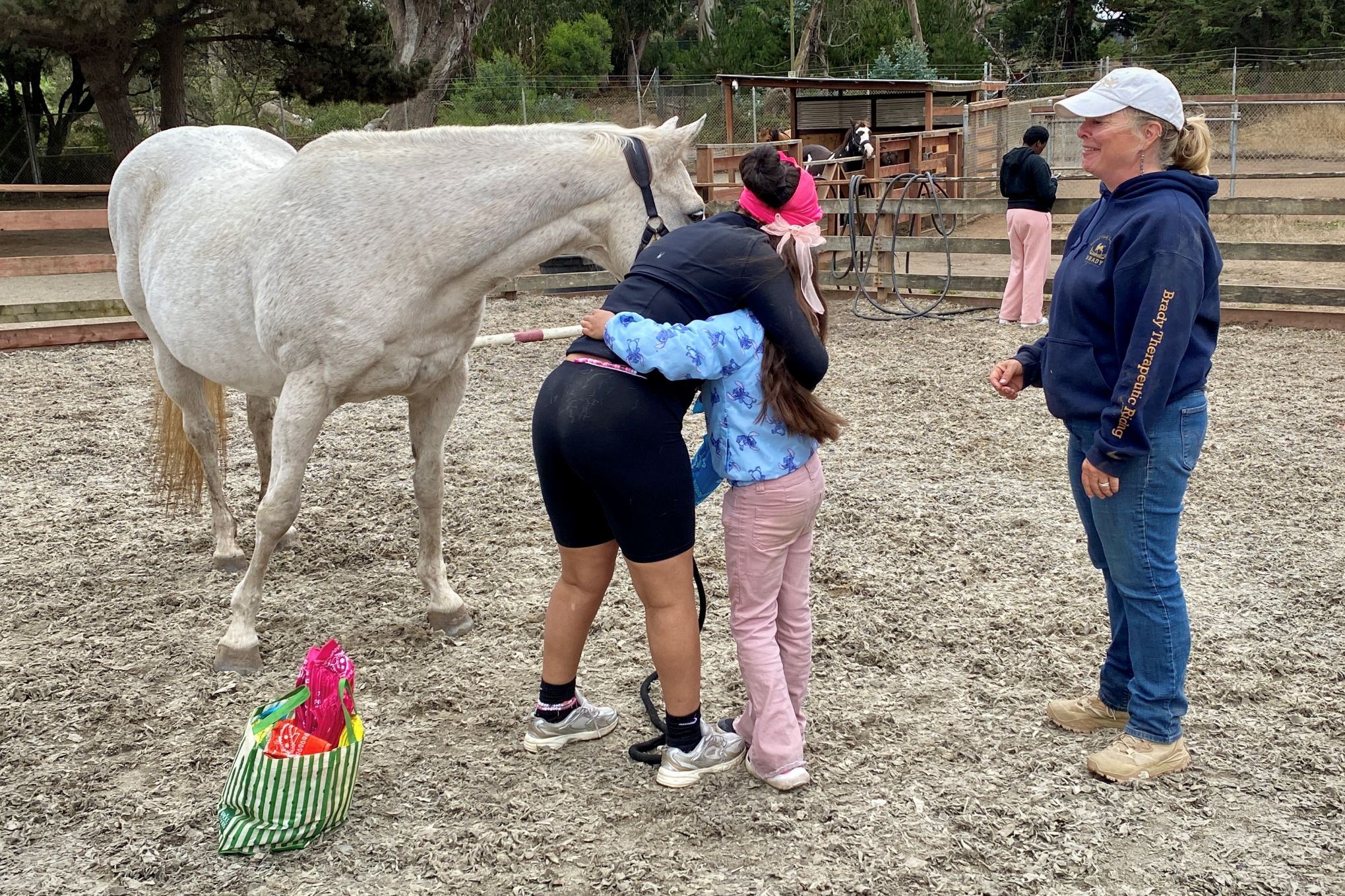
Program offerings include special field trips and dedicated day
A visit to the Zoo can sometimes be perceived as a place of serenity, or a chance to get away from the daily “noise.” But for some individuals, sudden shrieks, like the territorial calls emitted by black-and-white ruffed lemurs, may lead to anxiety or discomfort. San Francisco Zoo & Gardens has been working to accommodate those with heightened sensitivities, who might need less social interaction, or other challenges that neurodiverse individuals might face. From Tuesday, March 17 through Monday, March 23, SF Zoo will host its first Neurodiversity Celebration Week, with a dedicated day featuring informational booths, on Saturday, March 21.
“SF Zoo is truly a place for everyone,” said Cassandra Costello, CEO and Executive Director. “As such, it is important that our guests feel safe, supported and accepted whenever they visit the Zoo. I commend our staff for their on-going sensitivity to people that face different challenges, and how the professional zoo community has embraced the importance of every guest’s experience.”
Neurodiversity Celebration Week was founded as an international initiative in 2018 to address misconceptions and stereotypes when it comes to individuals with conditions such as autism, Tourette’s syndrome, ADHD, dyslexia, and other neurological differences, and promote inclusion in everyday life. At the Zoo, loud noises, especially those that are heard unexpectedly, like a lion roaring, may trigger discomfort for an individual. Perhaps the whistle from the steam train or music playing at the carousel might offer too much stimulation. Even the many olfactory smells may heighten anxiety.
“We have worked to identify what may appear unremarkable to non-neurodiverse individuals, as something that may, in fact, be triggering,” said Lamar Harris-Walker, Executive Vice President of Belonging. “We are also taking best practices gleaned from other zoos, and incorporating what we are learning from local organizations, to create an atmosphere here that is not only accessible, but comfortable.”
As part of the program, the Zoo has developed a downloadable sensory guide to allow users to better navigate their zoo visit. The guide offers helpful tips about different animal areas, and locations to take a breather away from crowds. Since last year, the Zoo has also offered a complimentary “sensory bag,” which can be checked out at the Membership Office. The sensory bag provides headphones, a communication card and a variety of fidgets. Fidgets serve as a calming effect, helping to manage sensory overload, and giving the user something to focus on.
On Saturday, March 21, the Zoo is offering early admission for members of the neurodiverse community and new pre-visit resources are being made available on the Zoo’s web site for visitors to download to provide context on what can be expected during their visit with us.
“This will allow our guests to better prepare for the day,” said Harris-Walker. “Zoo staff members will also go through new training on how to adapt to the needs of these visitors.”
In collaboration with the Zoo, James S Brady Therapeutic Riding, the on-site equine-assisted therapy program that is the first such program in any zoo, will host special hands-on demonstrations with their program’s rescued horses in the Brady area on the southeast side of the Zoo. Brady will also join other organizations at special informational tables in the Madagascar area on Saturday, March 21. The Zoo will be fundraising for the community to ultimately offer field trips to those affected.
March 16, 2026
Horse Therapy Program Excels at SF Zoo
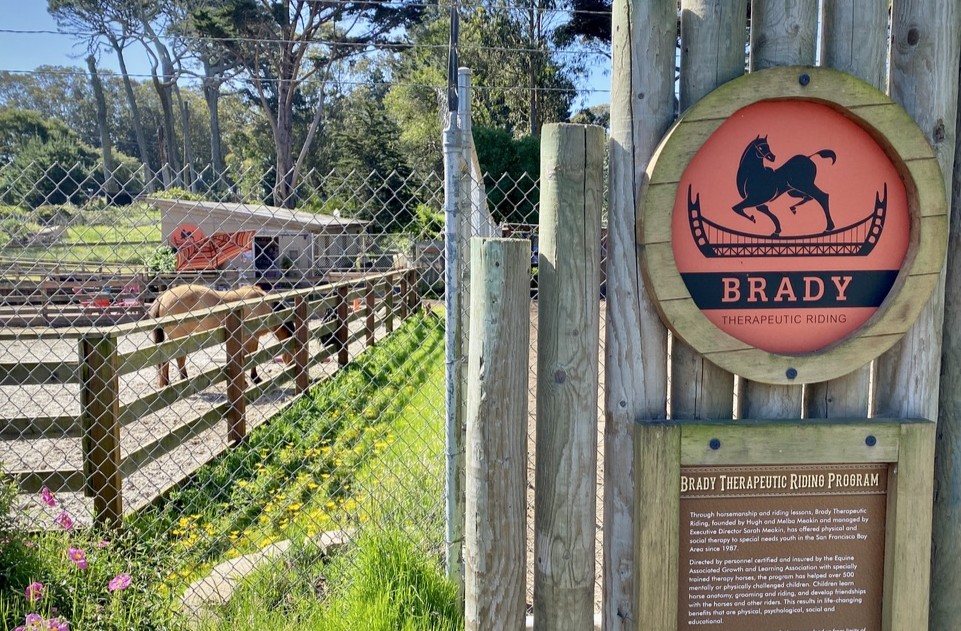
First Therapeutic Riding Program in a Zoo Environment
Over the past seven years, San Francisco Zoo & Gardens has been home to James S. Brady Therapeutic Riding, a collaborative program to expand the important work and healing power of horses in the community. Since moving onto Zoo grounds, Brady has expanded its program from one day to seven days per week, year-round. The long-established equine-assisted therapy program, where children with special needs and those who are systems-impacted benefit socially, psychologically and physically through their interactions with horses and mindfulness practices, is the first equine-assisted therapy program in an Association of Zoos and Aquariums (AZA) accredited facility. Together, the two organizations has built a scalable model for other zoo/therapy program partnerships to follow.
“This inspiring and impactful community program is part of our overall mission to connect people with animals in innovative ways,” said Cassandra Costello, CEO and Executive Director of the San Francisco Zoological Society. “Horses can connect with humans on a different level, with an innate way of calming individuals by their very nature, sparking joy and a general sense of well-being. As we near our 100th anniversary in a few short years, we recognize more than ever that our zoo has evolved as more than a zoological park, but as a valuable community resource, where people come to learn, play, explore and heal.”
Brady, located in an open stable setting on the southeast side of the Zoo, near Bear Country, operates the program as a third party but is viewable by zoo visitors. Brady’s volunteer staff is led by Executive Director Sarah Meakin, whose parents, Hugh and the late Melba Meakin, founded the program in 1987. Meakin holds a certification from Greg Kersten’s OK Corral Series. Brady is insured by Hallmark Equine Insurance Agency. The program offers therapeutic sessions throughout the week for Bay Area youths and families with special needs or who are systems-impacted, as well as special programs like their summer camp, Reading Education Assistance Ponies (R.E.A.P.) program, and a volunteer training program that strengthens leadership, confidence, and compassionate responsibility—especially for youth.
Brady prioritizes rescue horses, giving them a renewed sense of purpose while they help humans heal. Currently, the Brady herd consists of four full-size horses for riding and groundwork and two dwarf Shetland ponies for their reading program. Their head-of-herd gelding (Pete) and grey mare (Phoebe) were rescued from a slaughter yard in Texas, while their Paint mare (Magpie) and dwarf Shetlands (Toby and Tallulah) were adopted together from a rescue in Lancaster, CA. Their Kiger mustang mare (Lola) was donated by supporter and artist Isabelle Truchon.
The healing power of equine-assisted therapy has been well-documented, with physical benefits such as increased muscle strength, range of joint movement and sensory integration, and improved respiration, circulation, appetite and digestion. Psychologically, horse riding is known to build self-confidence and self-control, development of patience and self-discipline. Individuals learn recognition of shapes and colors, and visual spatial perception. Importantly, participants develop a love and respect for animals, foster friendships and experiences with people.
Programs and lessons are adapted to meet the needs of each individual participant and their family. Potential participants are asked to apply directly with Brady Therapeutic Riding through bradyriding.org.
February 18, 2026
San Francisco Zoo Appoints Cassandra Costello as Chief Executive Officer
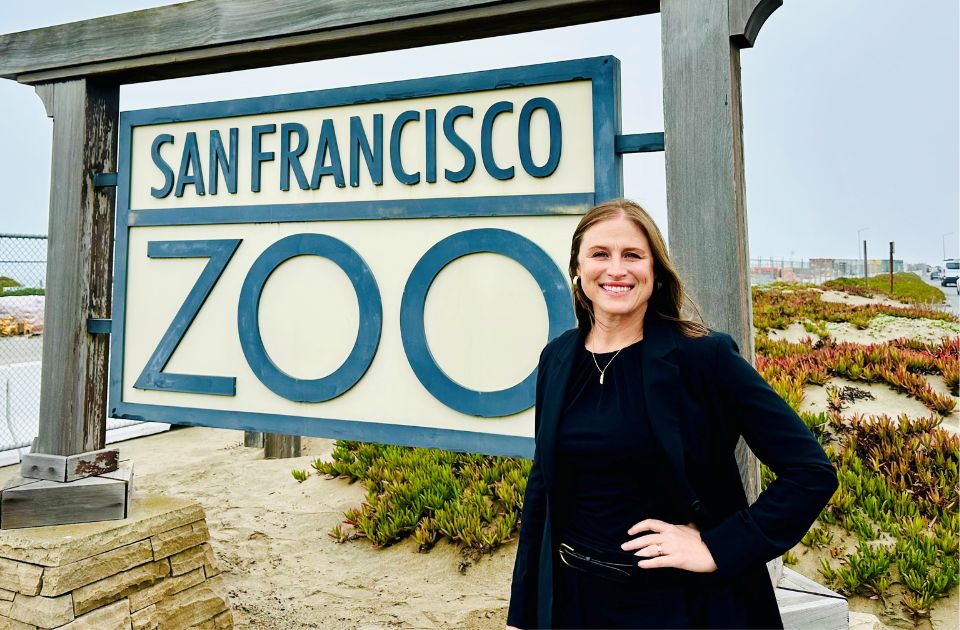
San Francisco Zoo Appoints Cassandra Costello as Chief Executive Officer
The San Francisco Zoological Society today announced the appointment of Cassandra Costello as Chief Executive Officer and Executive Director following an extensive national search.
Costello joined the Zoo as Chief Operating Officer in August 2025 and immediately stepped into the interim Co-CEO role and has held it since. Prior to joining the Zoo, she held leadership roles across San Francisco’s public and nonprofit sectors, including Chief Strategy Officer at SF Travel, Deputy Director of Property for the San Francisco Recreation and Park Department, and Chief of Staff at San Francisco City Hall.
Since stepping into the interim role in August, Costello has led a period of renewed momentum at the Zoo. January attendance reached the highest level in recorded history, welcoming approximately 63,000 visitors despite winter weather. The Zoo also introduced expanded community access initiatives, including free and discounted access programs for low-income families, special targeted promotions, and strategic media events, all designed to reconnect San Francisco families and visitors with the institution.
“Strong cultural institutions are essential to San Francisco’s vibrancy and recovery, supporting families, neighborhoods, and tourism alike,” said Mayor Daniel Lurie. “Cassandra understands that, and I am thrilled to have someone with her experience in this role.”
“The Zoo needs a leader who understands San Francisco, its communities, and how our recreational spaces serve families and neighborhoods,” said District 7 Supervisor Myrna Melgar. “Cassandra brings exactly that experience, and I’m grateful she is stepping up to guide the Zoo into its next chapter.”
“Zoo employees care deeply about the Zoo and the animals we look after every day,” said Corey Hallman, representing Zoo employees through Teamsters 856. “We’re encouraged by the direction Cassandra has taken and look forward to continuing to work together to support staff and the Zoo’s future.”
“The San Francisco Zoo belongs to the people of this city. Our focus is on strengthening animal care, expanding conservation work, and ensuring every family feels welcome here,” said Zoo CEO Cassandra Costello. “I’m honored to work alongside our extraordinary staff, volunteers, Board of Directors, and partners as we build the Zoo’s future together.”
As part of the six-month-long search in partnership with global search firm Russell Reynolds Associates, members of the Zoo’s Board of Directors met with internal and external stakeholders, including Zoo management and employees, City Hall leaders, and AZA Zoo Directors to gather input on the needs of the role.
“After a comprehensive national search, the Board is thrilled to have Cassandra stepping in as the permanent leader of the San Francisco Zoo,” said the Zoological Society Board of Directors in a statement. “She has deep roots in San Francisco, including the Sunset specifically, and demonstrates exceptional leadership and commitment to the Zoo’s mission. We are excited about the future under her leadership.
“Strong zoos succeed through collaboration with experienced animal professionals working alongside institutional leadership,” said Lee Ehmke, the President and CEO Emeritus of the Houston Zoo and a special advisor to the San Francisco Zoo over the last six months. “Cassandra has shown a clear commitment to supporting animal care and conservation programs, and I’m excited to work with her and the Zoo’s talented staff.”
Under Costello’s leadership, the Zoo will continue to build on recent progress—expanding public access, strengthening animal care and conservation programs, and deepening partnerships across San Francisco and with other zoos, ensuring a vibrant future for the institution and the communities it serves.
February 12, 2026
SF Zoo Offering Free Admission to Students During SFUSD Teacher’s Strike
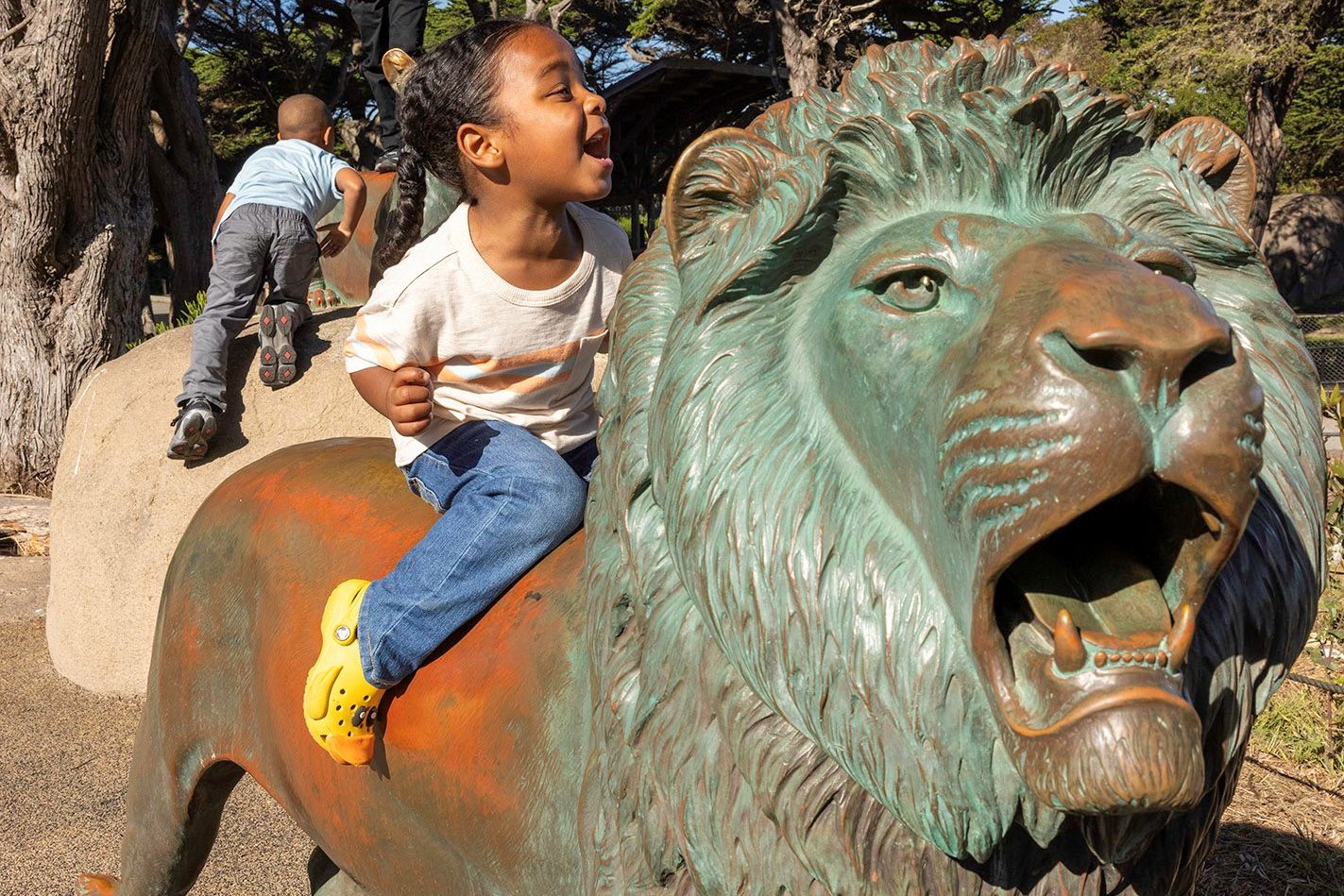
Free Admission for Students 17 and Under Until Strike Ends
San Francisco Zoo & Gardens has joined other San Francisco cultural institutions in offering free admission to students during the San Francisco Unified School District teacher’s strike that started earlier this week. Minors ages 17 and under will receive free admission to the Zoo during weekdays until further notice. Students ages 14 and under will need to be accompanied by a paying adult.
“We recognized early on that having schools closed throughout the City would impact families, and we could provide yet another resource for families to take their kids to during this time,” said Cassandra Costello, Interim co-Chief Executive Officer. “In addition, this offer is not only for San Francisco residents, but for all student visitors.”
The free admission offer during weekdays starts on Friday, February 13. The offer does not include the President’s Day holiday on Monday, February 16. To visit, guests will be required to visit the ticket window located at the front of the Zoo, as there will not be website sales for this program.
SF Zoo is open from 9:30 a.m. to 4:30 p.m. daily.
January 2, 2026
SF Zoo Mourns the Loss of Two Beloved Animals
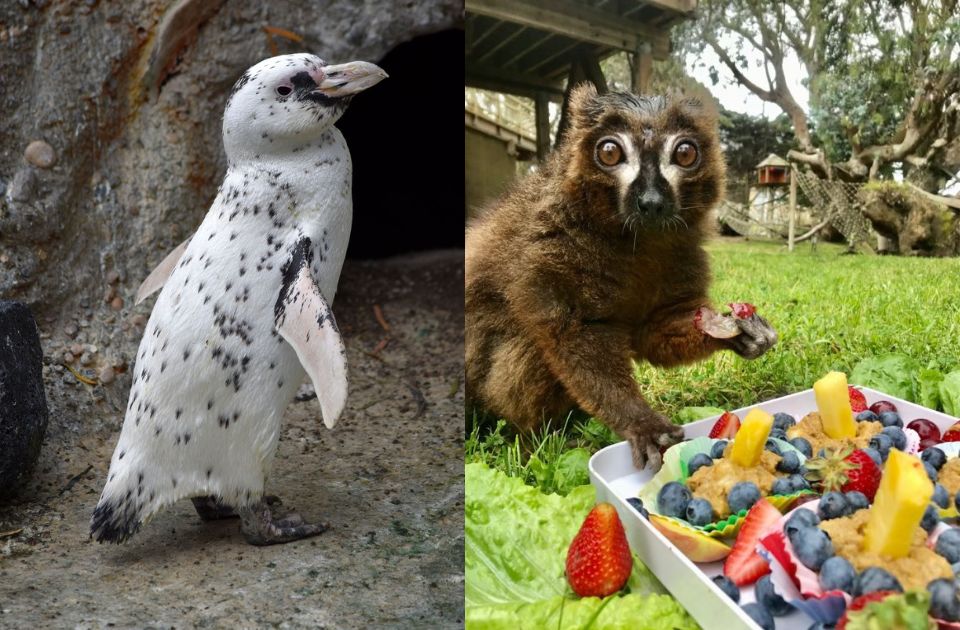
SF Zoo Mourns the Loss of Two Beloved Animals
We are starting off the new year with some heartbreaking news.
Today, we made the difficult decision to euthanize two of our beloved animals, with quality of life being the primary consideration for each. These decisions are never taken lightly and all options are carefully evaluated. Ultimately, our care team acts in the best interest of the animals to prevent unnecessary suffering or prolonged decline.
Our 34-year-old male red-bellied lemur, Eno, was the last of his kind in any North American zoo. Born at Duke Lemur Center in 1991, Eno was a fan and staff favorite at the Zoo since he first came here, and was distinguished by his large round eyes, with white teardrop shaped patches surrounding them. Red-bellied lemurs typically live until age 30 under human care (and between 20-25 years in the wild). Eno had been previously diagnosed with kidney disease and was being closely monitored by his care team. Unfortunately, his health declined rapidly due to complications from this condition.
According to his long-time keeper, Eno was so loved and a favorite of his caretakers because of his easy-going personality. “He smelled like a box of crayons and sounded like a squeaky toy when he vocalized. His fur parted down the middle on top of his head like a dapper little gentleman.” His favorite pals to explore and hunker with were crowned lemur Desi, and Redwood, the red-fronted lemur. His favorite treats were dates and bananas.
We are also mourning the loss today of our 19-year-old leucistic male Magellanic penguin, Freckles, whom many guests recognize for his white coat sprinkled with black spots, or “freckles,” which inspired his name.
In mid-December, staff noticed that Freckles was having trouble breathing and could no longer climb onto Penguin Island. After he was examined in the hospital, veterinary staff provided intensive care and round-the-clock monitoring to keep him comfortable and stable. Unfortunately, his neurologic condition did not improve. By yesterday, Freckles appeared confused and did not respond when staff approached him, touched him, or called his name. Despite treatment with several medications, his quality of life had declined significantly, and his condition placed him at a high risk of drowning if he were given access to a pool.
Freckles hatched in 2006 at the John Ball Zoo and had been here most of his life. According to staff, Freckles was “ornery,” focused on protecting his burrow, and mostly kept to himself and his long-time mate, Frenchie. Magellanic penguins are monogamous, typically mating for life, so caretakers are keeping a close eye on Frenchie as they know this loss will affect her. According to his primary caretaker, Freckles was a “good dad, and great at catching fish – something his three offspring all also do well.”
Both Eno and Freckles were remarkable ambassadors for their species, educating and inspiring millions of guests throughout their lives. Red-bellied lemurs are vulnerable due to habitat loss in Madagascar, and Magellanic penguins are near threatened as climate change and human impacts affect their coastal habitats. Through their presence and the connections they helped create, Eno and Freckles raised awareness of these challenges and the importance of conservation. They leave a lasting mark for so many of us, and will be missed.
For both animals, pathology results are pending.
November 26, 2025
Groundbreaking Eye Surgery Performed on Wolverine at San Francisco Zoo

Custom-Made Corrective Lens Made Specifically for Wolverine a World First
Edward, a 2-year-old wolverine at San Francisco Zoo & Gardens, is seeing better thanks to a first-ever corrective procedure on a wolverine’s eye. Following a recent cataract surgery, he became the first wolverine to have a custom-made intraocular lens implanted in his left eye.
Born at Billings’ ZooMontana in 2023, Edward was transferred to San Francisco Zoo later that year. While wolverines are generally solitary predators in the wild, Edward now enjoys the company of his female companion, Molly. In May 2025, the 30-pound male wolverine’s caretakers noticed his right eye was cloudy and informed the Zoo’s veterinary team.
“We were surprised to see what appeared to be a cataract forming in the eye of such a young animal,” said Dr. Nick Dannemiller, clinical veterinarian at the Zoo and board-certified specialist in zoological medicine. “So, we called an ophthalmologist to further evaluate Edward’s condition.”
Dr. Kate Freeman is no stranger to treating exotic animals. The board-certified veterinary ophthalmologist holds a Master’s degree concentrating on marine conservation and ecology, and her focus in veterinary school was zoo/wildlife animals, with the initial intention of becoming a wildlife veterinarian. Beyond her practice at the nearby Veterinary Vision, she also works as a veterinarian at The Marine Mammal Center in Sausalito and routinely travels to a handful of animal facilities to care for the eyes of various exotic animals and wildlife.
Dr. Freeman officially diagnosed a mature cataract in Edward’s right eye in June and noticed a small cataract forming in his left eye. A successful surgery to remove the cataract in the right eye was performed in August.
“In a cataract surgery, the contents of the lens, that normally refract light to the retina, are removed because they have become clouded, obscuring vision,” said Dr. Freeman. “In humans, and even in cats and dogs, there are manufactured replacement lenses made specifically for those species. At the time of Edward’s first surgery, there were no artificial lenses made for a wolverine.”
Edward was left without a replacement lens, leaving him farsighted in his right eye – unable to see close up.
Realizing that Edward would eventually also need cataract surgery on his left eye, Dr. Freeman was determined to find a solution for him, knowing he would not do well being farsighted in both eyes. She turned to an old mentor, veterinary ophthalmologist Dr. Christopher Murphy, professor emeritus at the UC Davis School of Veterinary Medicine, where Dr. Freeman completed her comparative ophthalmology residency in 2012.
Dr. Murphy, in turn, called an old friend and colleague, (human medicine) optometrist Dr. Donald Mutti, professor at The Ohio State University College of Optometry.
“Dr. Murphy and I have worked together for many years calculating the intraocular lens measurements for various birds – a falcon and an eagle,” said Dr. Mutti. “I wasn’t about to pass on a wolverine case. Even though I’m a loyal Buckeye, I just couldn’t leave an innocent wolverine in the lurch,” continued Dr. Mutti, referencing the Ohio State and Michigan mascots and the heated rivalry between those two universities. “Everyone deserves good vision.”
That’s right, a Buckeye was about to help a wolverine!
“The amount of farsightedness in Edward’s eye without an implant would be extremely high,” said Dr. Mutti. “A high level of farsightedness in a person is about 10 diopters, units of optical power. My guess is that Edward was at about a level of 50 diopters, where he’d be able to see whether lights were on or off and maybe some gross motion, but there would be no capability for detail vision in Edward’s eye.”
The three vision specialists got to work calculating the specific measurements for a custom-made lens for Edward. Based on ultrasound images of Edward’s eye and corneal measurements using a keratometer on loan from Micro Medical Devices, they were able to analyze and calculate the corneal curvature, size of natural lens, length of the eye, and where the lens would sit following surgery. After many different calculations, and consultation with the lens manufacturer, an-vision, the team settled on an optical power of 100 diopters for Edward’s lens and had the lens created. In comparison, cats are 53.5 on the scale, and dogs are generally 41 diopters. The optical power for human lenses varies based on individual calculations.
“Based on the measurements we calculated, a dog or cat lens would not work well for a wolverine, so we elected to have a special one made for him,” said Dr. Freeman.
In November, Edward underwent a second cataract surgery, this time on his left eye. Dr. Freeman successfully implanted the custom-made lens into that eye. It was determined best to leave the right eye without a replacement lens as that eye was doing very well and wolverine eyes are sensitive to procedures.
“Every time you open up an eye, you introduce potential problems,” said Dr. Freeman, explaining why a lens was not placed in his right eye also. “Since we knew Edward was doing well with only one eye farsighted, it was best to leave the right eye aphakic (without a lens).”
The world’s first wolverine to have a corrective intraocular lens implanted in his eye is doing much better according to his care team.
“Before the first surgery, he was very mistrusting of doing anything on the right side of his body,” said Dr. Dannemiller, about evaluating Edward’s vision. “After the surgery, we believe he can see a bit better, albeit aphakic, because he was more willing to present his right side during training activities. And now after the second surgery, we notice improvements in his overall vision.”
Edward now receives eye drops two to three times a day. Thanks to exceptional training by his handlers, he voluntarily receives the drops.
Edward’s improved vision was noticed recently when he successfully out-hunted Molly to catch a small rodent that naturally appeared in his exhibit, so his care team is encouraged by the success of the surgery.
While Edward eats a wolverine’s natural carnivore diet (rabbits, poultry, etc.), the random rodent was an anomaly – he does not have to hunt for his food normally. He does, however, enjoy one peculiarity in his diet – he is quite fond of taco seasoning.
“He can’t get enough of it,” said Dr. Dannemiller. “He loves taco seasoning on everything. Even if you sprinkle a little in his habitat, he will tear through the exhibit trying to find it.”
Going forward, Dr. Freeman and the Zoo will continue to monitor Edward’s vision and expect him to live a normal life.
Dr. Dannemiller approximates that wolverines typically live 5-10 years in the wild and up to 15-20 years under human care. Currently, there are only about 30 wolverines at zoos and wildlife centers in North America. Wolverines are listed as a threatened species under the Endangered Species Act, primarily due to climate change and habitat loss, with an estimated 300 individuals remaining in the contiguous United States.
As for this Saturday’s Ohio State-Michigan football game, we presume Edward will be rooting for the Michigan Wolverines, but he may now have a soft spot for the Buckeyes after receiving their help.
November 20, 2025
SF Zoo to Transfer Female Chimpanzee to Zoo on the East Coast
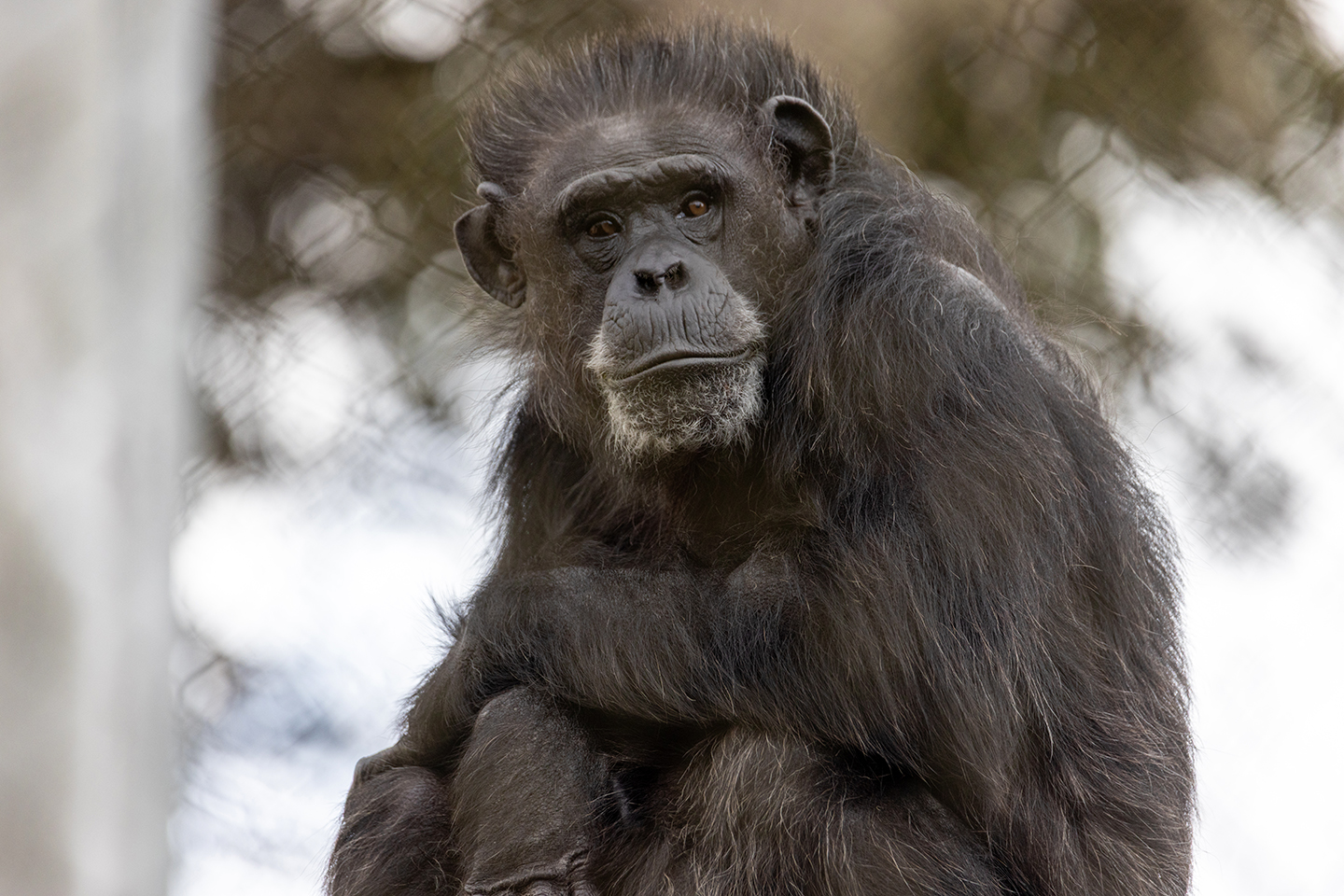
Photo credit: Justin Guiel
Zoo will temporarily place chimpanzee program on hiatus
A beloved female chimpanzee named “Twiggy” will soon be departing her home at San Francisco Zoo & Gardens to join the chimpanzee troop at the Maryland Zoo in Baltimore. She was deemed a good fit as this will allow her to build more relationships with other females, including one she is already familiar with. With this move, the Zoo announces that it will temporarily place the chimpanzee program on hiatus, with the future transfer of the remaining chimps to another zoo.
“In professional zoos, individual animals may transfer to another facility based on an Association of Zoos and Aquariums’ Species Survival Plan for Chimpanzees (SSP) recommendation,” said Robbie Graham, Senior Curator of Mammals. “Twiggy has become a favorite among staff and guests here, but when a request of this nature comes in, we want to do what is best for the animal.”
Twiggy, now 39-years-old, was transferred to SF Zoo in 2019 along with another female and male to form a larger troop with the opening of the new habitat, Great Ape Passage. Twiggy, renamed “Connie” as her public-facing name after a special donor, was part of an effort to expand the chimpanzee group, which had long been comprised of senior chimpanzees, “Minnie,” “Maggie” and “Cobby,” who each lived at the Zoo for more than 40 years. In addition to the two females and male, a fourth male transferred to the Zoo, based on an SSP recommendation.
Integrating adult chimpanzees together is complex, and it was necessary to find suitable individuals within the accredited zoological community that needed a new home. To do this, the SSP management group needed to find chimpanzees projected to be the most compatible with the Zoo’s troop, reviewing behavior profiles of potential new group members to find the best fit.
In the case of the two new females, including Twiggy, assimilating with senior chimps Minnie and Maggie served as an incredible display of acceptance of new troop members. The male introductions also exceeded expectations, as the new male “Gombus,” was the first other male chimpanzee ever to join this particular troop, and both Cobby and Gombus were patient and at ease, helping the integration process succeed.
The passing at 61 of Cobby in 2021 of old age, as the oldest male chimpanzee living under human care, followed in 2024 of female Minnie at age 54, and this year, of Maggie at age 55, the remaining three individuals – Twiggy, Gombus and Michael – coped with the losses of the senior members of their troop.
“Every loss was devastating, to not only long-time chimp caretakers, Zoo staff and those who grew up with them in San Francisco, but also to the remaining chimps,” said Graham. “We honor those we lost, but we also wanted to better understand what was best for the smaller group.”
With the recommendation to move Twiggy to Maryland Zoo, primate staff saw her departure as an opportunity to make an important decision – to temporarily halt the chimpanzee program, and focus on another Great ape species, the critically endangered Bornean orangutan. Currently, the Zoo has a male and female, and after the Zoo finds a home for the bonded males, Gombus and Michael, the chimpanzee habitat can be converted to house orangutans.
“We have an opportunity to create a mixed species habitat for both orangutans and endangered white-cheeked gibbons,” said Graham. “The plan would be to bring in another female orangutan, and participate in the Species Survival Plan for Orangutans’ breeding program. We are excited about this, as time is ticking for orangutans, as one of the world’s most critically endangered species.”
And within a few years, the hope is the return of chimpanzees to San Francisco.
“When the time is right, we want to build a multi-generational chimpanzee habitat, and continue the long tradition of raising awareness about one of the most iconic species in the world.”
A date for Twiggy’s departure has not yet been scheduled.
October 15, 2025
Cecil, the Zoo’s New Silverback Gorilla Officially, Debuts to the Public this Weekend
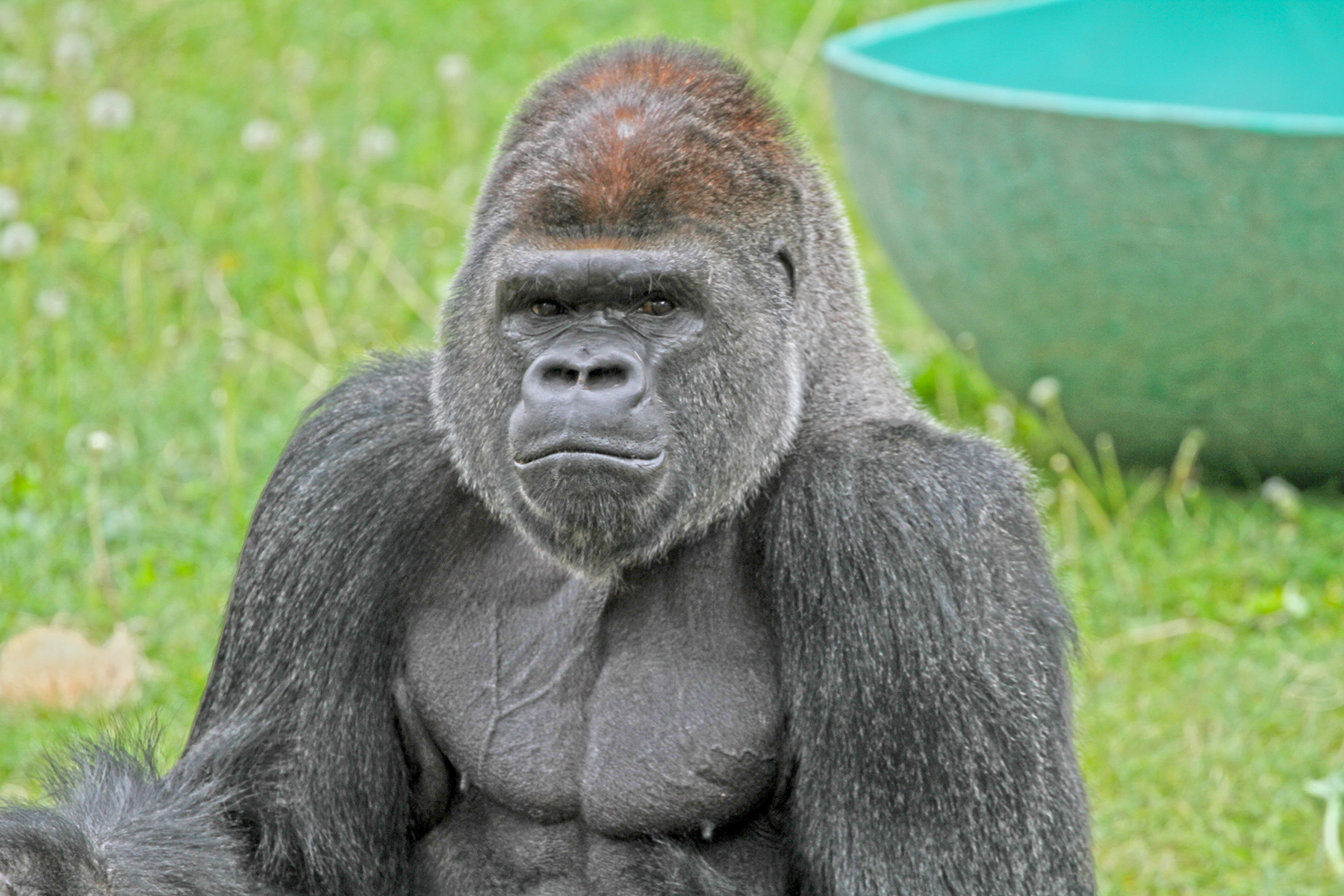
Cecil is welcomed to San Francisco and meets his public
The public is invited to see San Francisco’s newest resident, Cecil, a 26-year-old male silverback Western lowland gorilla, who will make his official public debut on Saturday, October 18th. Cecil arrived at San Francisco Zoo & Gardens in early August from the Louisville Zoo in Kentucky, to start the acclimation process, which also included an introductory phase with the Zoo’s resident females.
“We are excited for the public to see Cecil in his new home and among his new family troop,” said Robbie Graham, Senior Curator of Mammals. “Since his arrival, we have found him to be very even-tempered, and almost ‘chill’, as experiencing an all new environment among all new caretakers and other gorillas might have otherwise been daunting.”
Last April, silverback Oscar Jonesy, who led the Zoo’s family troop since 2004, passed away from advanced heart disease. Soon after, the Association of Zoos & Aquariums’ (AZA) Species Survival Plan (SSP) for Gorillas, which manages all 350 gorillas living in AZA-accredited facilities, identified Cecil as a promising candidate to lead a family group, as his genetics offer a strong match for the Zoo’s female members.
Through managed breeding and deep understanding of natural behavior, the Gorilla SSP aims to maintain a genetically healthy gorilla population for the next century, while raising public awareness about gorilla conservation and the threats faced by wild populations of this critically endangered species. SF Zoo participates in both the Gorilla SSP and Gorilla SAFE (Saving Animals From Extinction) programs.
Born at the Cincinnati Zoo in 1998, Cecil moved to the Louisville Zoo in 2004, where he was part of a young bachelor group. Bachelor groups are a common social grouping modeled after wild gorilla behavior, allowing maturing silverbacks to develop socially, physically and hormonally.
The process of introducing our resident females, 45-year-old Bawang, 27-year-old Monifa, and 20-year-old Kimani, to a new silverback, is a complex process that takes time, patience, careful planning and observation by primate specialists. The process takes into consideration each individuals’ personalities and social history, and social dynamics.
“We allowed the gorillas to do things on their own time,” said Graham. “And because Cecil is still considered relatively young, we gave him space to explore his outdoor habitat on his own, before meeting each of the females as a group.”
“The arrival of Cecil is a welcome one, not only for our gorilla family, but for the City of San Francisco,” said Cassandra Costello, Chief Operating Officer and Interim Co-Chief Executive Officer. “From the excitement I hear from the community, we know that visitors will come specifically to see him, as he takes reign of his new family troop.”
Guests can see Cecil at the Jones Family Gorilla Preserve at SF Zoo daily. Hours of operation are 10 a.m. to 5 p.m., winter hours are 9:30 a.m. to 4:30 p.m., beginning November 2.
In the News
July 3, 2026
“Exploring Animals” with the San Francisco Zoo
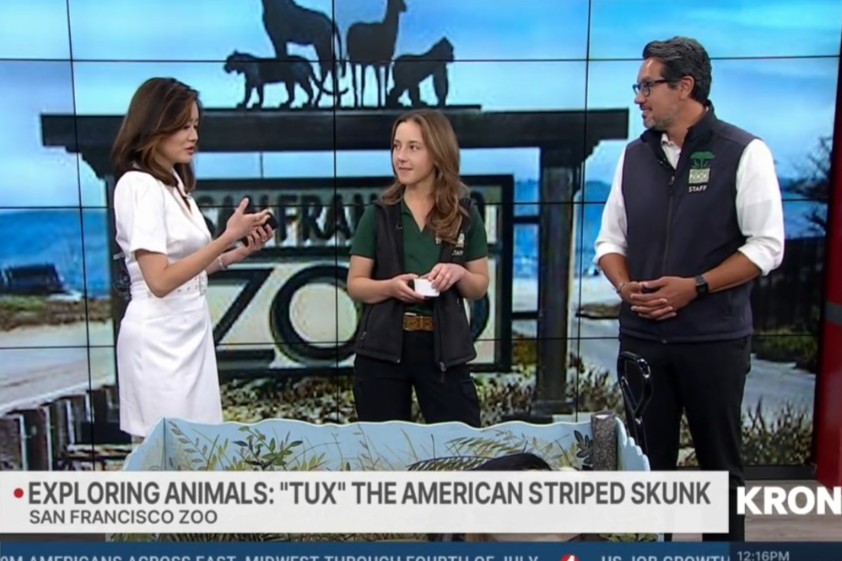
Photo credit: KRON4
July 1, 2026
Animatronic dinosaurs take over the San Francisco Zoo for the summer
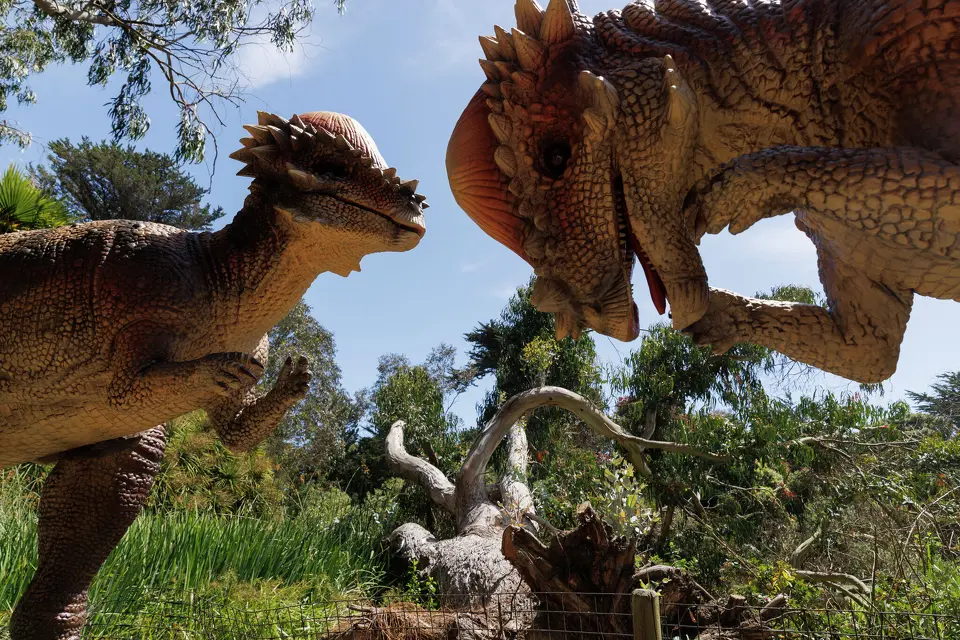
Photo credit: Santiago Mejia/S.F. Chronicle
June 13, 2026
San Francisco Zoo welcomes first penguin chicks in almost 3 years
June 6, 2026
“Exploring Animals” with the San Francisco Zoo
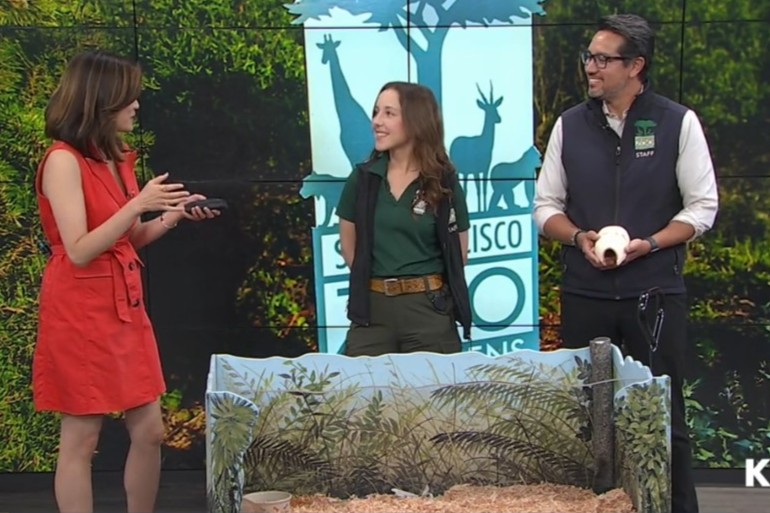
Photo credit: KRON4
May 30, 2026
The giant pandas are (still) coming. Maybe. Lurie wants you to know he’s on it
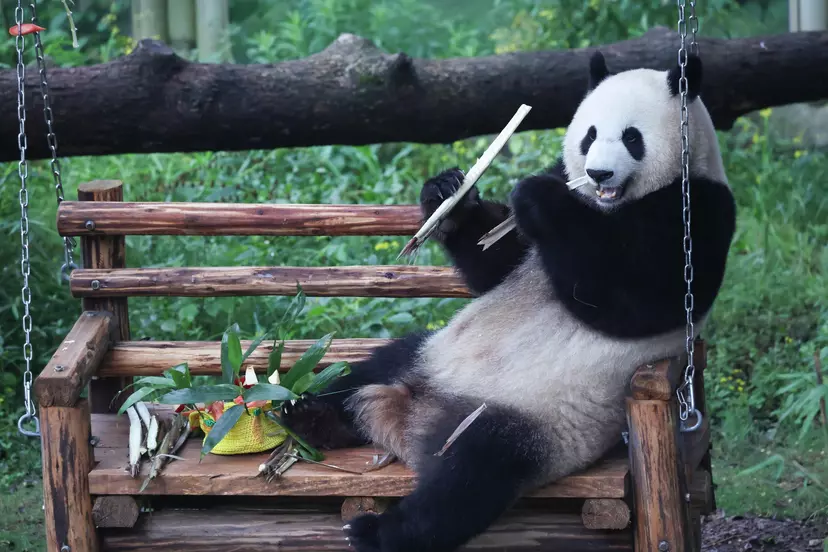
Photo credit: CFOTO/Getty Images/SF Standard
May 28, 2026
Meet the San Francisco Zoo’s New CEO
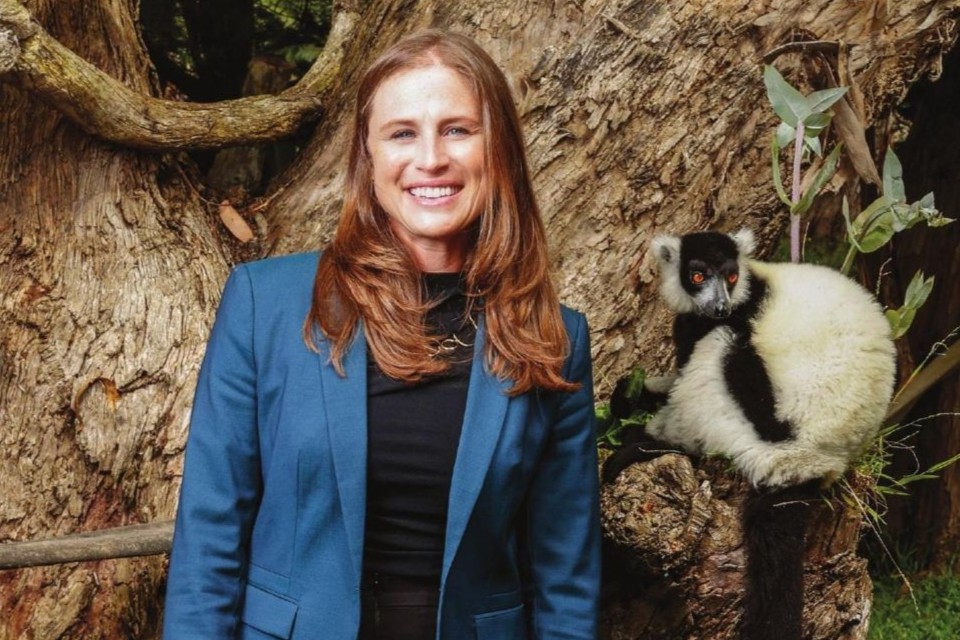
Photo credit: Craig Lee/The Examiner
May 8, 2026
This California frog vanished from Yosemite. Now it’s back — and thriving
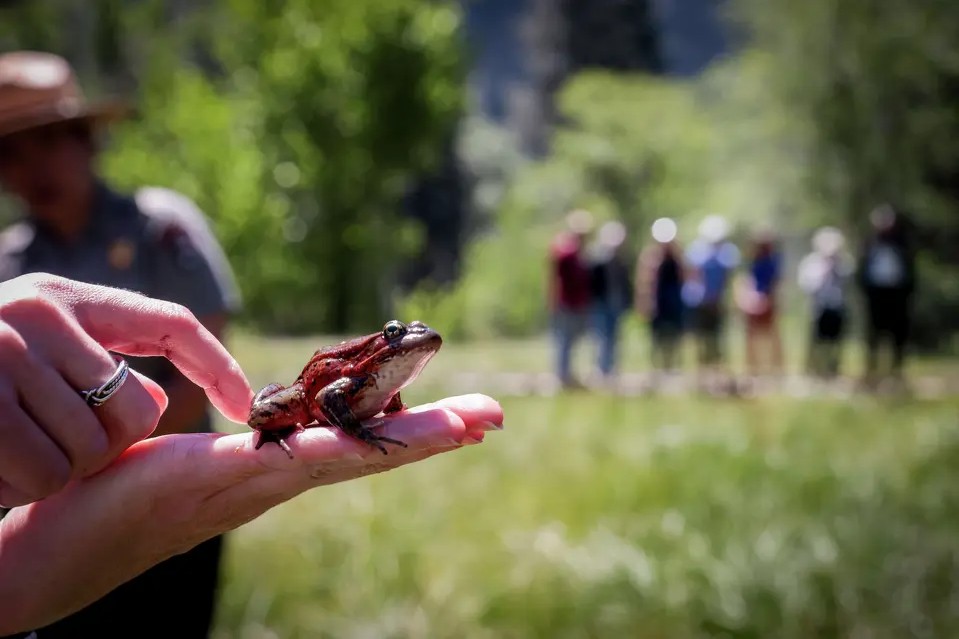
Photo credit: Brontë Wittpenn/S.F. Chronicle
May 7, 2026
New zoo CEO has eyes on a turnaround
Photo credit: Craig Lee/The Examiner
May 2, 2026
“Exploring Animals” with the San Francisco Zoo
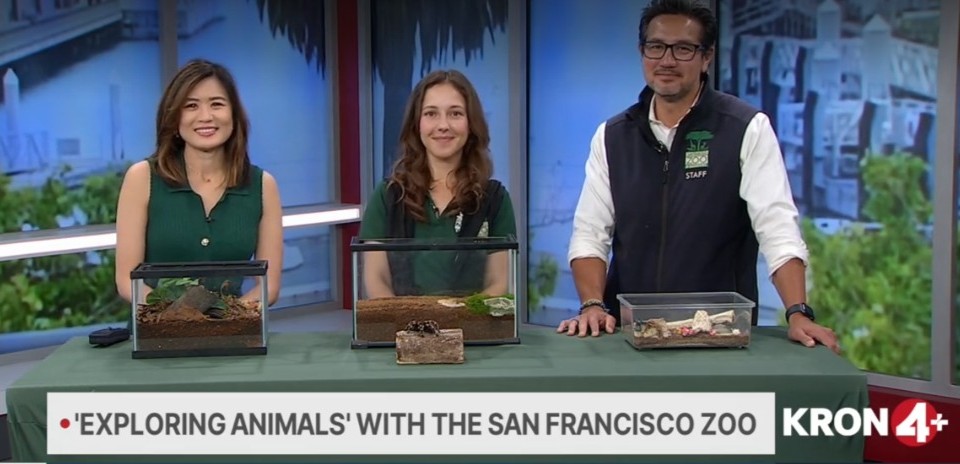
Photo credit: KRON4
April 7, 2026
San Francisco’s $6.5 million loan to zoo comes with a warning
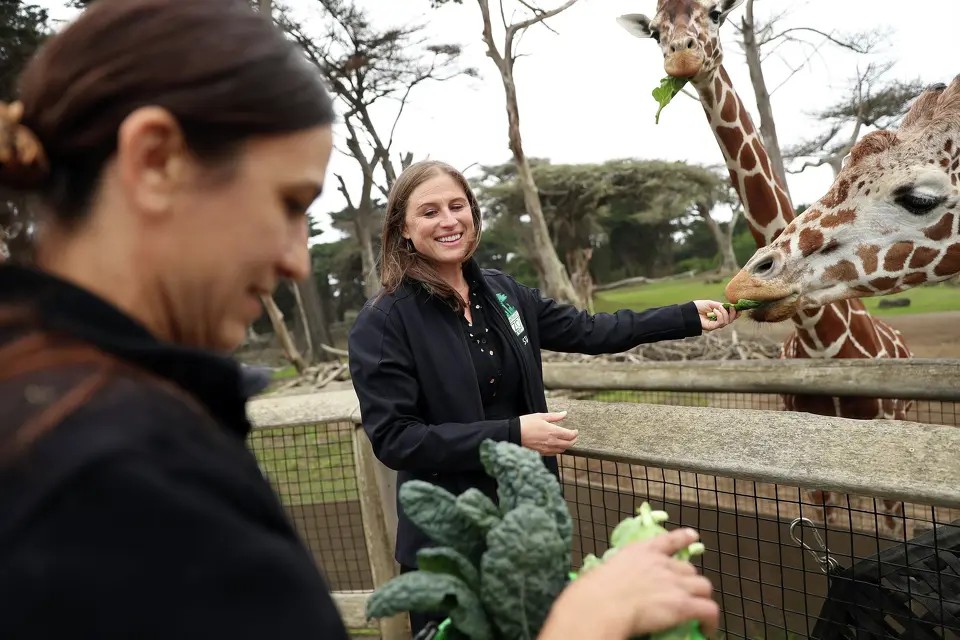
Photo credit: Scott Strazzante/S.F. Chronicle
April 3, 2026
“Exploring Animals” with the San Francisco Zoo
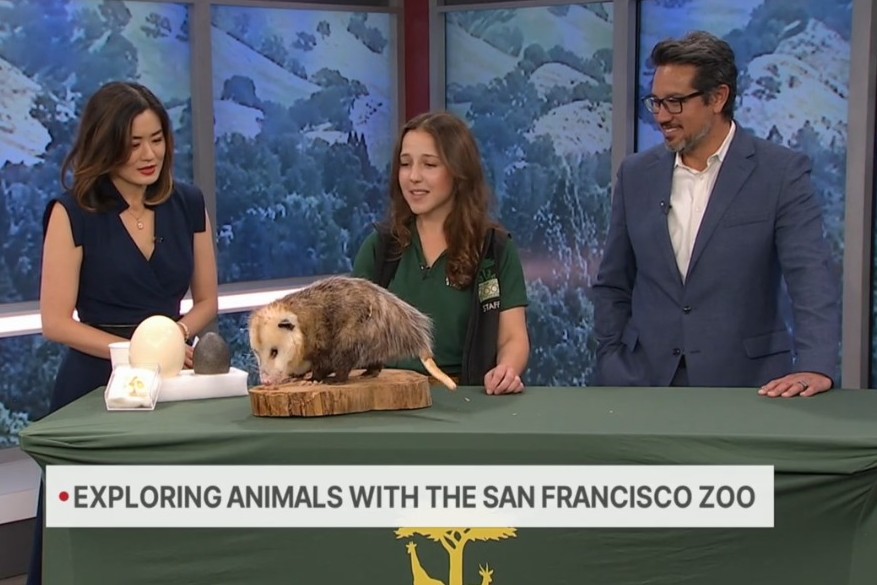
Photo credit: KRON4
March 17, 2026
SF: Zoo Horse Therapy Program Welcomes Guests For Neurodiversity Celebration Week
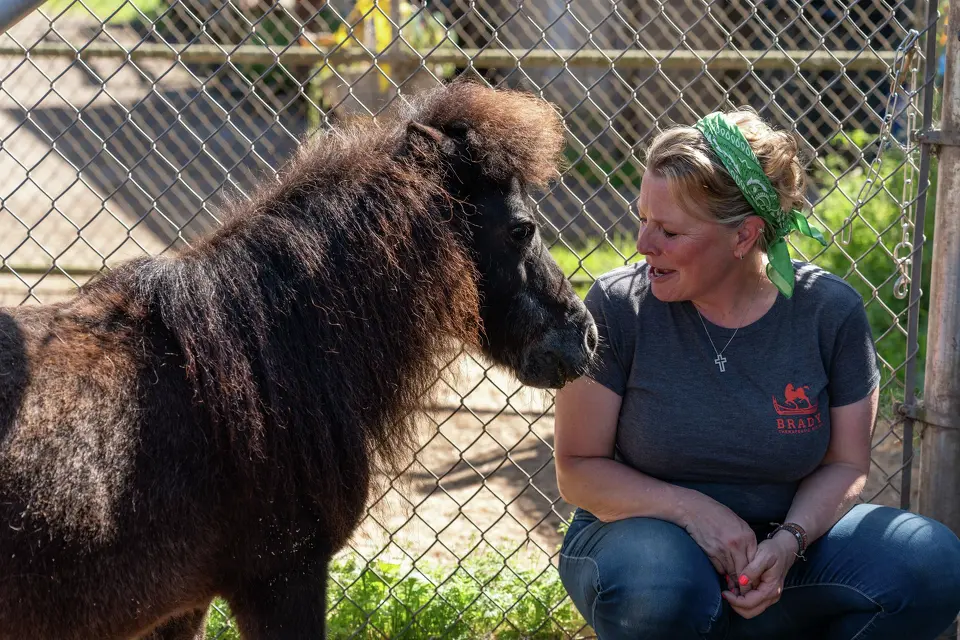
Photo credit: Andres Jimenez Larios/Bay City News
March 6, 2026
“Exploring Animals” with the San Francisco Zoo
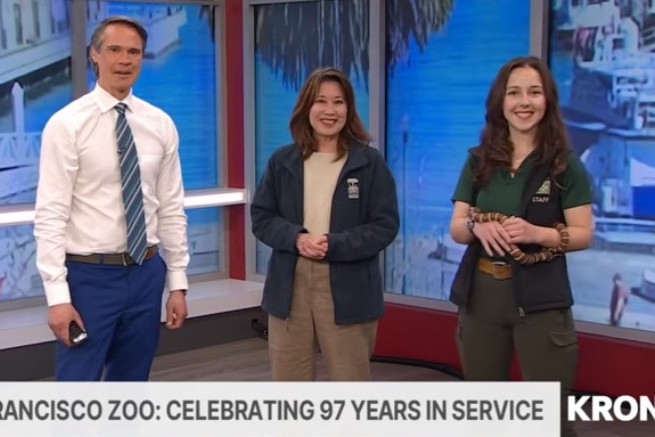
Photo credit: KRON4
February 23, 2026
Endangered San Francisco garter snake making a comeback
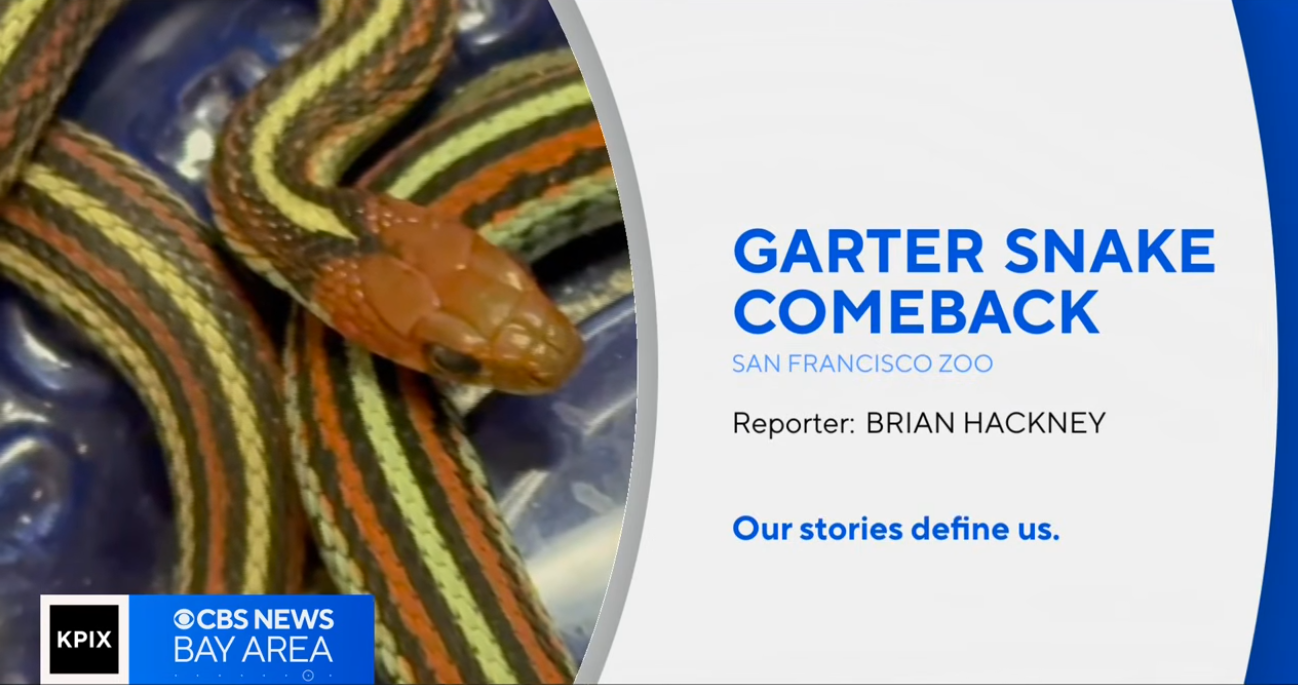
Photo credit: KPIX | CBS News Bay Area
February 18, 2026
San Francisco Zoo names new CEO

Photo credit: Scott Strazzante/S.F. Chronicle
January 31, 2026
In defense of the San Francisco Zoo: A mom’s rebuttal
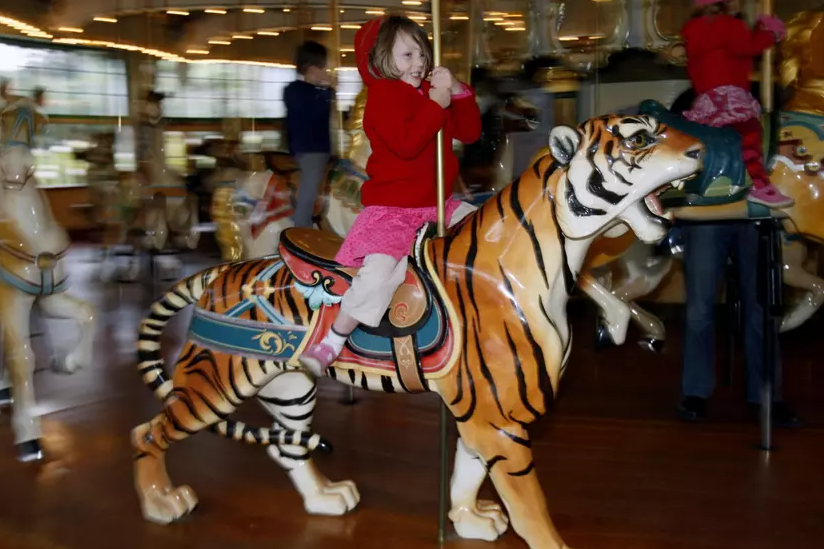
Photo credit: The San Francisco Standard
January 29, 2026
SF: Zoo Penguins Receive Annual Health Check-Up
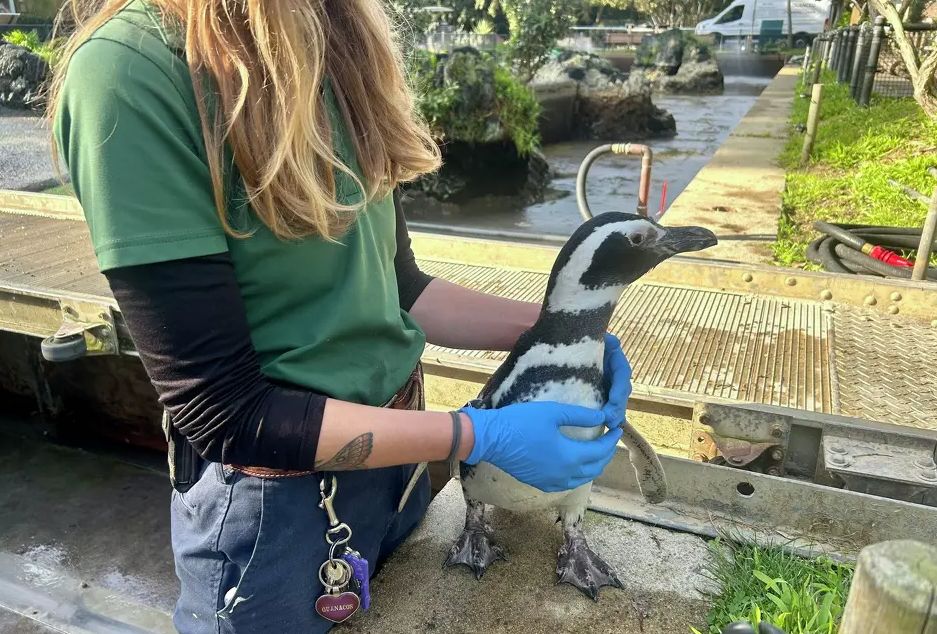
Photo credit: Alise Maripuu/Bay City News
January 27, 2026
S.F. mountain lion tranquilized, will be released into wild
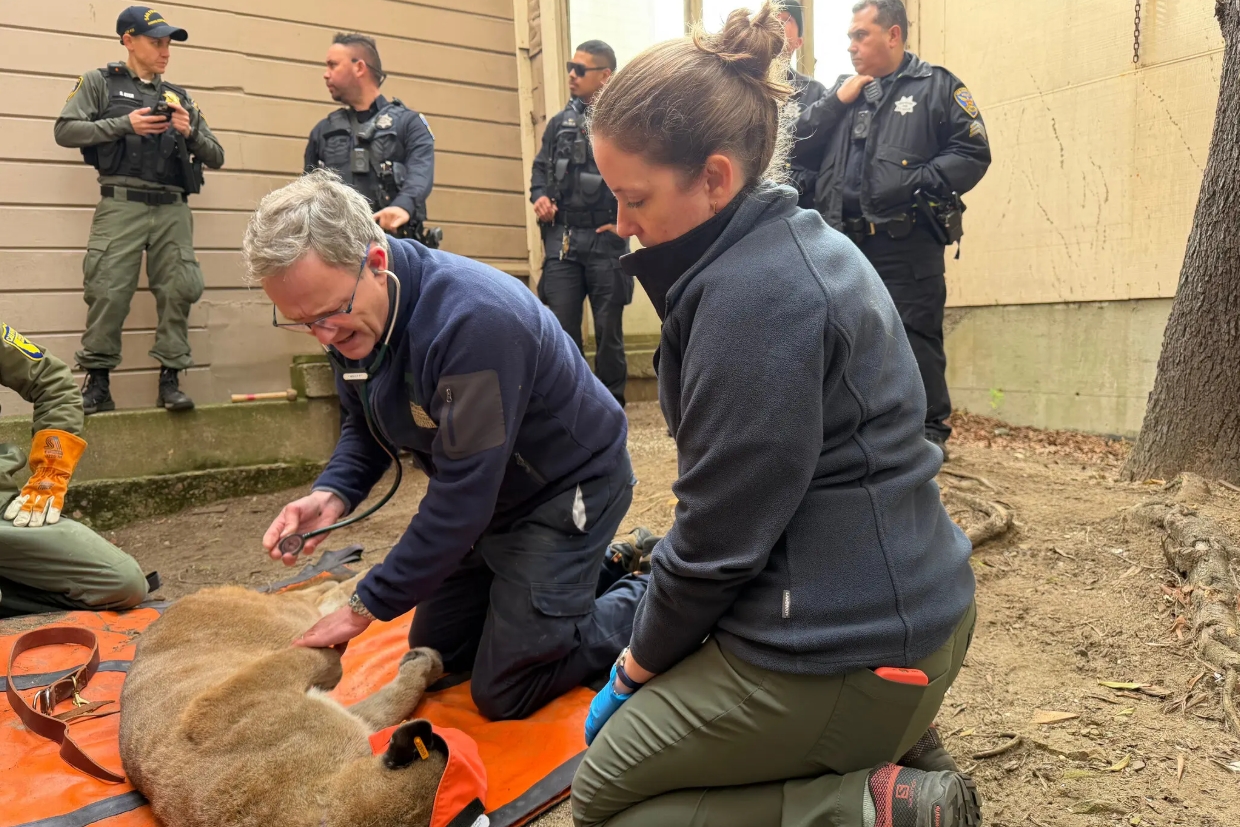
Photo credit: San Francisco Chronicle
January 27, 2026
Tails of the City: San Francisco’s Latest Animal Sensation Is a Mountain Lion
Photo credit: The New York Times
January 27, 2026
Zoo reintroducing San Francisco Garter Snake to wild
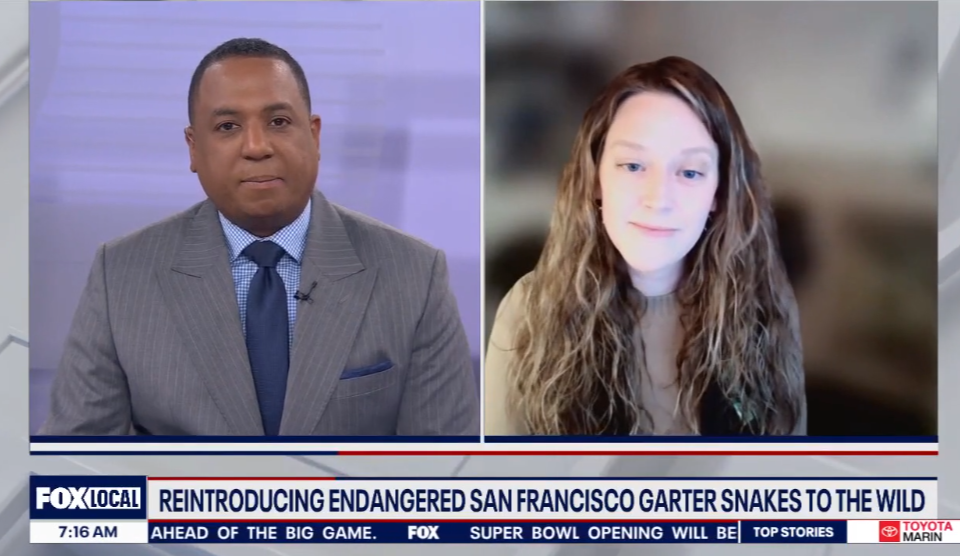
Photo credit: KTVU FOX2
January 24, 2026
Before Claude, an outlaw alligator eluded trappers in S.F. and stole the city’s heart
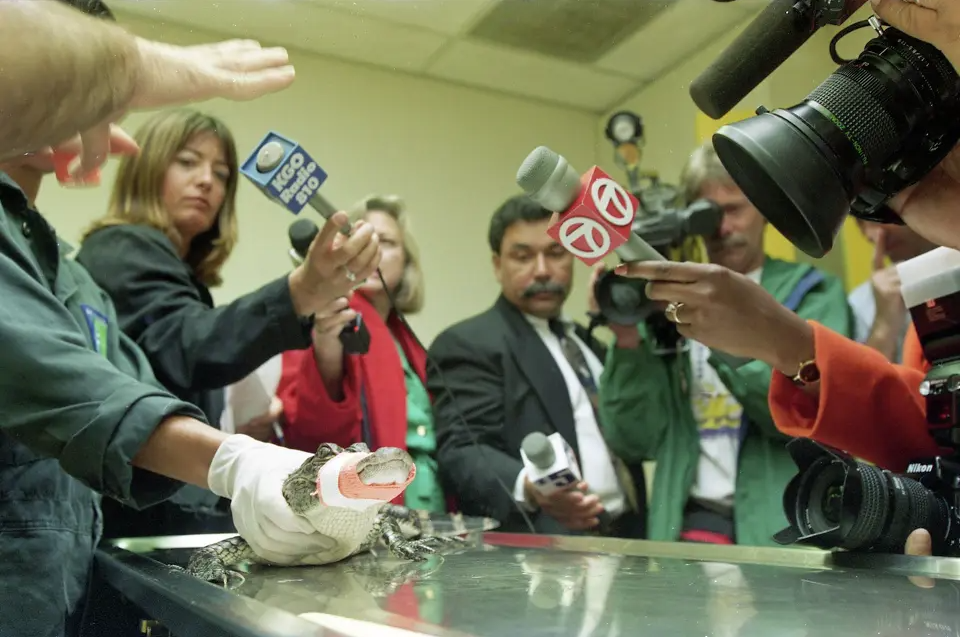
Photo credit: San Francisco Chronicle
January 22, 2026
Stunning California snake endangered since the 1960s prepares to make a comeback
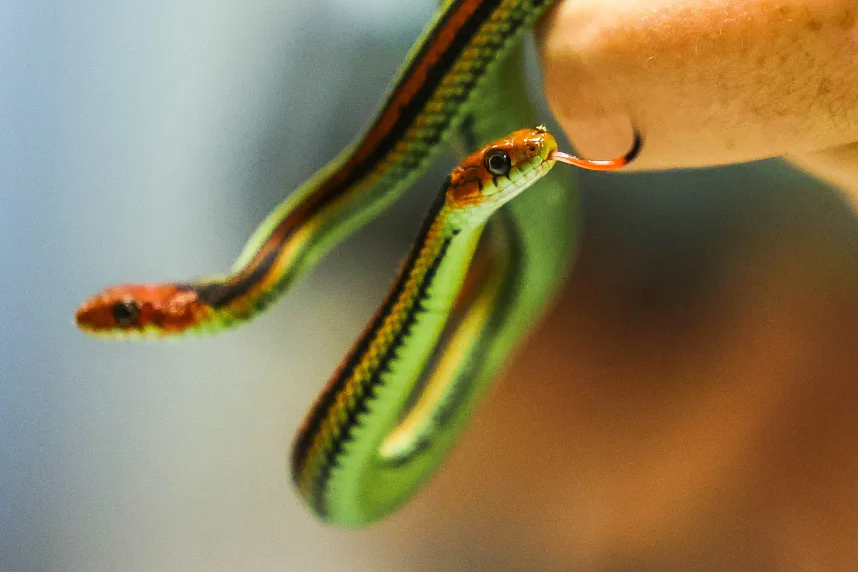
Photo credit: East Bay Times
January 11, 2026
Free admission all January at the SF Zoo for kids
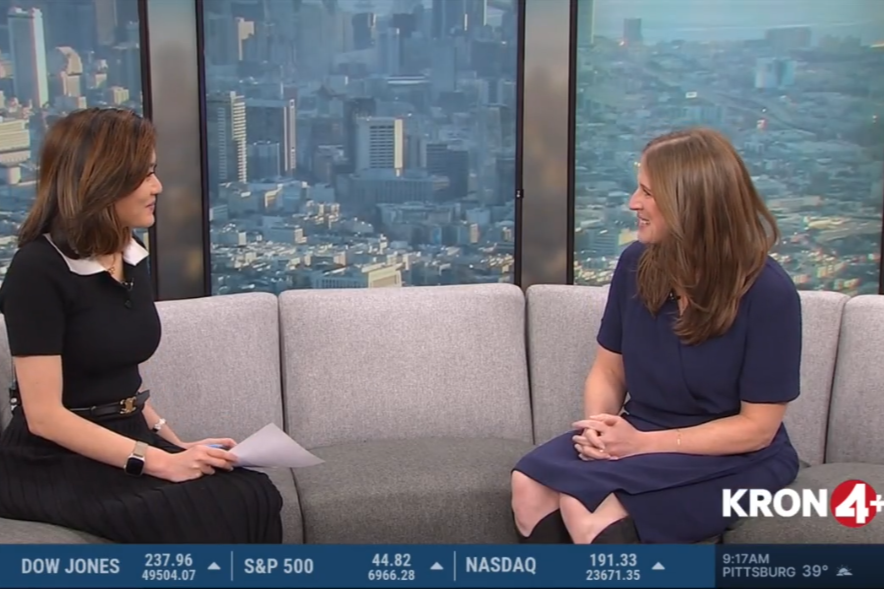
Photo credit: KRON4
December 6, 2025
SF: Cirque Du Soleil Brings Wild Performance To San Francisco Zoo

Photo credit: Andres Jimenez Larios/Bay City News
November 27, 2025
SF Zoo wolverine receives specialized eye procedure, first for species
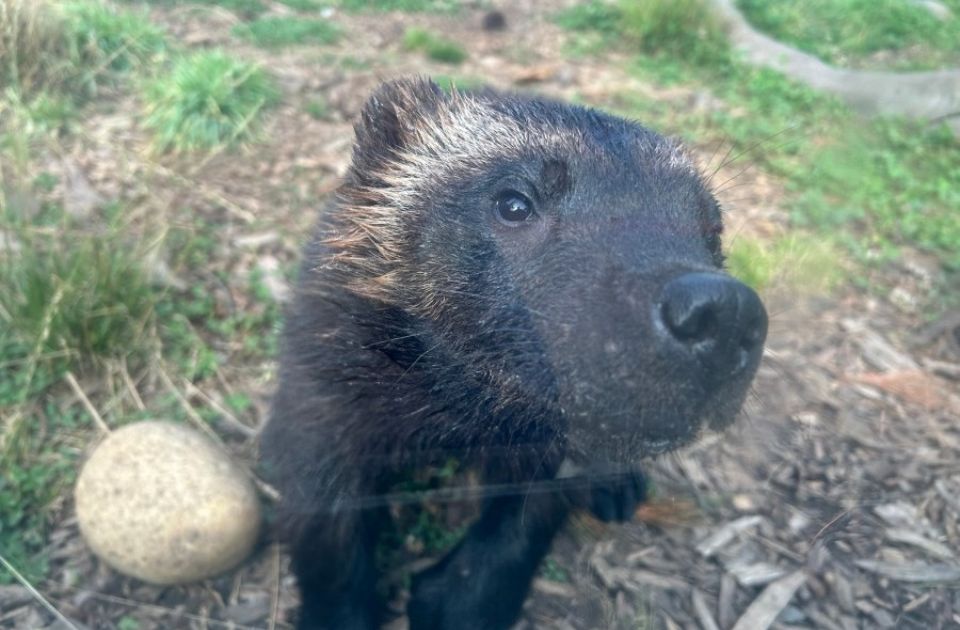
Photo credit: KRON4
November 17, 2025
San Francisco Zoo’s new leadership talks about revitalization plans

Photo credit: CBS News
November 10, 2025
‘Major shift’ at San Francisco Zoo as new leadership takes charge