




In the Zoo
South American Tropical Rainforest & Aviary
Fascinating Facts
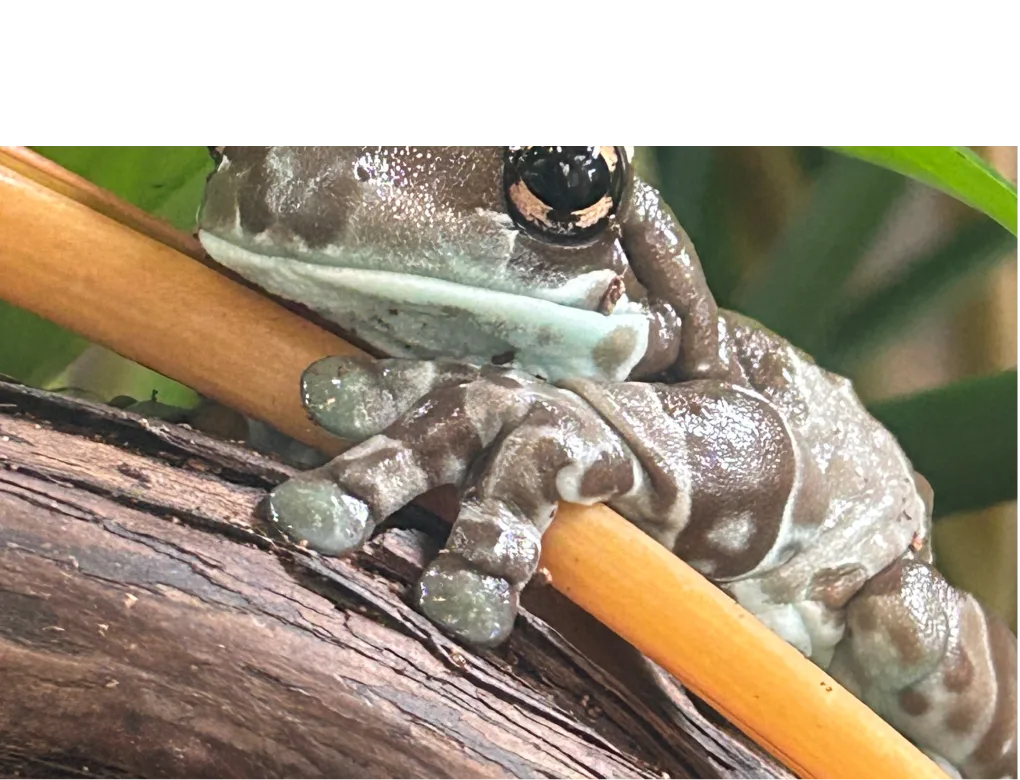
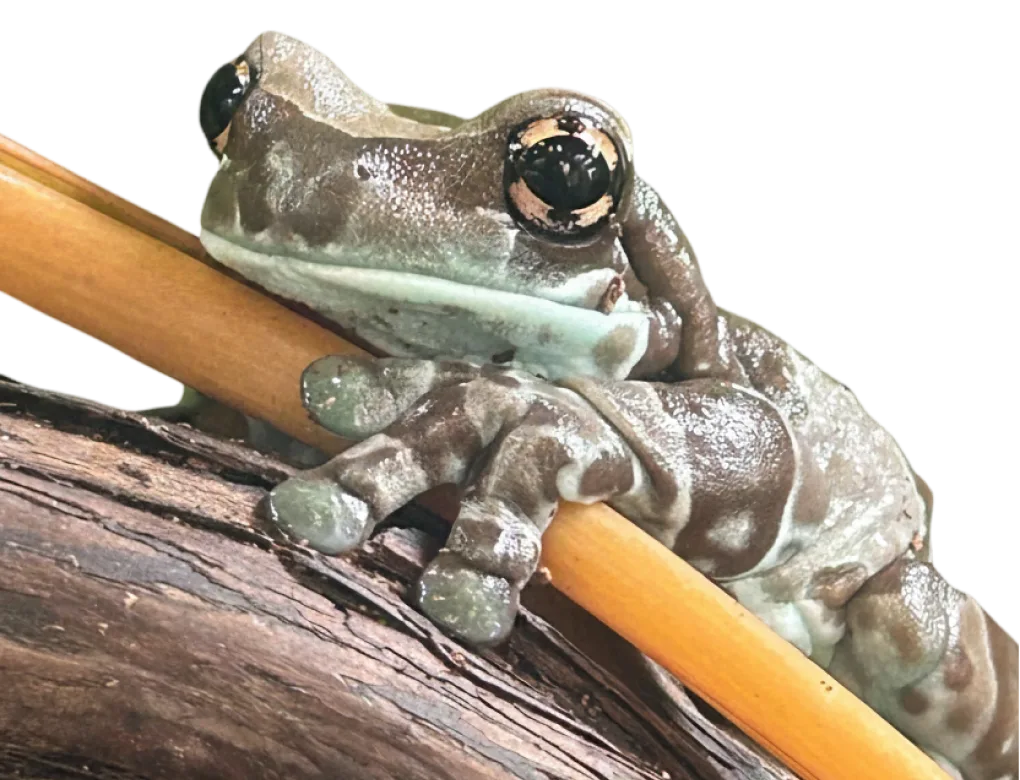
- The name “milk frog” comes from the poisonous milky secretion that they emit when threatened.
- They are also known as “mission golden-eyed tree frogs.” They are threatened by deforestation and pollution.
Physical Characteristics
Amazon milk frogs have bumpy skin and large toe pads for tree climbing. They are patterned in darker and lighter shades of brownish-grey.
Females grow up to 3 ½ inches in length, while males grow up to 3 inches in length. Their scientific name, “Trachycephalus” refers to their rounded snout, which they use for pushing aside vegetation to hide amongst. They have large vocal sacs and can produce a loud call.
Diet
In the wild, they eat a variety of insects, including crickets, moths, beetles and cockroaches. They will also eat spiders, caterpillars and other bugs.
Habitat
Amazon milk frogs are primarily arboreal and are found in the tropical rainforest canopy in Venezuela, Guyana, French Guiana, Suriname and Brazil.
Social Behavior
Males will vocalize from a water-filled tree cavity on a clear night to better carry the sound of their call. They reproduce during the rainy season, with a clutch of 2,000+ gelatinous eggs laid inside a tree cavity. The tadpoles will hatch within a day. Amazon milk frogs are nocturnal.
Status In The Wild
DID YOU KNOW?
Lions can sleep up to how many hours a day?
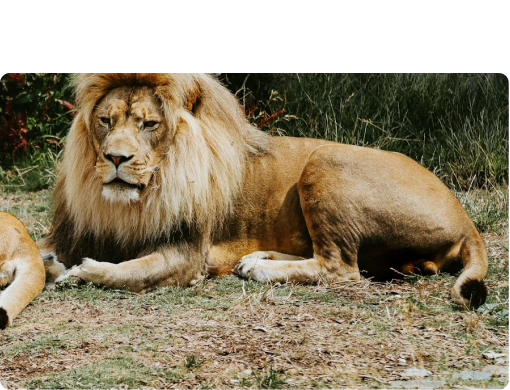
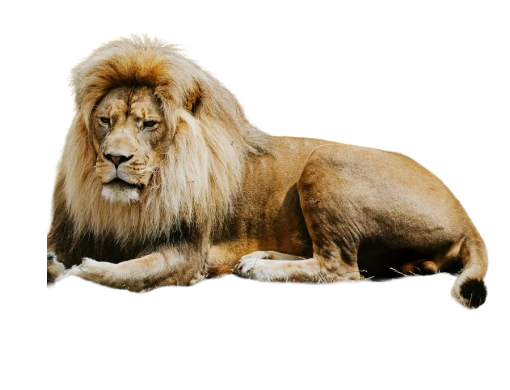
African lion
VulnerableOne of the most iconic animals on Earth, the African lion is a symbol of strength, social intelligence, and wild Africa.
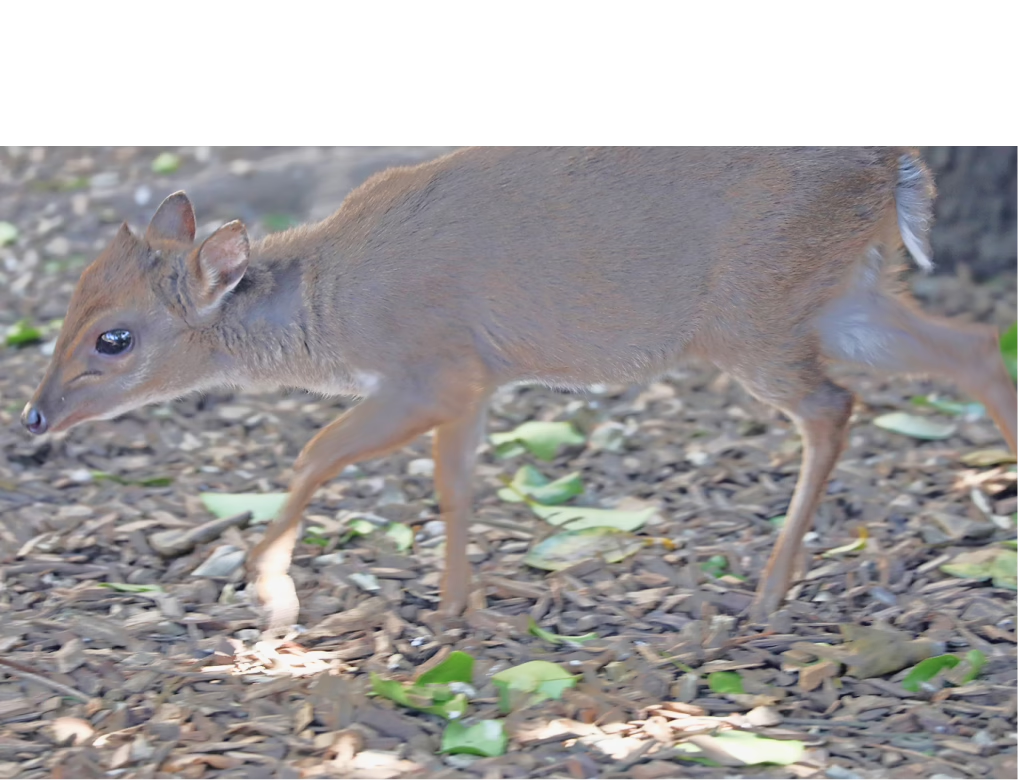
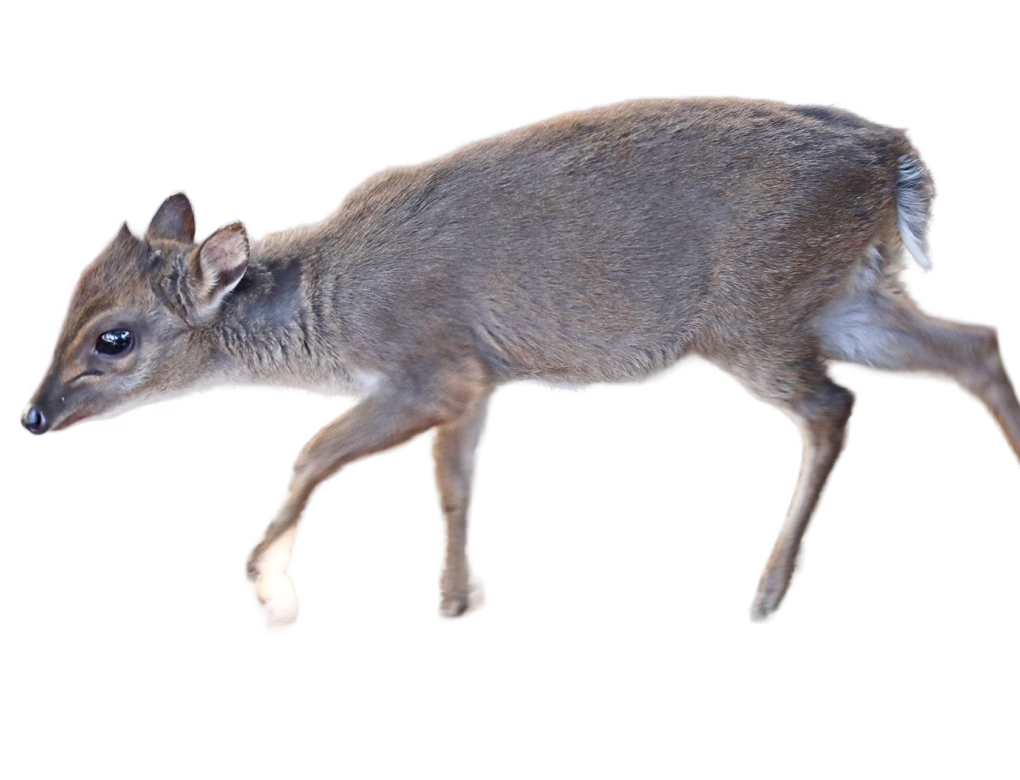
Blue duiker
Least ConcernAs the world's smallest antelope species, and smallest duiker, they play an important role in their forest ecosystem.
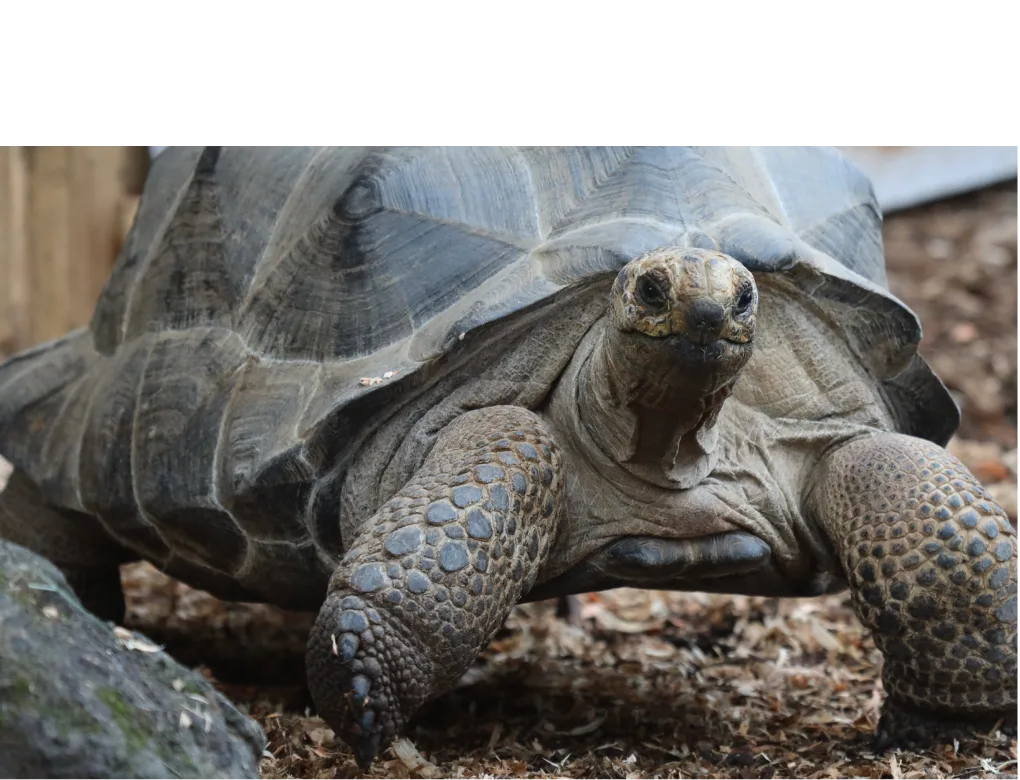
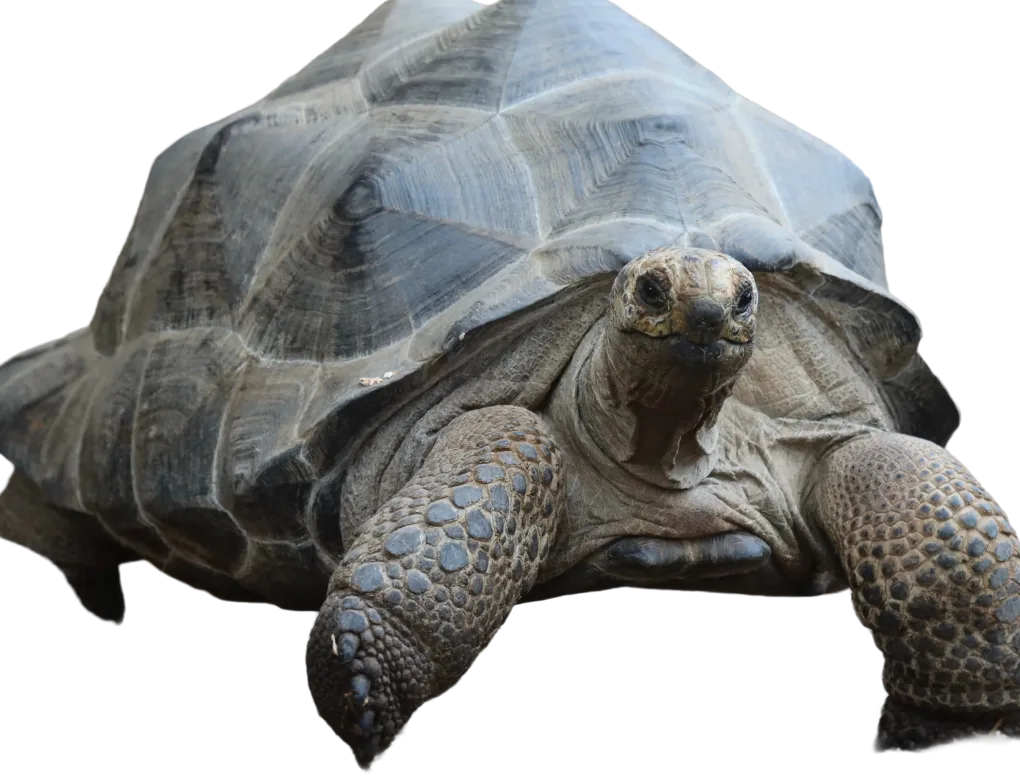
Aldabra tortoise
VulnerableAs one of the largest and longest-lived land tortoises in the world, some are known to have lived up to 170 years!
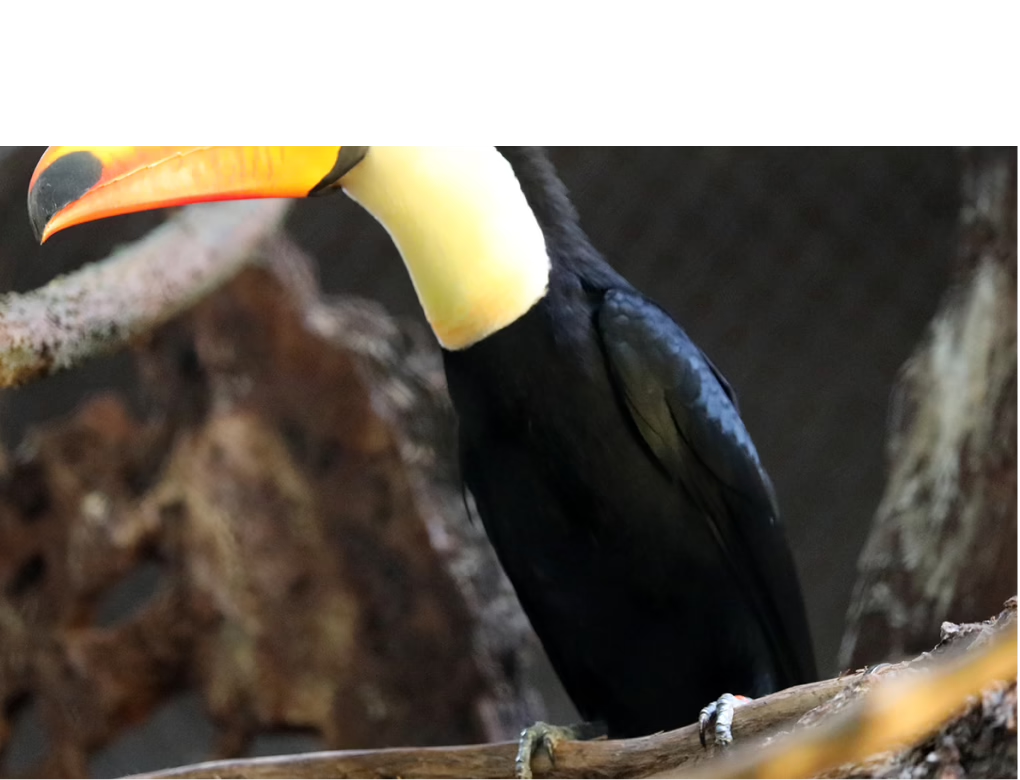
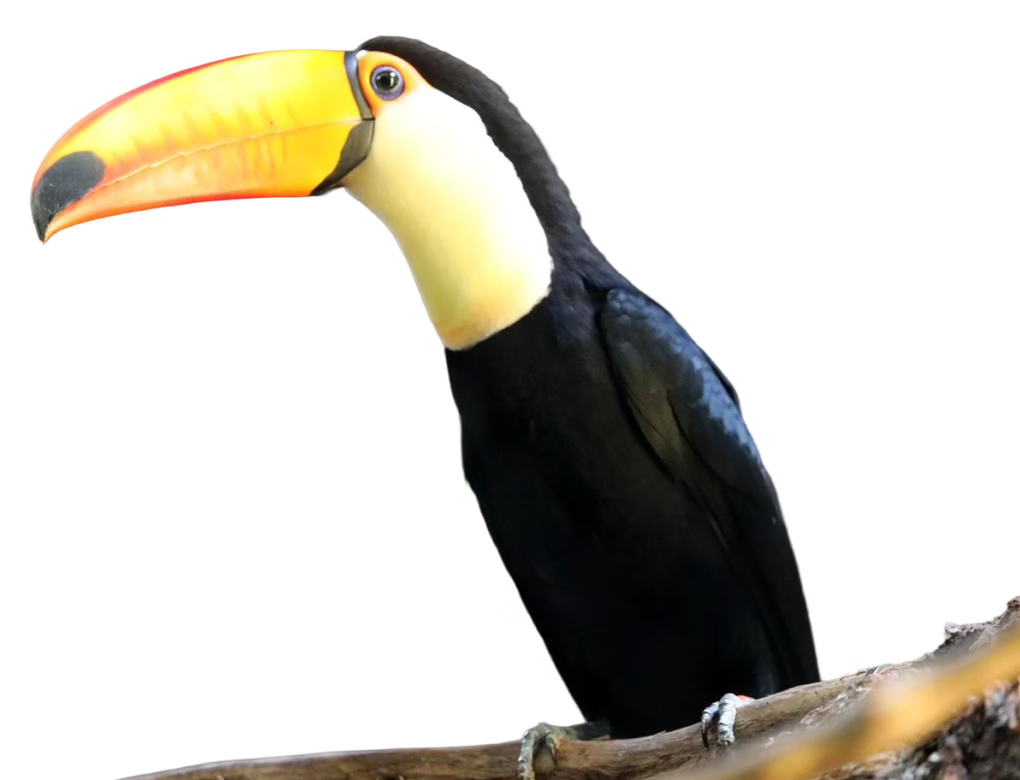
Toco toucan
Least ConcernKnown for their large, colorful bills and playful behavior, this is the largest of the toucan species.