





By Nancy Chan, Director of Communications
The gulls at San Francisco Zoo are notorious for their aggressive behavior towards visitors carrying trays of hot dogs and French fries, often swooping down and stealing food items, creating a state of panic in the process.
While the scavenger birds have been a problem at the Zoo for years and years, California gulls are a protected species under the federal Migratory Bird Treaty Act of 2018. As such, they cannot be harmed or their nests disturbed or destroyed.
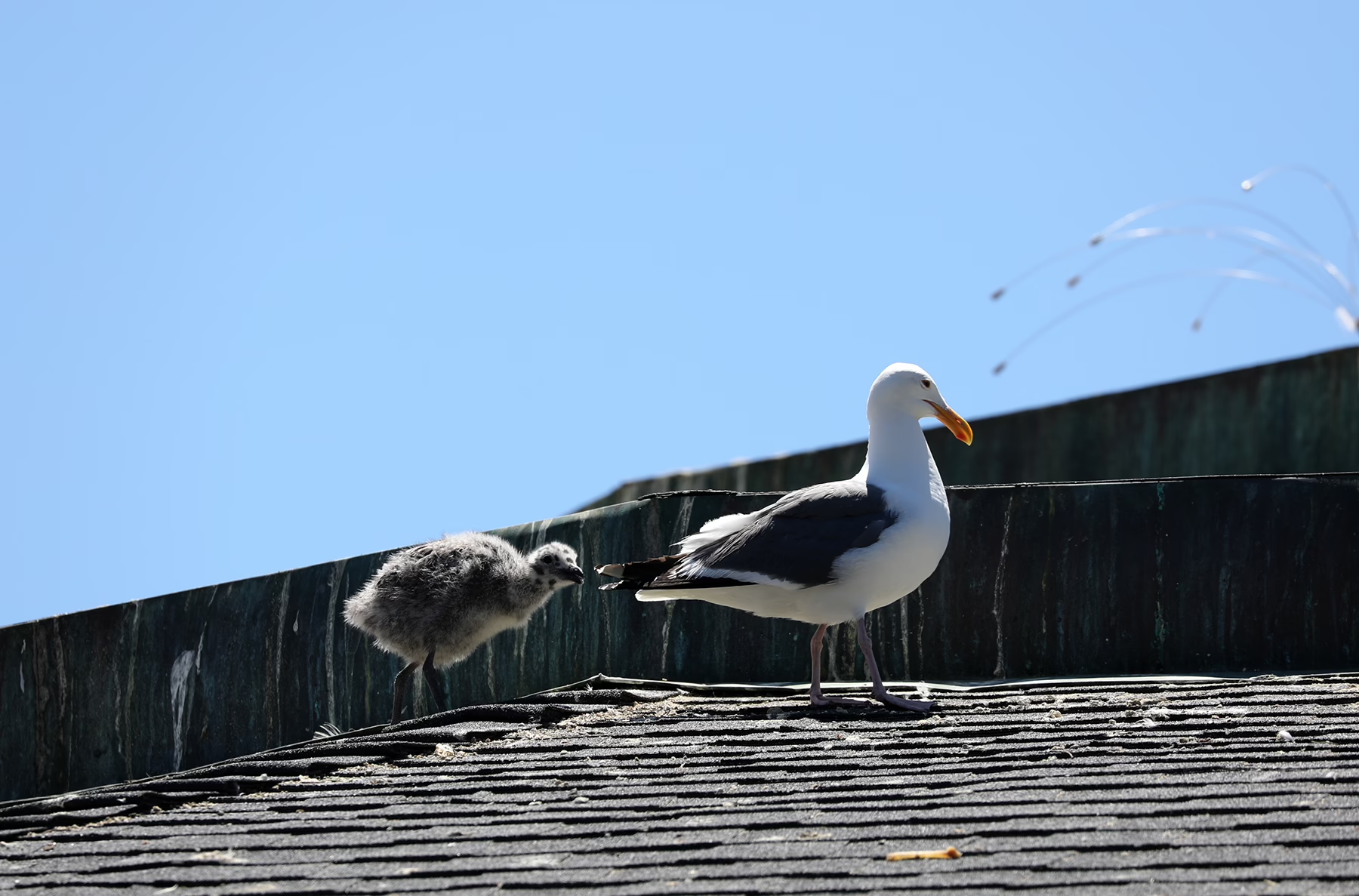
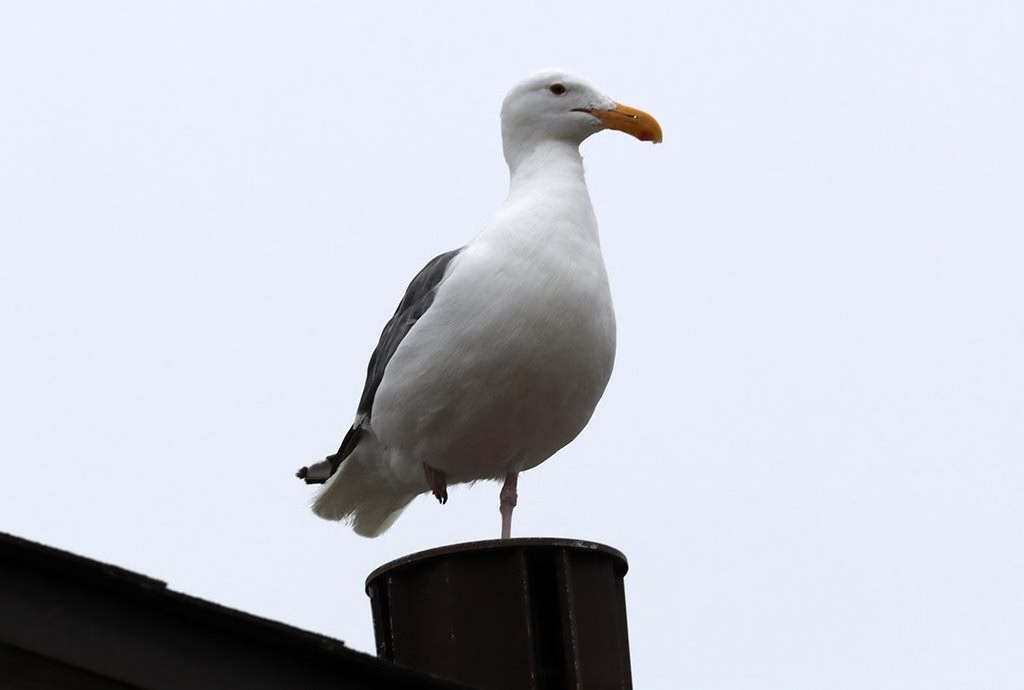
Seeing gulls dive-bomb patrons’ lunch items is not a new phenomenon. There are 9 species of gull that occur on Zoo grounds. The most aggressive is the western gull – the largest and most prominent – which is endemic to the coast of California, Oregon, Washington to Baja California. The gulls have made the Zoo a generational coming-of-age feeding ground since it opened its doors in 1929. Situated right at the ocean’s edge, the place has been part of their pilgrimage from their nesting grounds at the Farallon Islands and Alcatraz Island.
Over the past few years, the brazen gulls have established breeding colonies at the Zoo itself, building their nests in the trees of the Lipman Family Lemur Forest, and atop the roofs of the Giraffe Lodge and the Leaping Lemur Cafe. This year they had chicks simultaneously with the Chilean flamingos where you could fluffy, gray chicks in several places.
The Zoo has attempted to use abatement techniques to keep the gulls at bay, coming up with countless creative ideas to try to prevent the birds from attacking visitors carrying Zoo fare from the restaurant to their outdoor tables. Each time, the gulls have always figured out the new preventative effort, and gone back to their hamburger-stealing ways.
This included using ARC ambassador King Richard, a female Great horned owl, stationed in the area with a youth volunteer during peak periods as a way to scare the gulls off. The owl was later replaced by plastic raptors and both, for a while, kept the gulls away. The Zoo tried everything, placing large umbrellas over the tables, to placing rubber snakes on top of the food stand, to whirly-gigs that looked like crocodiles, to one time having a staff member swing a stuffed, dead gull at the birds. A recording of an alarm call of the western gull was even played over the Zoos loudspeaker. Over time, the gulls would become accustomed to these deterrents and eventually ignore them.
Another method was to run strands of wires across the food area, to block the gulls’ flight paths and to confuse them. It worked temporarily, but the gulls were smart enough to navigate around the wires and incorporate it into their flight strategy.
A much more elaborate approach was the installation of a woven plastic mesh structure in 1999, when all dining took place outdoors in a snack bar area.
The framework resembled an aviary for people stood 12 feet high, 90 feet long and 60 feet wide, and though the access directly from the food stand was open (to enable strollers or guests carrying trays of food and drinks to go in and out), the sides of the structure had doorways taped with plastic curtains to keep the gulls from just walking in. At the time the seating area’s perimeter was surrounded by large concrete plants that were donated by the Moscone Center, and installed to combat this very problem.
We called it the “anti-aviary” because it was used to keep the gulls out and the people in.
That worked for a brief period, until the Leaping Lemur Cafe opened in 2001, and most seated dining took place indoors. Unfortunately, moving most of the dining indoors did not deter the gulls from seeking French fries from defensive guests carrying trays to eat outdoors.
Big signs warning guests not to feed the birds has gone unheeded, as kids still happily toss snacks to gulls who eat up greedily.
Zoo snacks are a favorite for the gulls, but they also take advantage of Zoo animals. You might see them snatch a fish right out of the buckets filled with fresh herring meant for penguins and pelicans, snatch bear chow with a bear inches away, and always have a keen eye out for open backpacks and strollers packed with snacks, even in plastic bags.
As for the gulls – they are very smart, are unafraid of humans and can recognize victims enough to know who will be an easy target, they watch how people move and how they carry their food; they can even recognize staff.
If you’ve got a story, email us, we’d love to put together some guest testimonials. And if this happens to you, our food and beverage vendor is happy to replace food stolen by gulls.