
Aldabra tortoise
Aldabrachelys gigantea
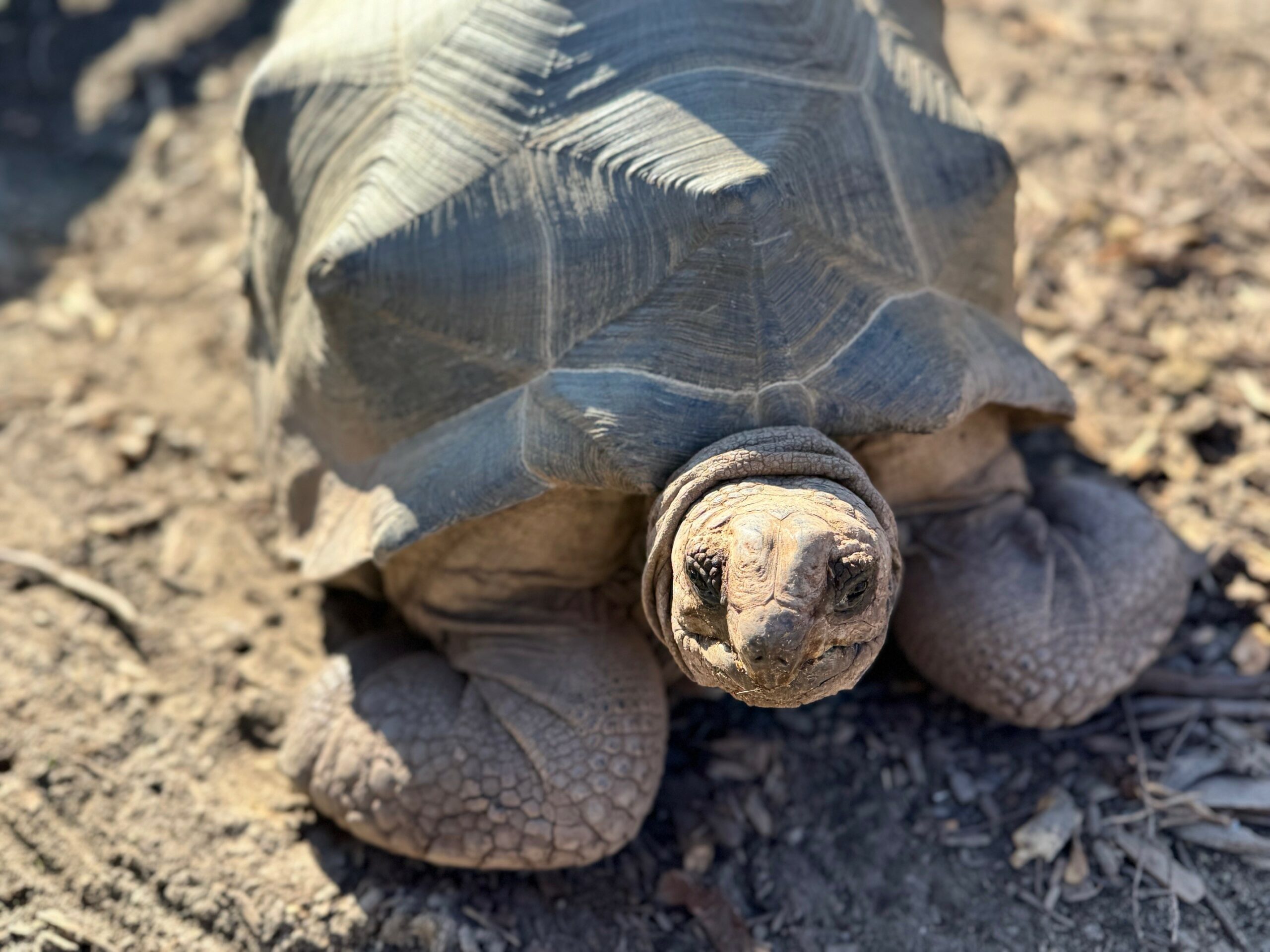
In the Zoo
Family Farm
Fascinating Facts
Aldabra tortoises are some of the largest tortoises in the world. They are also some of the oldest living animals – it is estimated that they can live up to 150 years, but they keep outliving the scientists studying them. In their native habitat they play a role similar to that of elephants in their homelands – they eat brush, small trees and shrubs, which alters the landscape. They also disperse seeds in their droppings, starting new growth and providing food for other animals.
Physical Characteristics
Aldabra tortoises are brownish gray. Their shell, or “carapace”, is domed and males have a curved “plastron”, or belly, to aid in mating. They have stocky legs and long necks. Males are much larger than females, with a shell that can grow over 4 feet in length, and they can weigh up to 550 pounds. Females can grow up to 3 feet across in length and weigh 350 pounds.
Diet
They eat mostly grasses, shrubs and small trees, with some small invertebrates or carrion, including dead tortoises.
Habitat
Aldabra tortoises inhabit scrub forest, coastal dunes, mangrove swamp and grasslands.
Range
They are found on the Aldabra Atoll in the Seychelles, north of Madagascar. They have been introduced on several other islands in the Seychelles.
Social Behavior
Breeding season is from February – May and males will fight each other for breeding rights. Males will make a trumpeting sound while mating. Females carry the eggs for 10 weeks and then deposit a clutch of 4 – 14 tennis ball sized eggs in a hole dug in the ground. After 3 – 6 months the eggs will hatch with babies measuring just 3 inches across at hatching. Juveniles become sexually mature when they are about half of their full-grown size, or at about 25 years of age. Most tortoises are solitary, but Aldabra tortoises will graze on grasslands in “herds”. They will dig holes or lie in water to cool off during the heat of the day.
Status In The Wild
IUCN – Vulnerable
Other
Aldabra tortoises and Galapagos tortoises are all that remain of a number of giant tortoise species that were once found worldwide. These other species are now extinct due to over-hunting by European sailors and the introduction of invasive species such as cats, rats and pigs that eat tortoise eggs and young. Aldabra tortoises have a long history of conservation; the British Museum started a conservation group in the late 1800’s to preserve habitat for the tortoises.